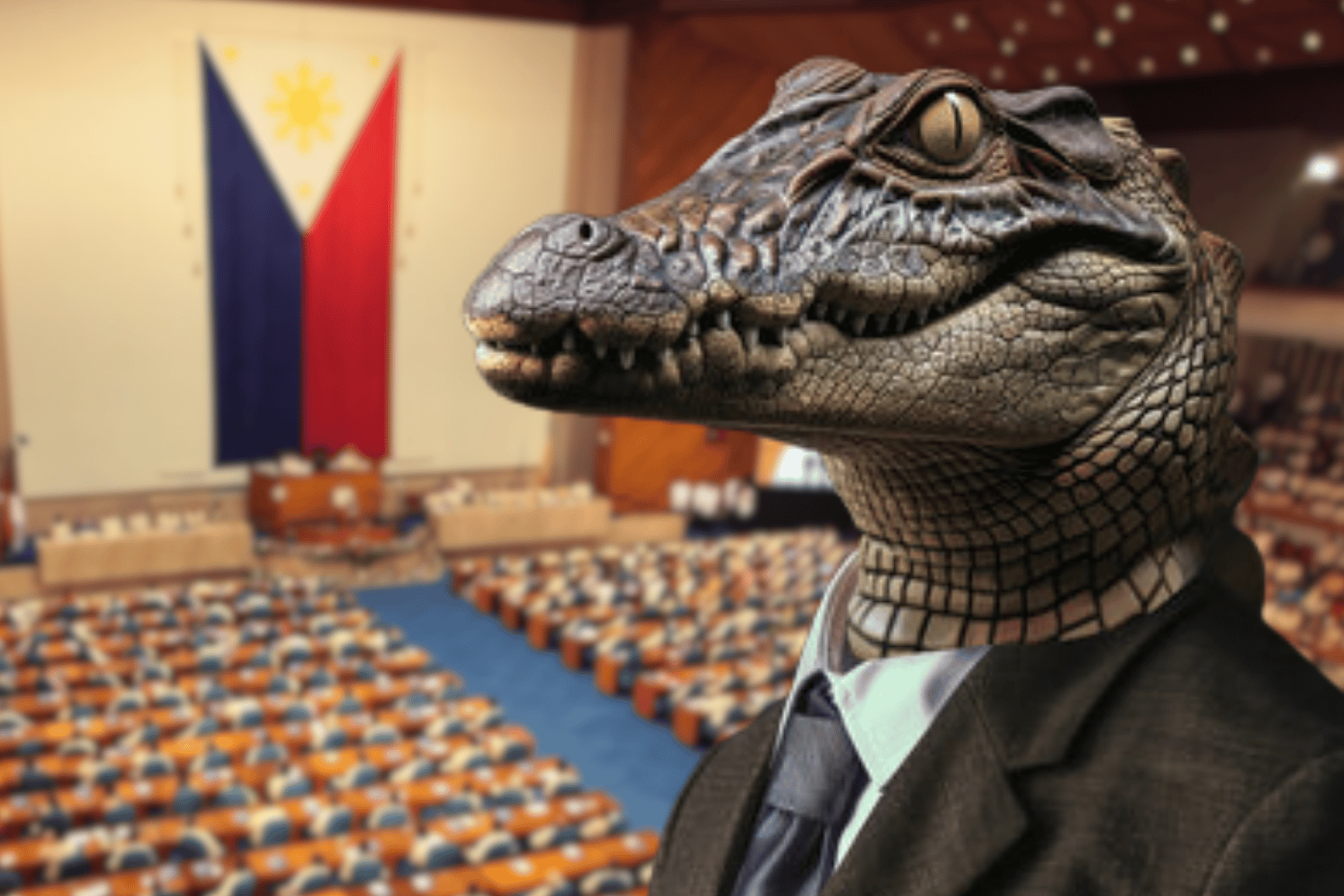
These jokes reinforce the idea that crocodiles are naturally evil, greedy, or corrupt.
A youth-led conservation group is urging Filipinos to stop using animals as insults for human behavior, saying the habit does more harm than many people realize—especially to endangered wildlife like the Philippine crocodile.
The Alliance for the Conservation of Enigmatic Wildlife (EnWild) recently called on the public to rethink common expressions that compare people to animals, such as calling corrupt politicians “buwaya,” traitors “ahas,” greedy people “baboy,” or untrustworthy individuals “daga.”
According to the group, these comparisons unfairly assign human flaws to animals that simply behave according to their natural instincts.
“A snake is not deceitful, a pig is not greedy, and a rat is not malicious. They are just animals surviving in their own ecological roles,” EnWild said in a Facebook post.
The group singled out one of the Philippines’ most familiar political metaphors: referring to corrupt officials as “mga buwaya.”
While the expression has long been embedded in Filipino culture, EnWild argued that it has also shaped negative public perceptions toward crocodiles—animals that are, in reality, vital to healthy wetland ecosystems.
“Crocodiles regulate populations of fish and other animals, and their presence indicates a healthy environment,” the organization explained. “The corruption we condemn is a human choice, not an animal trait.”
EnWild pointed to the critically endangered Philippine crocodile (Crocodylus mindorensis) as an example of how language can affect conservation efforts.
The species is one of the world’s rarest crocodiles, with only a few hundred individuals remaining in the wild. Yet conservationists often encounter dismissive reactions whenever campaigns are launched to protect it.
One response, the group noted, has become all too familiar: “Bakit pa poprotektahan ’yan? Marami naman niyan sa Kongreso at Senado.”
According to EnWild, jokes like these may seem harmless, but they reinforce the idea that crocodiles are naturally evil, greedy, or corrupt, making it harder for the public to sympathize with efforts to save them from extinction.
“When a call to conserve a species is blocked by negative perceptions, that is where harm also takes place,” the group said.
The organization believes changing everyday language is a small but meaningful step toward respecting wildlife and recognizing that greed, cruelty, and corruption are human choices—not animal characteristics.
“Words matter,” EnWild said. “The challenge is not to tame nature, but to tame ourselves.”
READ: