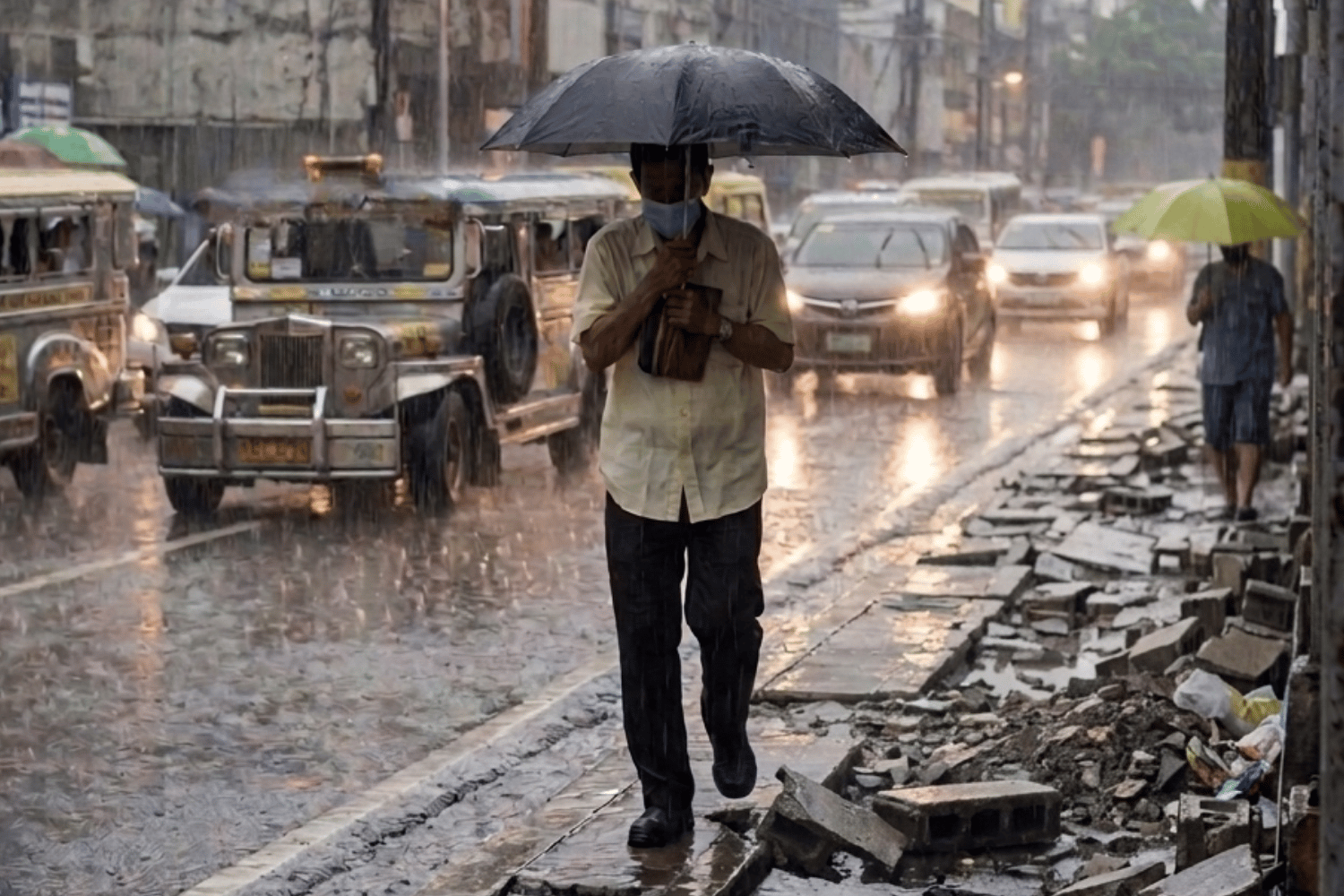
Filipino commuters are still running through rain, heat, and traffic.
People don’t realize how exhausting commuting becomes the moment it rains. In many cities, a trip to the train station or bus stop can mean sprinting across flooded roads, squeezing through narrow alleys, or waiting for the rain to stop because there is nowhere safe to walk.
Across Southeast Asia, several neighboring countries have treated covered walkways as basic public infrastructure instead of optional amenities.
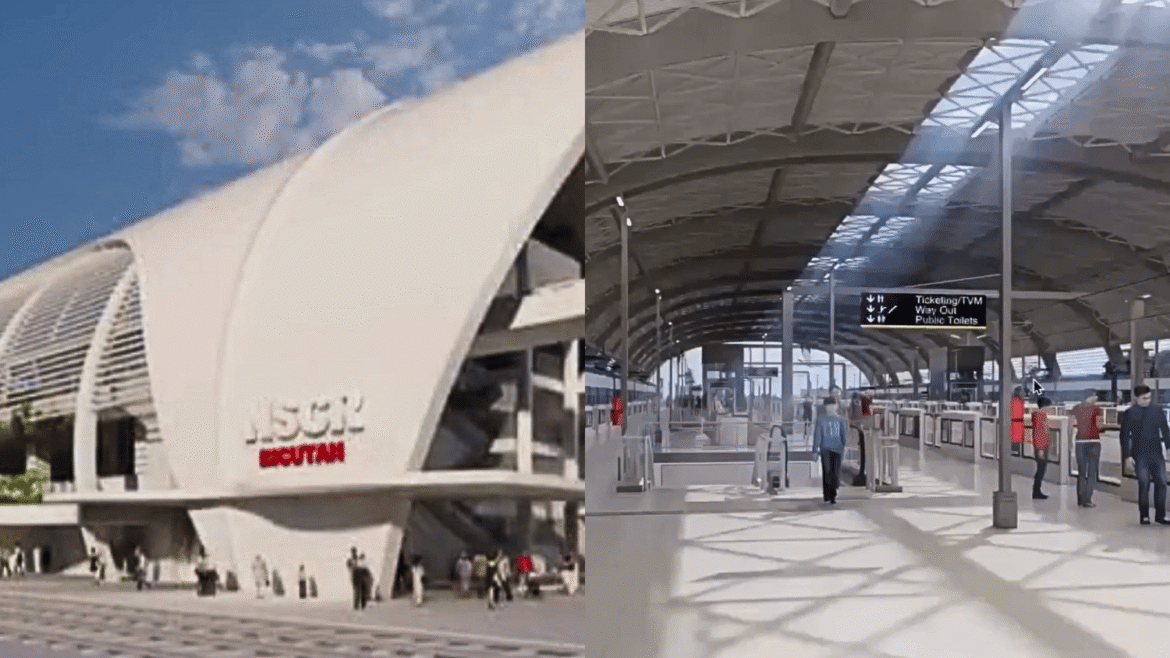
Singapore arguably has the region’s most extensive sheltered walkway network. Under the government’s Land Transport Master Plan, covered linkways connect housing estates to MRT stations, bus stops, schools, clinics, and commercial centers, allowing commuters to walk comfortably even during heavy rain or intense heat.
Malaysia has long incorporated the concept of the kaki lima, or “five-foot way,” into its urban landscape. These covered pedestrian corridors, originally built into shophouses, have existed for more than a century and remain common in cities such as Kuala Lumpur, Penang, and Malacca, giving pedestrians continuous protection from both tropical sun and rain.
Indonesia has also begun redesigning central Jakarta with wider sidewalks, covered pedestrian areas, improved crossings, and shaded public spaces as part of its effort to reduce car dependence and improve walkability.
The Philippines, meanwhile, continues to prioritize roads over pedestrians. While some business districts and newer developments have connected covered walkways, these often stop at property lines instead of forming a continuous public network.
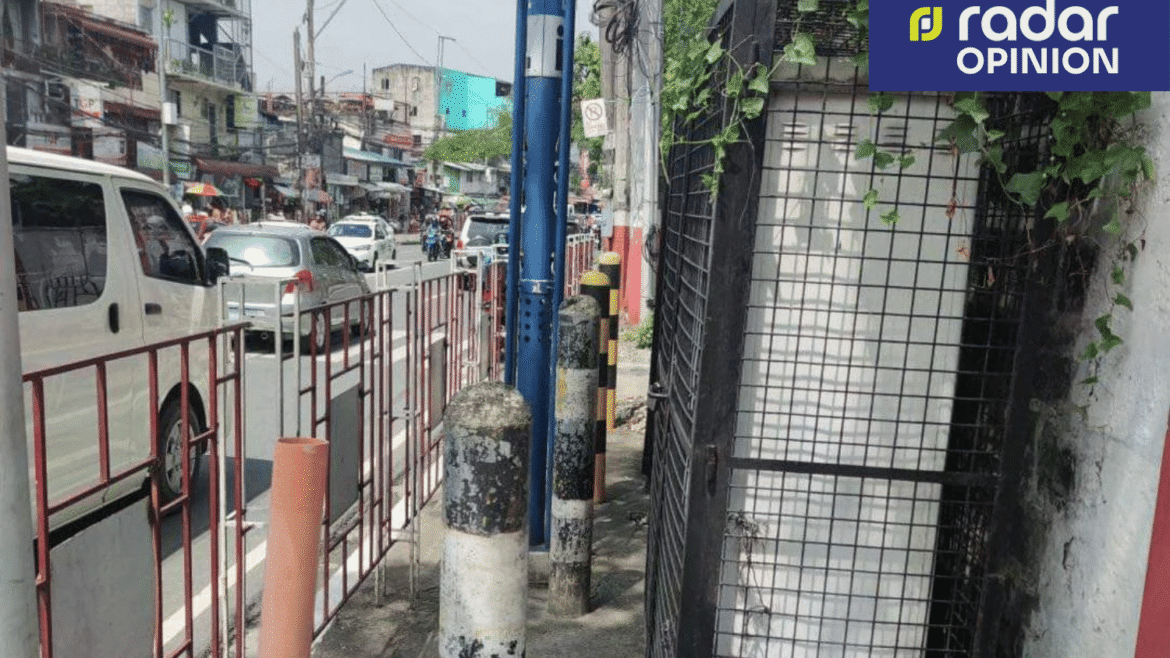
Outside central business districts, commuters are frequently left navigating sidewalks blocked by parked motorcycles, utility poles, and unfinished infrastructure before being left exposed to heavy rain.
The Department of Transportation has repeatedly encouraged active transport, while the Department of Public Works and Highways has expanded pedestrian projects in recent years. Yet a truly connected, weather-protected walking network remains largely absent in most Philippine cities, despite the country experiencing around 20 tropical cyclones each year and frequent episodes of extreme heat.
Building more covered walkways would not simply make commuting more comfortable. Studies consistently show that safer, more convenient pedestrian infrastructure encourages walking, improves access to public transport, reduces traffic congestion, and supports local businesses by increasing foot traffic.
Filipinos bring umbrellas everywhere not because they want to, but because they have to. In much of Southeast Asia, cities have begun treating sheltered walkways as basic infrastructure. Here, they’re still considered a bonus.
Until that changes, every weather season will keep exposing the same gap between building cities for cars and building them for people.
READ: