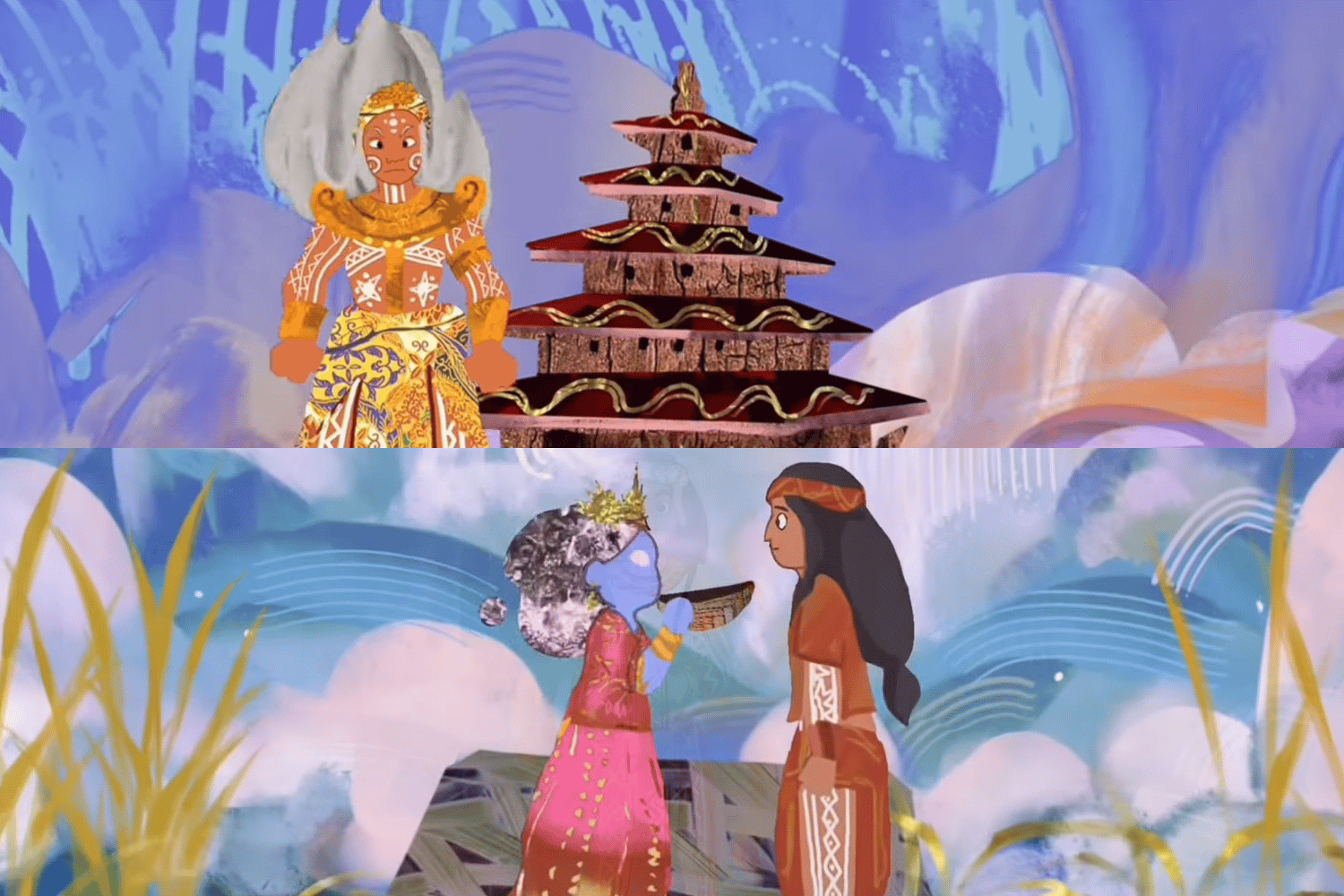
The animation works are publicly available on Cuppops’ YouTube channel. Photo from Cuppops / YouTube
Pulvera hopes for Filipino youth to learn more about pre-colonial culture and identity.
Animation creatively tells stories which captivates audiences of all types and ages, and for one artist’s thesis, their goal is being reached—spreading Visayan folklore to younger generations.
On Facebook, Altheya Pulvera posted about the “heartwarming surprise” of their Visayan Creation Myth animated video receiving attention. On screenshots were Youtube comments from students who shared that the video was recommended by their teachers.
Pulvera, a graduate of Bachelor in Fine Arts – Studio Arts in the University of the Philippines Cebu in 2024, created the “Visayan Creation Myth” as one of the three animated videos for their thesis, with the other two stories on “Datu Mangal and his son Lapulapu” and “Mactan Marine Life”.
According to Pulvera, the inspiration to feature Visayan folklore can be traced way back from the History class they took during their second year in the university.
“During that time, and after a compelling activity […] in our Kasaysayan class, I was feeling deeply resentful about growing up fairly disconnected from pre-colonial Filipino culture,” Pulvera told radar, “Back then, we didn’t have a lot of materials to go off of except for journal entries/academic papers/books that weren’t as widespread as they ought to be.”
Due to growing up without knowing such stories existed, they thought about fellow Filipino youth who also felt disconnected from the culture due to effects of colonization and globalization.
“I’m not saying that precolonial culture is the only marker of our rich Filipino heritage, but it is one that was taken from us, and so we often don’t know where to start,” they said. “With the animations, I wanted to spread more local tales with captivating visuals, because I know the younger generation would pick them up faster than full blocks of text from jargon-heavy college level books.”
As local folk stories tend to have many versions, Pulvera researched and decided on which stories to include, and consulted with Karakoa Productions cofounder Minxie Villaver for references and details such as clothing and jewelry.
For the animation’s visual appearance, Pulvera documented organic material in their own island in Visayas to clipmask into the animation, making their home literally imbued in the work. For example, the goddess Lidagat’s hair was clipmasked with rain water, while Libulan’s copper body utilized photos of Lapulapu’s copper statue in Mactan Shrine.
Pulvera acknowledged the challenge of the workload for an individual thesis: “I ended up taking a gap year to complete all three… Not counting the semester I spent working on the mini-thesis for the ground work, it took me roughly 1 year [to complete it].”
Initially, Pulvera shared that they were quite disappointed about their work due to it being “wrong” on paper, because fine arts theses usually do not follow film formats. They were able to justify the thesis “as a visual exercise and exploration of limited-animation and unmoving plaid as a medium”, the latter referring to the clipmasking trope.
Despite this, they were proud of accomplishing everything, and felt fulfilled about creating something meaningful. Pulvera held a week-long public thesis exhibition in the historic Mactan Shrine in 2024, while the animation works are publicly available on their YouTube (Cuppops) and Tiktok (@Beaupeep_) channels.
“I’m happy with how it turned out visually, and most of all I’m happy to see that people genuinely feel represented/amused to know that we have our own cultural markers through these stories, and I was able to help deliver that feeling of cultural pride,” Pulvera said.
Mia greatly appreciates her phone's notes app and the classic pen and paper to reflect on her day and capture ideas whenever inspiration strikes. An avid reader—whether it’s online discussions, visual novels, or books—she also enjoys photographing cats and dogs, and taking long walks.