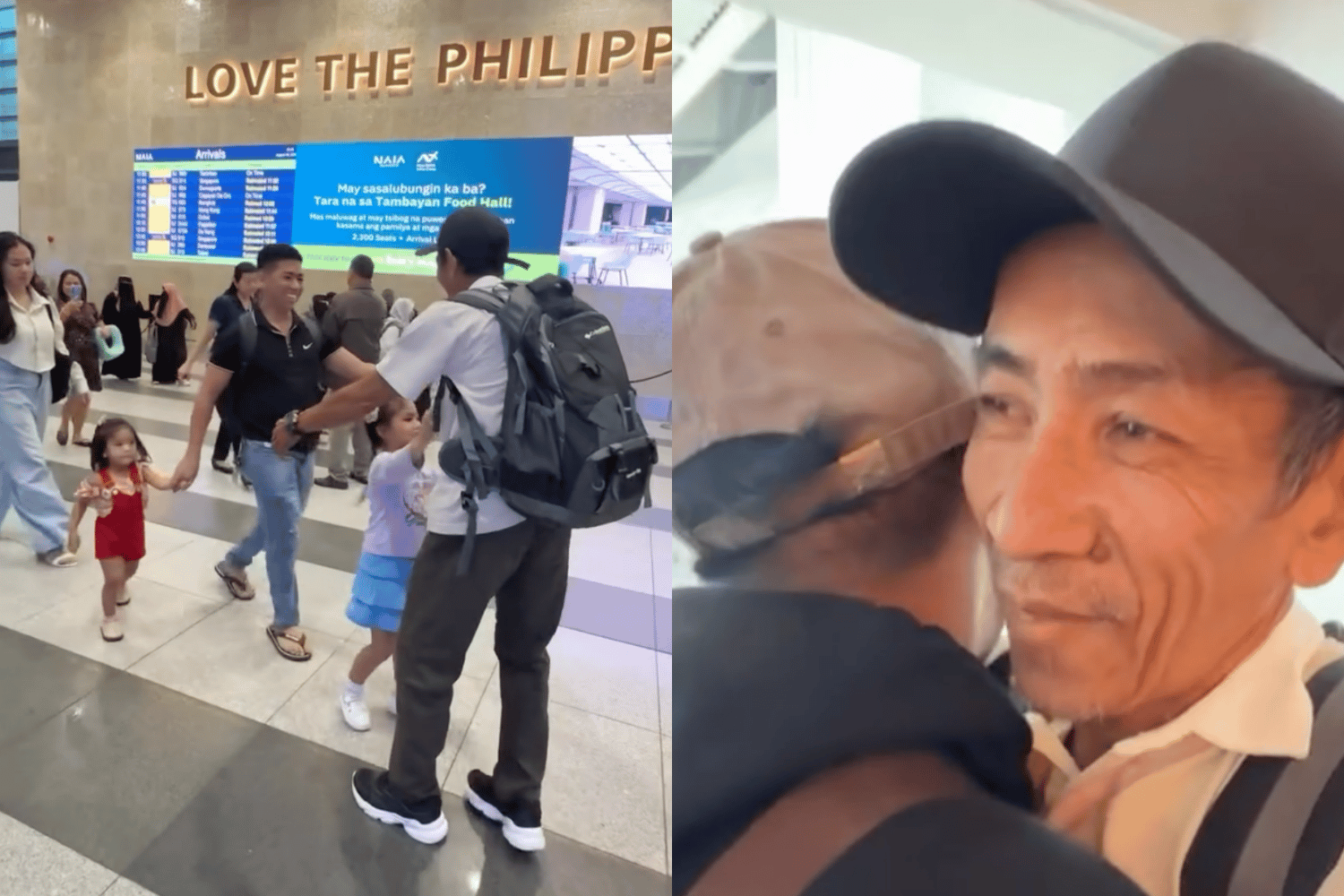
According to the captions on the video she shared alongside footage of an airport reunion, Pastor’s parents separated thirteen years ago. At the time, her mother made the difficult decision to try her luck in Manila, taking all the children with her. Her father was left behind in the province of Zamboanga.
What followed was a journey of survival. Life in the city was hard, and the family spent years simply trying to stay afloat day to day. In the meantime, both of Pastor’s parents moved on and started families of their own.
It took thirteen years for the next chapter to unfold. Once some of the siblings had grown up enough to land stable jobs, they made a decision to find their father in Zamboanga and bring him back to Manila. The goal wasn’t to undo the past or force their parents back together, but simply to let their father see them again, and to let him meet the younger siblings he’d never met since the separation.
So, is reconciliation possible?
The instinct when we hear “broken family” is to measure success by whether the original unit comes back together under one roof, as if the separation never happened. By that measure, Pastor’s story isn’t a reconciliation at all: her parents didn’t get back together, and the airport reunion did not undo the past.
But that’s exactly what makes her story worth paying attention to. Reconciliation doesn’t always mean reassembling what was lost to make it whole again. It can mean adult children choosing, on their own terms and in their own time, to rebuild a relationship with an estranged parent. It wasn’t between two ex-spouses. It was between a father and children who’d simply been apart too long, closing a gap that circumstance had opened.
Families that break apart rarely go back to exactly what they were. Pastor’s story suggests a more realistic and, in some ways, more powerful version of reconciliation: one where the people who were separated don’t have to erase what happened in between. Instead, they choose each other again, even in a new shape.
It took her family thirteen years, a plane ticket, and a decision made by children who were once too young to have any say in the split.
READ: