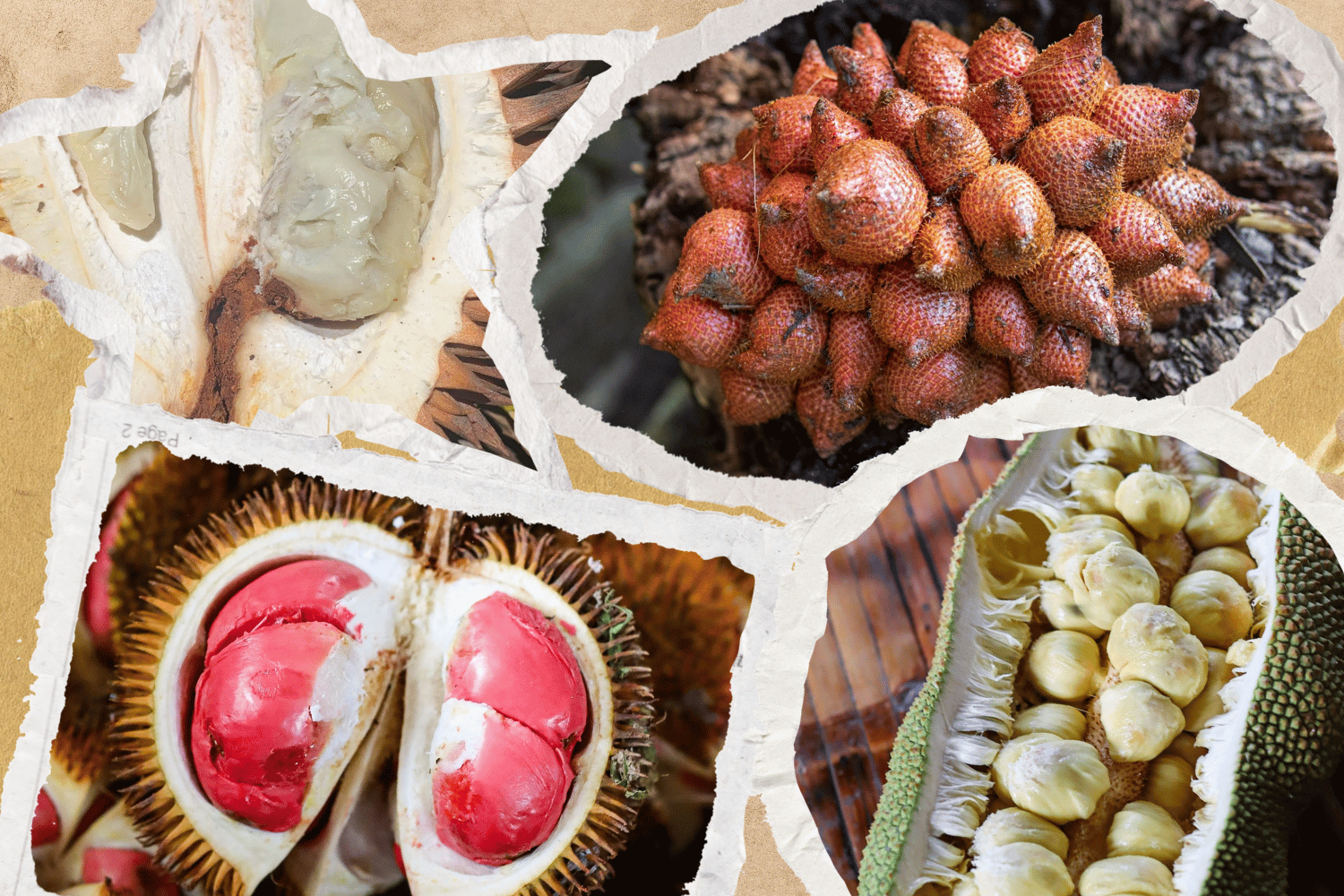
Some of Palawan’s treasures are small enough to fit in the palm of your hand.
Palawan is famous for turquoise lagoons, limestone cliffs, and white-sand beaches.
But deep in its forests grows another kind of treasure—wild fruits so unusual that many Filipinos have never seen, tasted, or even heard of them.
Because of Palawan’s close biogeographic links with Borneo and Sundaland, the island supports an extraordinary variety of forest plants, including rare fruits gathered and eaten by indigenous and rural communities during fruiting season.
Some look like durian. Others resemble rambutan, mangosteen, mango, or snake fruit—but taste completely different.
Here are 10 of the most fascinating.
1. Tabo
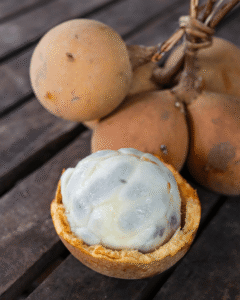
Tabo is a rare vine fruit with soft, white, cottony flesh. Those who have tasted it describe the flavor as somewhere between mangosteen and santol—sweet, tart, and refreshing.
2. Badak
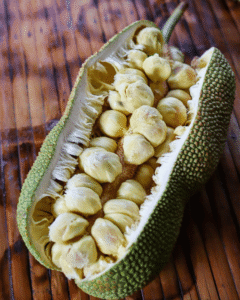
A wild relative of jackfruit, badak has pale yellow flesh and an intense tropical sweetness. Its flavor is often compared to a cross between langka and durian, but without the latter’s overpowering aroma.
3. Dugyan
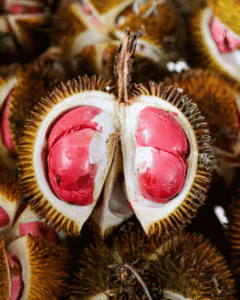
This may be Palawan’s most visually shocking fruit.
Dugyan is a wild durian known for its brilliant red flesh. It is creamy and mildly sweet, with a gentler aroma than many commercial durians.
4. Lued
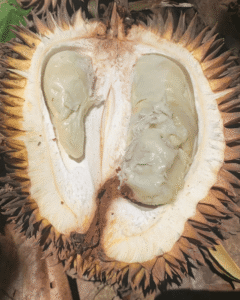
Another forest durian, lued hides unusually white flesh beneath its thorny shell. Locals prize it for its rich, milky sweetness.
5. Manakuka
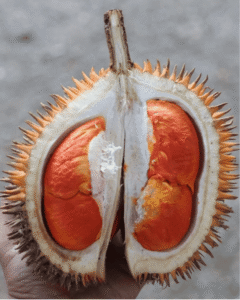
If lued is white and dugyan is red, manakuka brings another surprise: deep orange flesh.
Its taste is mild, slightly sweet, and nutty—making it less intimidating for people who normally avoid durian.
6. Wani
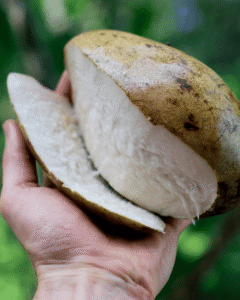
Wani looks like a distant cousin of the mango, but one smell tells you it is something else entirely.
It is intensely sweet and fibrous, with a strong resinous aroma and flavor. Some call it a “jackfruit mango” because of its powerful tropical scent.
7. Maraitum or duro
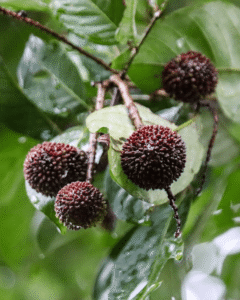
Imagine a rambutan turning almost purple-black when ripe.
Maraitum is a wild Nephelium fruit valued for its juicy, clean sweetness, without the strong tartness found in some other forest rambutans.
8. Baluno
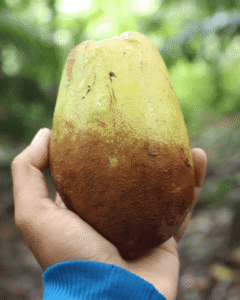
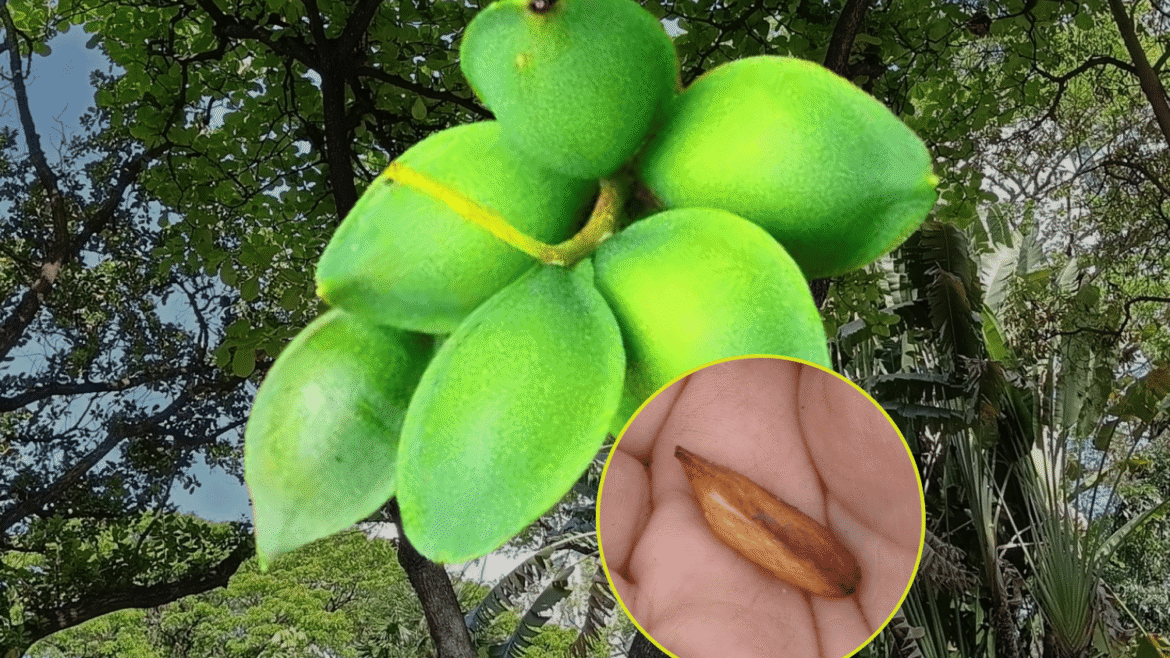
Baluno is a wild mango-type fruit with dark brown to almost black skin.
Its flesh reportedly delivers a deep sweet-and-sour flavor followed by an unusual wine-like aftertaste.
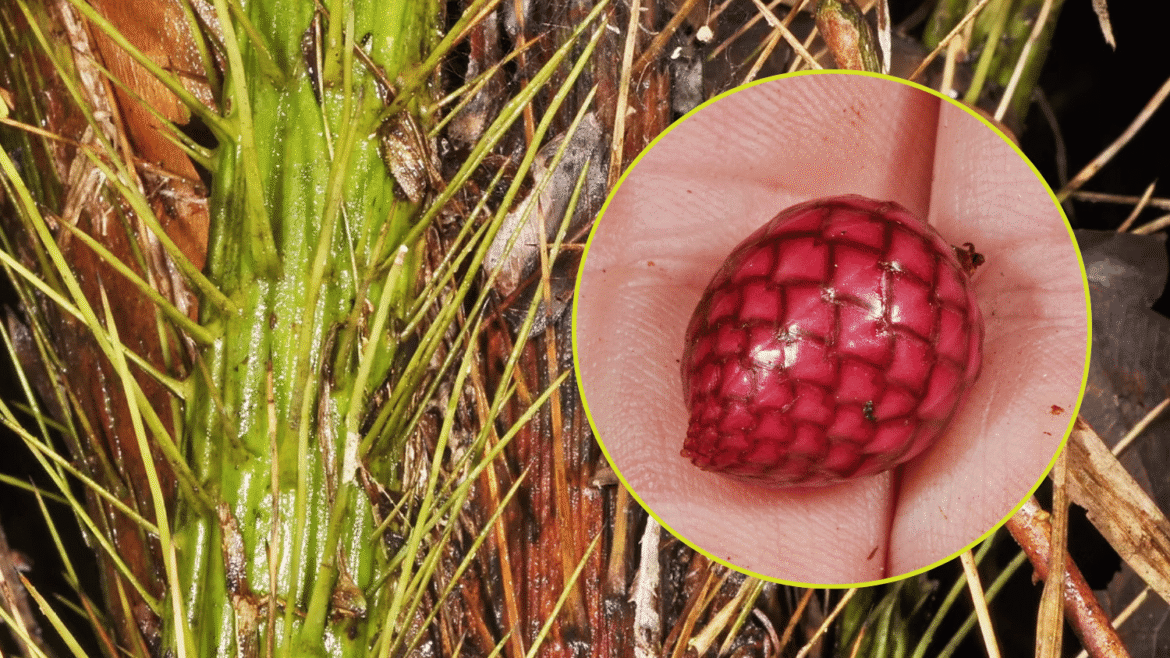
9. Paratungon
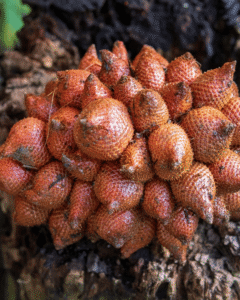
Palawan has its own version of snake fruit.
Paratungon grows in thorny clusters near the base of forest palms and has rough, scaly skin. Its taste is mostly sour and acidic, although very ripe fruits may develop some sweetness.
10. Palau
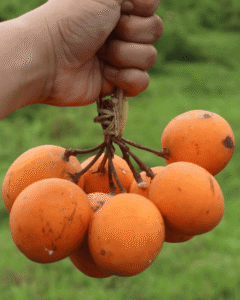
Often described locally as a wild forest mangosteen, palau has a sharp, tangy flavor.
It can be eaten fresh, but communities also use it as a natural souring ingredient in traditional dishes and seafood broths.
More than just exotic food
These fruits are not simply curiosities for adventurous eaters.
They are part of Palawan’s food heritage—knowledge carried by communities that know when the fruits appear, where they grow, how they taste, and how they can be used.
Many are seasonal, forest-foraged, and rarely enter mainstream commercial markets. That is exactly why seeing them lined up in a rural Palawan market can feel like discovering an entirely different Filipino fruit basket.
Palawan may already be one of the country’s greatest natural wonders.
But sometimes, its wildest treasures are small enough to fit in the palm of your hand.