The Samba Easy Chair makes you look twice at an object most people barely notice.
“It isn’t meant to be an ordinary chair.”
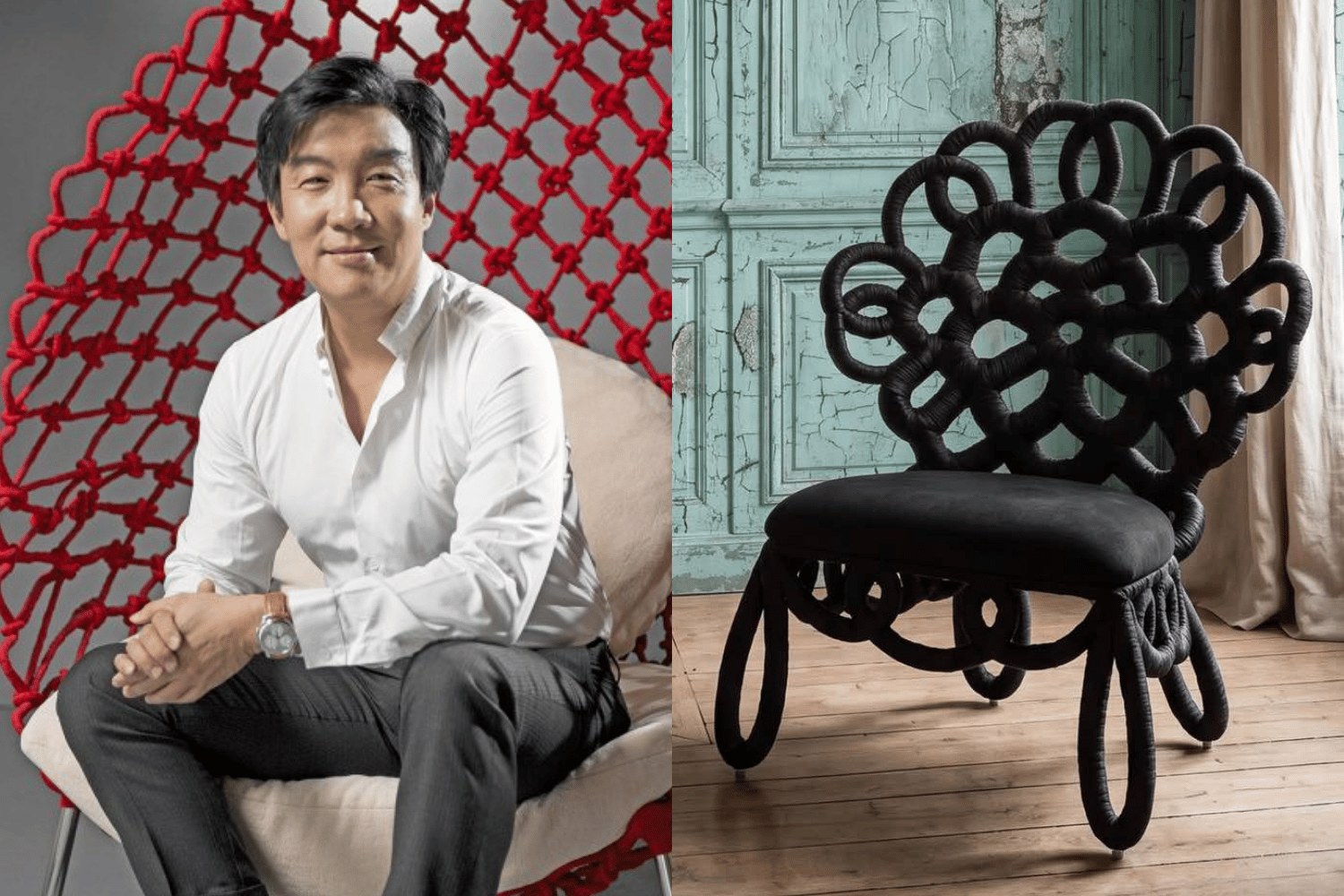
Filipino designer Kenneth Cobonpue made that clear as he showcased the Samba Easy Chair, a striking piece that turns something as familiar as a chair into a mass of looping, almost dancing forms.
In a Facebook post, Cobonpue described the chair as being wrapped in “plush, tactile velvet” woven into continuous loops. The result is a silhouette that appears to twist, curl and move around the person sitting in it.
EMBED: https://www.facebook.com/share/p/19U82o2JdF/
“Its sweeping curves flow through space like a dance suspended mid-air, inviting you to settle in—and stay a little longer,” he wrote.
That description is very much in character for the Cebu-born designer, whose furniture has long blurred the boundary between functional objects and sculpture. Rather than hiding the way a piece is constructed, Cobonpue often makes weaving, repetition and handcraft part of the visual spectacle.
The Samba Easy Chair pushes that philosophy to an extreme. Its backrest resembles a web of oversized knots or interconnected rings, while more loops spill underneath the seat and form its unconventional legs. Photographed against an aged European-style interior, the dark chair looks almost like a three-dimensional drawing placed inside the room.
It is the kind of visual experimentation that has made Cobonpue one of the Philippines’ most internationally recognizable industrial designers.
Born in Cebu in 1968, Cobonpue grew up around furniture production through his mother, designer and entrepreneur Betty Cobonpue. He later studied industrial design at Pratt Institute in New York and trained in Europe before returning to Cebu in 1996.
From there, he developed a distinctly Filipino design language built around handcraftsmanship and materials such as rattan, abaca and bamboo, transforming traditional weaving techniques into contemporary luxury furniture.
His creations—including the Bloom Chair, Croissant Sofa and Peacock Chair—have reached international homes, hotels and even Hollywood productions. TIME once described him as “rattan’s first great virtuoso.”
The Samba Easy Chair continues that tradition, but its appeal may lie in something simpler: it makes you look twice at an object most people barely notice.
For Cobonpue, apparently, a chair does not simply have to hold a body.
It can move a room.
READ: