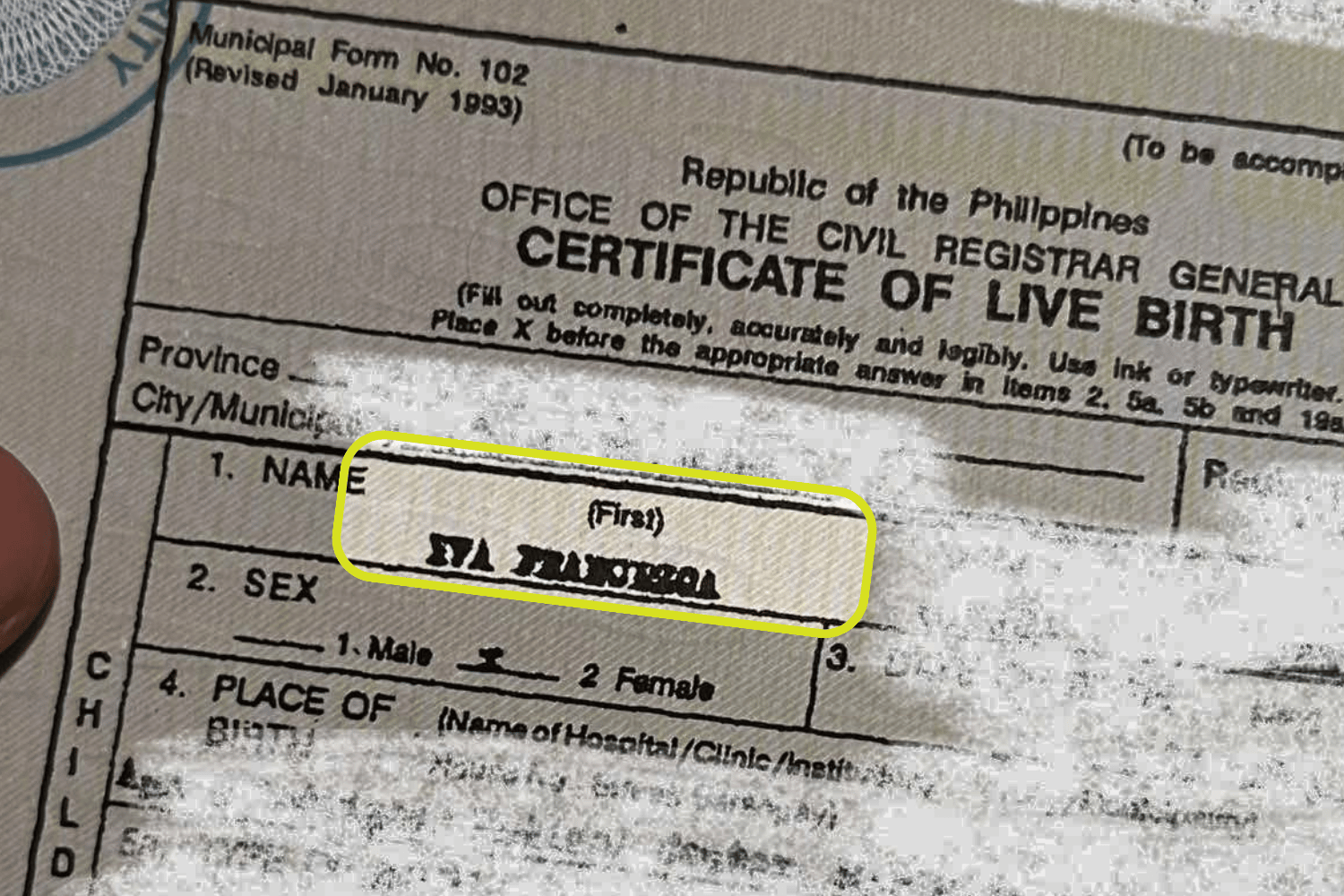
Her post made other users recount their own problems involving old, faded or difficult-to-read civil registry records.
A Filipino passport applicant has gone viral after calling out the Department of Foreign Affairs (DFA) over what she described as an unnecessarily difficult process after her PSA-issued birth certificate was deemed too unclear to verify information needed for her application.
In a Facebook post that has drawn more than 42,000 reactions and thousands of comments and shares, Iva Francezca Arnedo questioned why an applicant should bear the burden when the problem involves the legibility of an official document issued by another government agency.
“What do you mean hindi niyo kayang i-verify yung spelling ng pangalan ko dahil hindi clear ang typing at pagkaka-print ng freshly printed original birth certificate copy na provided ng PSA?” Arnedo wrote.
She shared a photo of her Certificate of Live Birth showing portions of the old record with faded or difficult-to-read text.
Arnedo argued that the same document is routinely required for official transactions, yet applicants can run into problems when another government office cannot clearly read information printed on it.
“Ito hinahanap to do basically anything, tapos suddenly hindi valid? Di mabasa?” she wrote. “Di kayang itawag sa PSA para i-check sa database nila?”
She also criticized the quality of other government-issued identification documents, including the National ID, saying Filipinos are expected to rely on these documents for years despite concerns over printing and durability.
According to Arnedo, she had already secured an appointment but still spent four hours waiting, only to encounter the problem with her birth certificate. She also complained that the additional documents she was apparently expected to present were not included in the reminders she received.
“Pagkamahal-mahal ng fee niyo pero ni katiting na convenience wala,” she wrote.
The experience prompted her to raise a broader question about government services.
“What’s the future of government services for the Filipino people? Sobrang unnecessary ng pahirap,” she said.
Other Filipinos share similar experiences
Arnedo’s post quickly became a venue for other Filipinos to recount their own problems involving old, faded or difficult-to-read civil registry records.
One commenter said the year on her date of birth was unclear because the number “1” in “2001” could not be properly seen. She claimed she had to obtain another record from the municipality before her passport application could proceed.
“Imagine that, we can’t request a reprint kasi ‘yan na raw yung nasa database nila at sobrang habang proseso pa to change that na in the first place sakanila namang fault yun,” the commenter wrote. She later updated her comment to say she had successfully obtained her passport.
Another commenter said an original Certificate of Live Birth given to her parents when she was born was allegedly not accepted, and she was instead told to obtain a certified true copy from the municipality.
Others questioned why citizens should have to spend additional money, travel back to their places of birth, or go through another bureaucratic process simply because an old government record is no longer easily readable.
One commenter pointed out that applicants had no role in how the original records were typed, printed or preserved.
“Hindi naman siya ang gumawa ng record, hindi siya ang nag-type, at wala rin siyang control kung paano na-maintain yung document,” the commenter said, questioning why clarification or correction should require additional payment and processing.
There were also complaints about what some commenters perceived as inconsistent implementation among DFA offices, with one claiming that documents accepted at one location may encounter problems at another.
‘Bakit nasa atin ang burden?’
Not everyone agreed with Arnedo.
One commenter reminded passport applicants that they also have a responsibility to research documentary requirements before appearing for their appointments, noting that a passport is an international identification document.
Arnedo pushed back, saying the larger issue was why citizens should shoulder the inconvenience caused by the condition of government records.
“Bakit nasa atin ang burden?? When they have the means to make it easier,” she replied.
For Arnedo and many commenters who shared similar experiences, the controversy is no longer simply about one difficult-to-read birth certificate. It has become a familiar question for Filipinos navigating government bureaucracy: when one government agency issues a document that another government agency cannot accept or clearly read, why is it the citizen who has to fix the problem?
READ:
Pwede bang take two? PhilHealth members share wacky card photos
radar Lifestyle
April 12, 2026
You may use civil registry documents or passport applications
Kiara Gorrospe
August 29, 2026
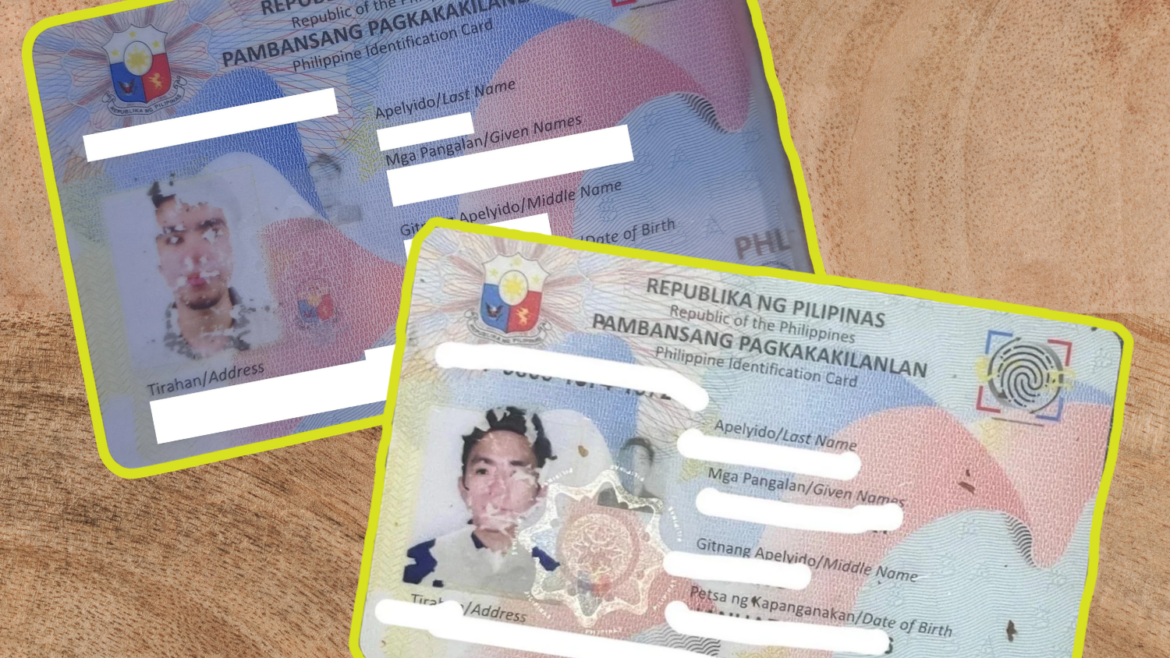
National ID holders complain of photos and details fading, peeling off
Top Dagohoy
August 29, 2026