The bakery’s line of breads have kept generations returning.
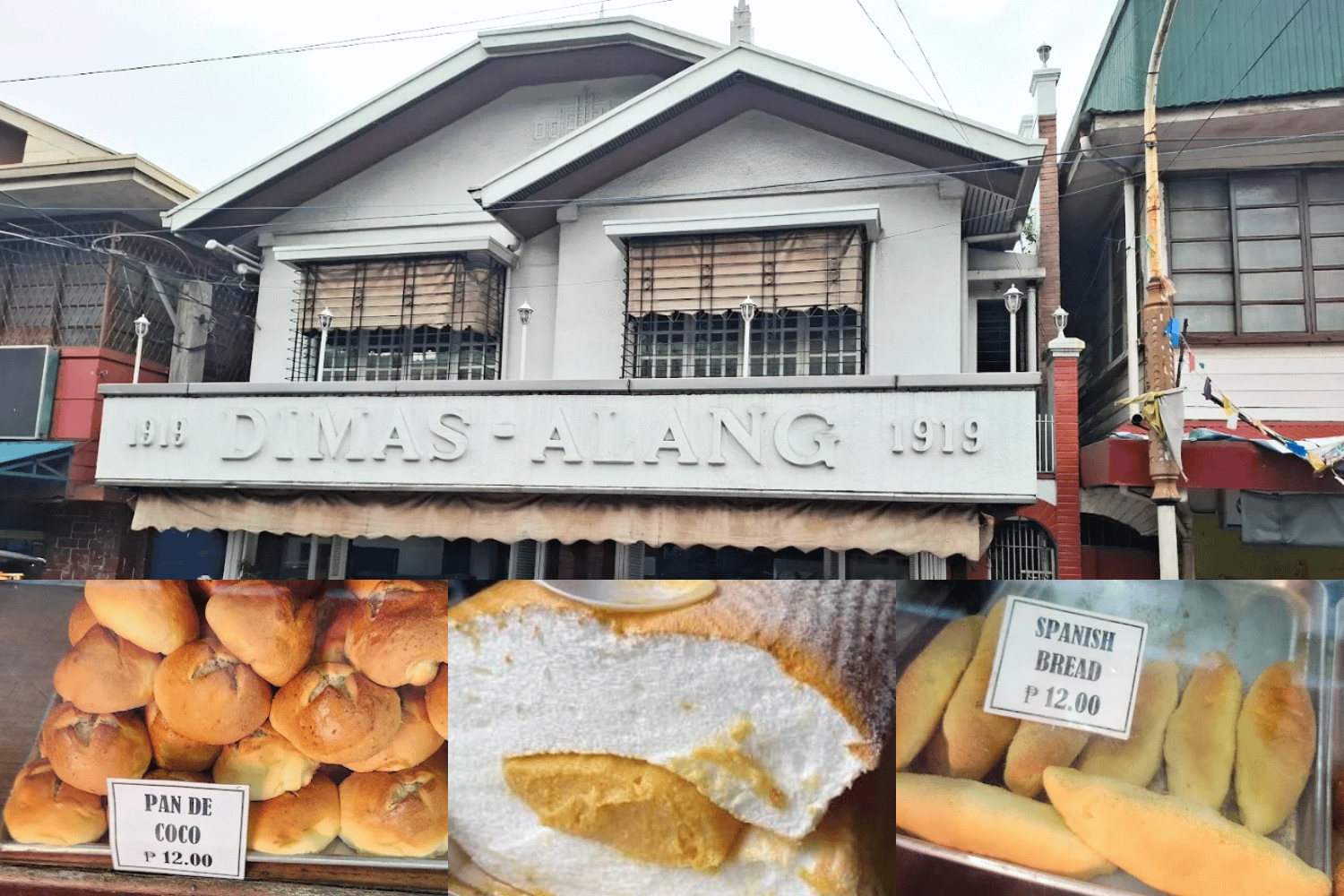
Walk into Panaderia Dimas-Alang in old Pasig and you’re buying bread from a business that was already around when the Philippines was still under American rule.
The unassuming bakery along A. Mabini Street in Kapasigan has been operating under the Dimas-Alang name since 1919. Today, it stands as one of Pasig’s enduring heritage businesses, surviving as the city around it transformed into a dense urban center.
And the bread keeps coming out of the oven.
From Dos Hermanos to Dimas-Alang
The bakery traces its beginnings to an earlier establishment called Dos Hermanos Panaderia.
In 1919, it passed into the hands of Teresa Raymundo and became Panaderia Dimas-Alang, adopting “Dimas-Alang,” a pen name associated with national hero José Rizal.
Its survival is even more extraordinary considering what happened afterward.
Dimas-Alang lived through World War II and was rebuilt after the bakery was destroyed during the war. Pasig itself transformed from a provincial community surrounded by fields into one of Metro Manila’s busiest cities.
Dimas-Alang simply kept baking.
The bestsellers people keep coming back for
Its history might bring curious visitors through the door, but its breads have kept generations returning.
Perhaps the most intriguing is “Hindi Ko Akalain,” a crunchy, sugary little pastry roughly the size of a Scrabble tile. It remains one of the bakery’s signature bestsellers and is especially popular paired with hot coffee.
Then there is bonete, the distinctive bonnet-shaped bread with a soft interior that has long been another Dimas-Alang favorite.
Its traditional pandesal is equally celebrated. The bakery says its version once took first prize in a blind tasting conducted by FOOD Magazine.
The shelves also preserve increasingly uncommon panaderia classics such as Aglipay, camachile, biscocho de caña, pan de niyog, pan Americano, ensaymada and monay.
For those craving something richer, Dimas-Alang has also become known for egg pie and its enormous brazo de Mercedes.
Bread baked the old-fashioned way
Part of the Dimas-Alang experience is its commitment to traditional baking.
For generations, its panaderos have continued making breads largely by hand and using a wood-fired pugon, giving its breads a character difficult to reproduce in modern commercial ovens.
That attachment to tradition may help explain why the bakery has lasted.
Trends changed. New bakery chains arrived. Pasig’s rice fields disappeared beneath subdivisions, towers and business districts.
But people still wanted the bread they remembered.
Still baking since 1919
In 2026, it has been 107 years since the bakery adopted the Dimas-Alang name.
Generations of Pasigueños have grown up, grown old and introduced their children and grandchildren to breads from the same neighborhood institution.
At 52 A. Mabini Street, Panaderia Dimas-Alang remains remarkably ordinary for something so historically extraordinary.
No museum glass protects its breads. They are still baked to be eaten.
And perhaps that is the sweetest thing about Dimas-Alang: Pasig’s history can still come warm from the oven and disappear inside a paper bag on the way home.
READ: