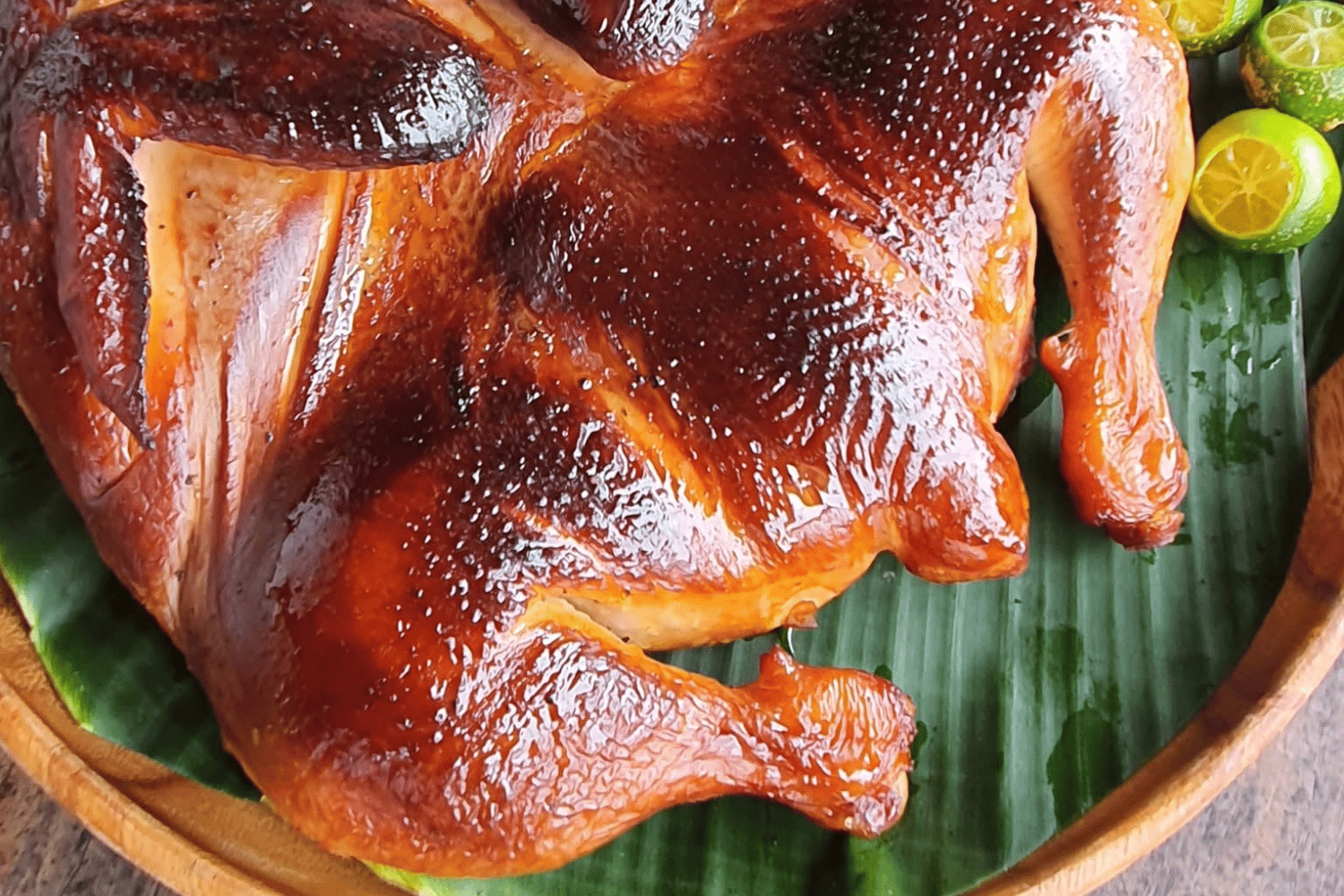
The skin is glossy and golden brown, while the meat underneath remains juicy, savory and deeply smoky.
You sit down for breakfast and spot something golden brown and smoky beside a mound of steaming rice. At first glance, it looks like the usual roasted chicken. Then you take a bite and taste something unmistakably familiar: tinapa.
For generations, Filipinos have associated tinapa with fish—bangus, galunggong or tamban, salty and smoky and often served with tomatoes and salted egg.
But who said tinapa has to swim?
In parts of Bulacan and Pangasinan, the familiar Filipino smoking tradition has found its way to another staple of the dining table: chicken.
Tinapang manok takes the basic idea behind traditional tinapa—seasoning or brining food before exposing it to smoke—and applies it to a whole or butterflied chicken. The result is something that looks almost like lechon manok but tastes distinctly different.
The skin emerges glossy and golden brown, while the meat underneath remains juicy, savory and deeply smoky.
Tinapa is a process, not just a fish
Filipinos have become so accustomed to associating tinapa with fish that the word itself has practically become synonymous with smoked fish.
But at its heart, tinapa refers to food preserved or flavored through smoking. That means the technique doesn’t necessarily have to stop with bangus or tamban.
Tinapang manok simply takes an old Filipino food tradition and gives it a different protein.
Traditional makers can prepare the chicken using smoking facilities similar to those used for fish. The bird is typically seasoned or brined before being cooked and exposed to smoke, allowing the aroma to penetrate the meat while giving the exterior its characteristic color.
The result brings together two familiar Filipino flavors: the juicy satisfaction of roasted chicken and the unmistakable smokiness associated with tinapa.
You can even make it at home
No traditional tapahan? Home cooks have developed shortcuts.
One method starts by soaking a whole chicken in a brine of water, salt, brown sugar, soy sauce, garlic, ginger, pepper and bay leaves. Liquid smoke can be added to mimic the flavor produced by a traditional smoker.
After several hours of marinating, the chicken is dried, partially cooked and brushed with a mixture of atsuete, oil and sugar before going into an oven or turbo broiler.
At around 180°C, it can be roasted until the skin turns caramelized and golden and the meat is completely cooked through. For food safety, chicken should reach an internal temperature of at least 74°C.
Serve it with garlic rice and sawsawan made with soy sauce, calamansi and sili, and suddenly breakfast begins to look very different.
Tinapang manok may sound unusual at first, especially for generations of Filipinos who grew up believing tinapa belonged beside tomatoes and salted egg.
But perhaps that is exactly what makes it interesting.
Tinapa, after all, doesn’t have to be a fish.
Sometimes, it can cross the road too.
READ: