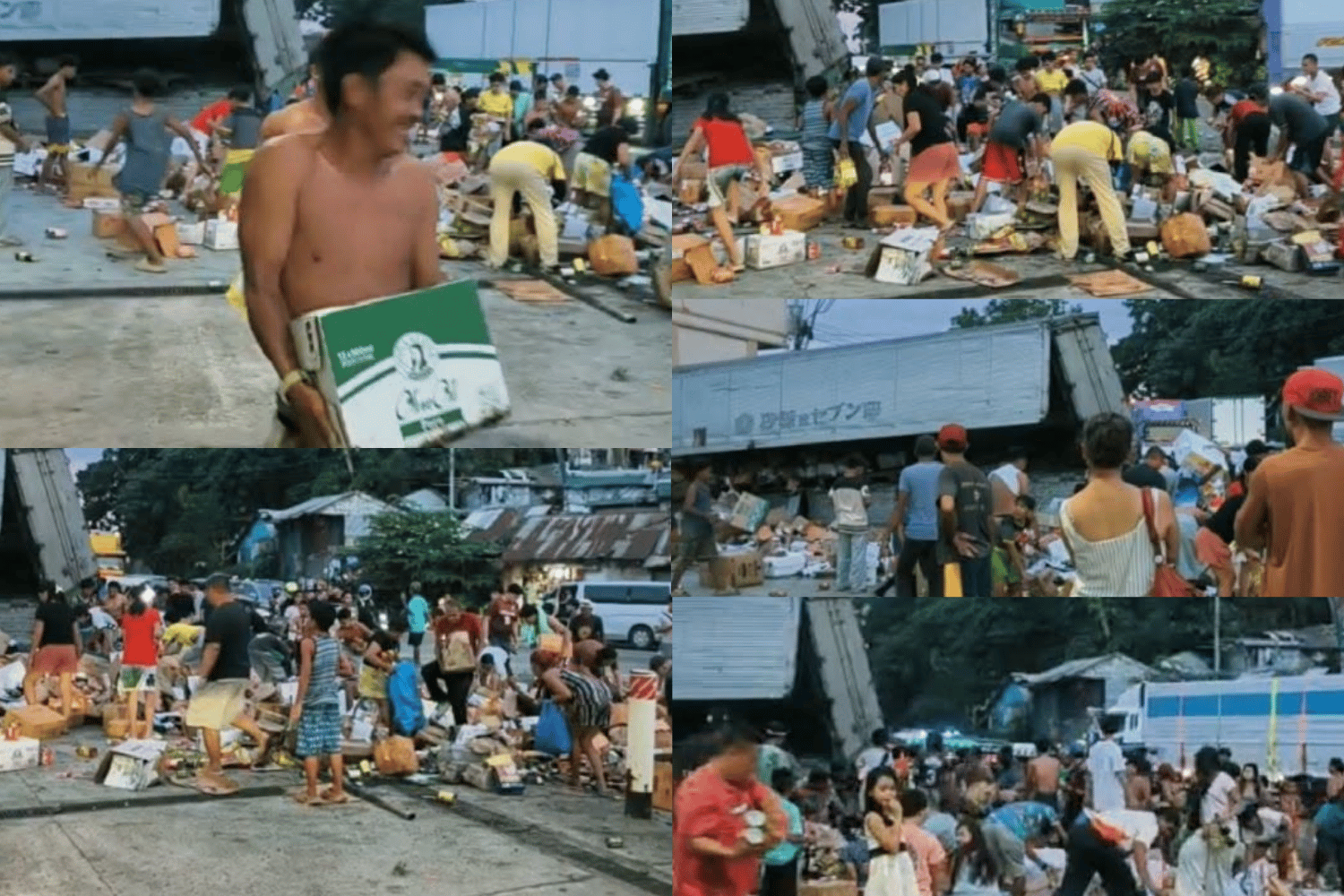
Photos accompanying the post showed the truck stopped near several houses, with boxes and other cargo scattered across the road. Dozens of people had gathered around the area, with some photographed carrying boxes away from the scene.
The circumstances surrounding the removal of the goods remain unclear. It has not been independently established whether those seen carrying the cargo had permission from the truck operator or owner. The condition of the driver and helper was also not stated in the original post.
Still, the images triggered criticism from social media users who questioned why people appeared more interested in the scattered merchandise than in helping those involved in the crash.
“Tumulong—X. Magnakaw—check,” one commenter wrote.
Another asked: “Kawawa naman po. Kamusta po kaya ang driver at pahinante?”
“Dapat po sa ganyan tulungan muna ang driver at pahinante bago kuhain ang karga ng truck nila,” another said.
Other commenters sarcastically described the scattered goods as “ayuda” or free groceries, while some criticized what they viewed as opportunistic behavior following an accident.
The incident raises a basic distinction often lost when cargo spills onto a public road: goods do not automatically become free for the taking simply because they have fallen from a vehicle.
If the people photographed were taking merchandise without the owner’s consent, the behavior would go beyond an embarrassing display of opportunism. The priority at any crash scene should be checking for injured people, contacting emergency responders and keeping the area safe—not treating another person’s misfortune as an opportunity to take property.
The viral images are especially jarring against the Filipino tradition of bayanihan, often celebrated whenever communities rush to help strangers during fires, floods and road accidents.
In an emergency, the instinct should be to ask who needs help.
Not what can be taken home.
READ: