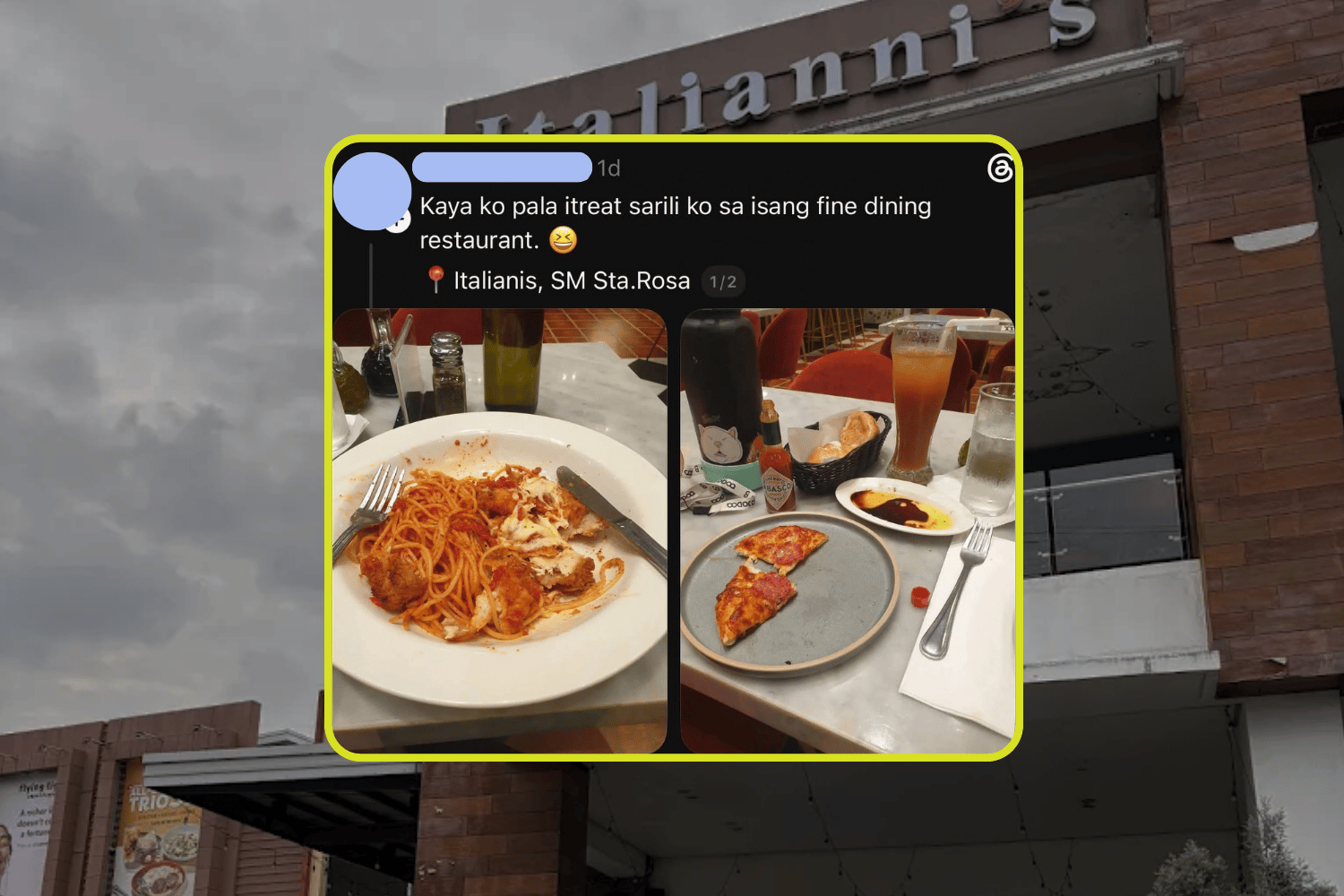
Italianni’s, they pointed out, is not technically fine dining. It is a casual dining restaurant. But as the criticism piled on, Cyrille Joy Tolon offered another way of looking at the post.
“Luxury is subjective to your privilege and circumstances,” she wrote.
And with that, an argument over restaurant categories became a much bigger conversation about class, privilege and what luxury actually means.
There is, of course, a conventional definition of fine dining. It generally involves elevated service, sophisticated food and presentation, carefully curated surroundings and, usually, significantly higher prices. Under that definition, Italianni’s belongs to a different restaurant category.
But that technical distinction does not necessarily describe how a meal feels to the person paying for it.
For someone earning comfortably, a ₱500 meal may be an ordinary lunch. For a minimum-wage worker, it can represent hours of labor. For a student living on an allowance, being seated at a restaurant and ordering from a menu instead of eating at a fast-food counter can already feel extravagant.
The comments under Tolon’s post revealed how dramatically our definitions of luxury change depending on where we started.
One commenter remembered proudly eating alone at Cibo after receiving a first salary. Another recalled growing up poor and how bringing home a tub of ice cream, a whole roast chicken and a liter of Coke would make the family wonder whether there was a special occasion.
“Sa ibang tao nga luxury na ang Jollibee,” another wrote.
Tolon also compared the incident with the viral story of a teenager who proudly called a Charles & Keith bag her “first luxury bag,” only to have strangers tell her that the brand was technically not luxury.
Both episodes expose the same tension.
There is luxury as a market category, and there is luxury as lived experience.
The first can be classified through price, exclusivity, service and brand positioning. The second is measured against a person’s circumstances, income and memories.
Calling Italianni’s fine dining may be technically inaccurate. But correcting the terminology and ridiculing someone’s achievement are two very different things.
For people accustomed to abundance, luxury may mean increasingly exclusive restaurants, designer labels and expensive hotels.
For someone who grew up counting every peso, luxury can be much simpler.
Sometimes, it is finally sitting inside a restaurant you once thought you could never afford—and realizing that this time, you can.
READ: