There is a perfectly reasonable argument behind the government’s decision to rebid the Semirara coal concession. Semirara is one of the country’s most valuable natural-resource assets, and the State should obviously try to secure a fair economic return from it.
The problem is that there comes a point when chasing a bigger deal starts creating costs of its own. With Semirara, after months of postponements, shifting timelines and eventually the cancellation of the entire bid round, we may already be approaching that point.
The clock is already running
The Department of Energy opened the 2026 coal bid round earlier this year, including the ten coal blocks on Semirara Island currently operated by Semirara Mining and Power Corporation, or SCC. The timetable was later postponed, revised and eventually terminated in September so government could reassess the parameters for awarding the new coal operating contracts.
There are legitimate reasons for DOE to reconsider the rules. Government wants better economic returns from a proven natural resource, while prospective bidders have raised real questions about operating conditions and what exactly a successor would inherit.
But SCC’s existing contract expires in July 2027. Every extension and restart leaves less time for SCC, DOE and any possible replacement operator to prepare for what comes next.
That would already be concerning for an ordinary mine. Semirara is anything but ordinary.
The operating risk is getting harder to ignore
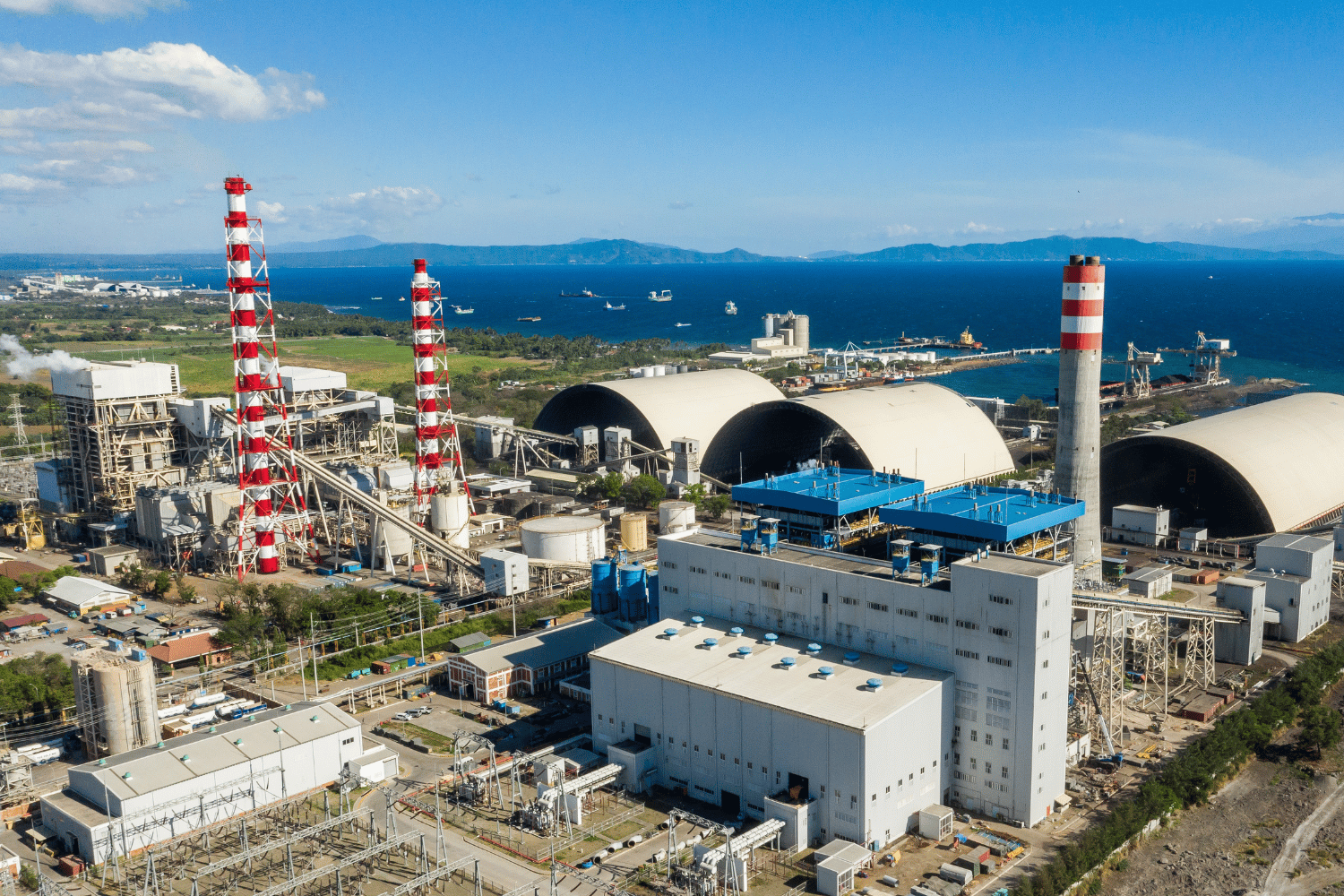
SCC recently disclosed that seawater seepage at its Acacia mine has increased to around 30,000 cubic meters per hour, already beyond its existing pumping capacity. Part of its stripping operations has been affected while the company undertakes remedial work, and a longer-term solution will require substantial investment in pumping equipment, power systems and related infrastructure.
This is obviously bad news for SCC operationally. Strategically, however, it also makes one thing much clearer: Semirara cannot simply be treated as a piece of paper that government awards to whoever writes the biggest number on bidding day.
Operating the mine requires specialized equipment, an experienced workforce and, more importantly, accumulated knowledge of the mine itself. Managing a pit where seawater is entering faster than the existing pumps can remove it is a pretty good illustration of the difference between technically qualifying as a miner and knowing how to operate Semirara.
DOE itself has acknowledged the problem. When it cancelled the previous round, it cited the water seepage and the legal dispute involving coal-operation assets as uncertainties that could affect the operating plans and bidding strategies of prospective operators.
Uncertainty has a price
The bigger problem is that uncertainty changes how SCC itself behaves.
Mining requires continuous investment. If SCC knew it would be operating Semirara for another couple of decades, spending heavily today on pumps, power systems and long-term mine development would be much easier to justify. If the company may have to hand the operation to someone else next year, the economics change considerably.
Why should SCC shareholders finance long-lived infrastructure when another operator may capture much of the eventual return? That is simply a capital-allocation question.
The result is an uncomfortable feedback loop. The longer the concession remains unresolved, the less incentive SCC has to commit long-term capital. The less it invests, the greater the risk that the operation becomes more difficult and expensive for whoever eventually takes over.
At some point, the effort to extract a larger government share can start reducing the value of the asset from which that share is supposed to come.
As if there were no energy crisis
This would be less worrying if Semirara were economically insignificant. It is not.
SCC accounts for the overwhelming majority of domestic coal production, which means continuity at Semirara has implications well beyond the fortunes of one listed company.
The timing is also particularly strange. Only in March, the Philippines declared a state of national energy emergency amid concerns over global fuel supply and prices. Government subsequently introduced emergency measures aimed at protecting electricity supply and conserving fuel.
Against that backdrop, the repeated delays surrounding the country’s dominant domestic coal operation deserve considerably more urgency.
There are also people behind all of this. SCC has already announced workforce reductions as it adjusts operations, and Semirara supports a much larger economic ecosystem around the mine. When mining activity falls, the effects do not end with SCC employees. Families lose income, contractors lose work and businesses in the surrounding community lose customers.
A disorderly transition could therefore mean falling production, substantial job losses, damaged livelihoods and a technically compromised operation at precisely the time the country is supposed to be worrying about energy security.
The San Miguel question
This is where San Miguel becomes particularly interesting.
San Miguel has a logical reason to want access to Semirara. Its power business consumes substantial amounts of coal, so a large domestic source has obvious strategic value. But wanting the coal and wanting to replace SCC as the actual operator are different propositions.
If San Miguel eventually wins the concession, it inherits whatever mine exists on day one. It still has to deal with the water, equipment requirements, infrastructure and workforce continuity. More importantly, it has to recreate or somehow acquire decades of operating knowledge that SCC already possesses.
Meralco PowerGen appears to have considered this problem. MGEN initially explored participating in the auction, then decided against submitting a direct bid and instead discussed the possibility of partnering with SCC. Its CEO specifically pointed to SCC’s existing equipment and operating advantage.
That becomes even more interesting now that the Acacia problem has become more serious.
San Miguel could conceivably outbid SCC and still find that the cheapest and least risky way to operate Semirara involves working with SCC in some capacity. That could involve equipment, personnel, operating services or some broader commercial arrangement.
Winning the concession and replacing SCC economically are two separate problems.
Two audiences
This is why SCC’s recent statements are worth reading beyond their immediate operational content. The company appears to be speaking to two particularly important audiences.
The first is DOE. SCC wants government to understand that the value of Semirara depends on more than how much a bidder promises on paper. Operating continuity matters, and months of uncertainty can slowly make the asset more difficult to operate.
The second is San Miguel. SCC does not have to convince San Miguel that Semirara is valuable. San Miguel already knows that. SCC only has to make clear how expensive it could be to remove the incumbent operator from the equation.
That is a fairly powerful position to be in.
When more becomes less
Government is right to want a better deal for the Filipino people. There is nothing wrong with trying to secure better returns from a valuable State resource.
But there is a difference between extracting more value and simply asking for more.
A higher government percentage means little if production falls sharply. A more aggressive winning bid can eventually become a liability if the winner has to spend enormous amounts simply keeping the mine operating. Whatever additional revenues government hopes to secure also have to be weighed against the jobs, livelihoods and economic activity that could disappear if the transition goes badly.
The repeated extensions, revisions and cancellation are therefore becoming part of the risk themselves. The mine is not standing still while government perfects the bidding rules. SCC is making investment decisions now, workers are being affected now, and the physical condition of the mine continues to change.
There is still time to get this right. But government should be careful that, in chasing a bigger deal from Semirara, it does not end up creating a much bigger problem.
Disclosure: The author holds a small position in SCC.
READ:
San Miguel Food and Beverage profit falls 4% in first half as consumers cut back
radar Business
August 6, 2026

OPINION: Semirara, coal, and the difference between risk and ruin
Von Cuerpo
February 18, 2026
San Miguel Corp. revenues surge 34% in H1, but net income plunges 43%
Kenneth M. del Rosario
August 18, 2026