You probably remember picking these tiny, pale green fruits from a backyard tree, dipping them in salt, and immediately making a face because of their intense sourness. But ask someone what the fruit is called, and chances are they might not know the answer.
Meet karamay, one of the Philippines’ familiar yet often overlooked native food traditions.
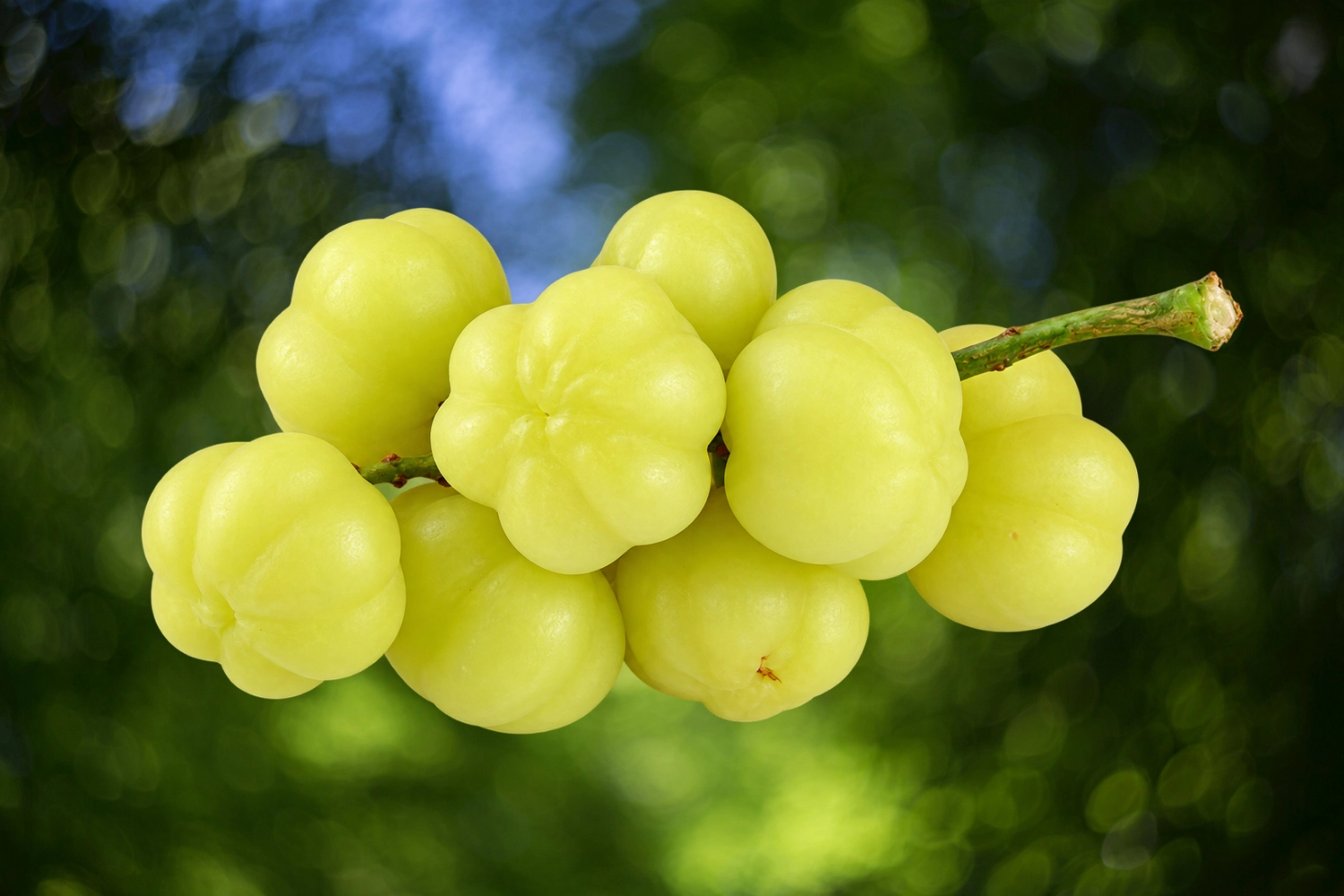
Scientifically known as Phyllanthus acidus, karamay is called star gooseberry in English. Depending on where you grew up, you might know it as iba, iba insik, or bangkiling.
Its small, rounded fruits have distinctive ridges resembling miniature pumpkins. They grow in clusters along the branches of trees, turning from pale green to yellowish as they ripen.
A sour taste of childhood
Karamay is famous for its sharp, mouth-puckering sourness. Its crisp, juicy flesh delivers an immediate acidic kick, somewhat reminiscent of kamias, although the two fruits differ in texture and botanical classification.
For many Filipinos, the simplest way to enjoy karamay is with rock salt. Others prefer soaking it in vinegar and salt, while some households turn the fruit into sweetened preserves, candies, or pickles.
In certain communities, it is also used as a natural souring ingredient in traditional dishes.
A fruit that’s becoming harder to find
Karamay was once a familiar sight in many provincial backyards, particularly in Northern Luzon, where the fruit remains part of local food traditions.
Today, however, it is less visible in many urban neighborhoods and mainstream fruit markets.
Unlike commercially cultivated fruits such as mangoes and bananas, karamay has a limited presence in large-scale retail. Its seasonal harvests, delicate nature, and relatively low commercial demand help explain why younger Filipinos may be less familiar with it.
Still, there is no comprehensive national data establishing how much its cultivation has declined.
More than just a fruit
Karamay contains vitamin C and naturally occurring antioxidant compounds. But its cultural value may be just as important as its nutritional qualities.
For Filipinos who remember climbing trees, sharing freshly picked fruits with childhood friends, and reaching for a pinch of salt, karamay represents a simpler kind of pleasure.
It’s one of those fruits many Filipinos recognize instantly by sight and taste, even when its name escapes them.
And perhaps that’s why karamay deserves to be remembered before another generation grows up without knowing it.