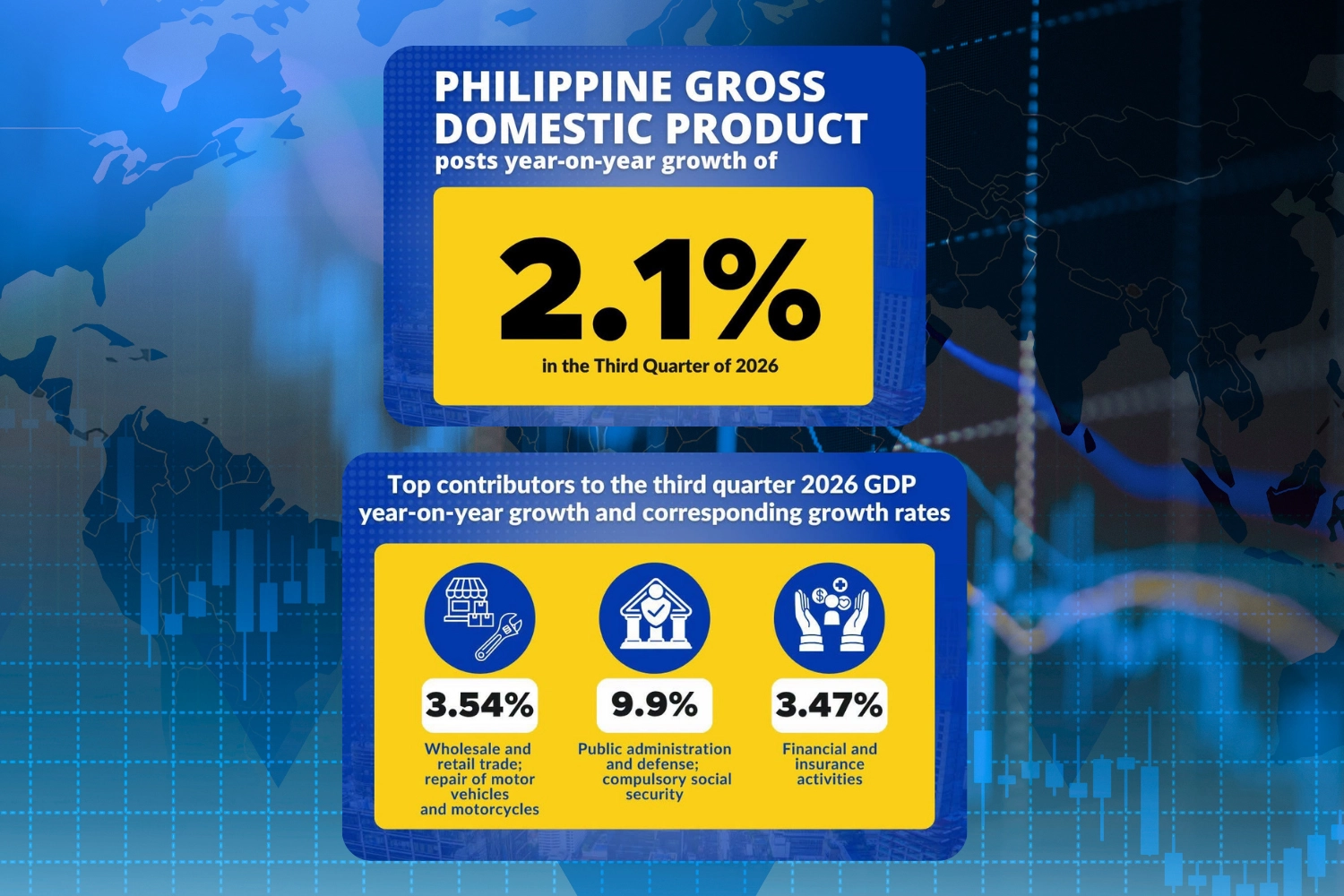
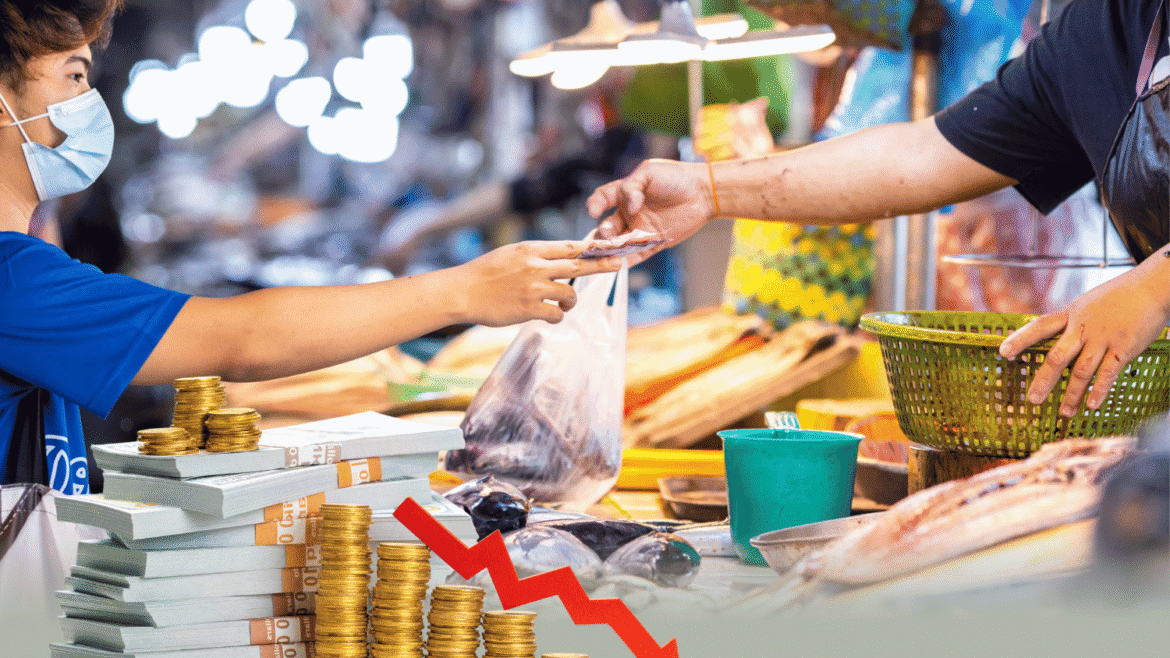
The Philippine economy expanded by just 2.1 percent in the third quarter of 2026, according to the Philippine Statistics Authority (PSA), signaling sluggish economic activity as household spending weakened and two major sectors contracted.
In its November 9 report, the PSA confirmed that the country’s gross domestic product (GDP), the broadest measure of economic output, grew by only 2.1 percent from July to September compared with the same period last year.
The figures reveal an economy struggling to gain momentum despite continued growth in services, government spending, and exports.
Agriculture and industry struggle
Agriculture, forestry, and fishing suffered a 4.8 percent contraction, while industry registered a marginal decline of 0.003 percent.
Services remained the economy’s primary growth engine, expanding by 3.7 percent.
Among the activities supporting economic growth were public administration and defense, which expanded by 9.9 percent; wholesale and retail trade, including vehicle repairs, at 3.54 percent; and financial and insurance activities at 3.47 percent.
Filipino households spend cautiously
Household consumption, traditionally the biggest driver of the Philippine economy, grew by just 2.4 percent.
The modest increase suggests limited momentum in consumer spending, an important indicator of economic confidence and purchasing power.
Government consumption grew by 6.8 percent, while exports of goods and services increased by 8.6 percent.
Imports also climbed by 7.7 percent.
Meanwhile, gross capital formation, a measure of investment activity, declined by 0.2 percent, suggesting weakness in capital spending.
What this means for Filipinos
The disappointing GDP figures raise questions about the economy’s ability to generate stronger business activity, employment opportunities, and household income growth.
Although the economy continues to expand, the latest numbers show that growth remains uneven, with services carrying much of the momentum while agriculture and industry struggle.
Gross National Income increased by 2.7 percent, while net primary income from the rest of the world grew by 6.6 percent.
For ordinary Filipinos, the challenge is whether economic growth can translate into better wages, more jobs, and stronger purchasing power.
The latest figures suggest that the Philippine economy still has considerable ground to recover.