Government assistance should always prioritize the poorest of the poor. That much is easy to agree on. But they aren’t the only Filipinos who are struggling to make ends meet.
The government’s expanded Unified Package for Livelihood, Industry, Food and Transport (UPLIFT) program, for instance, provides up to ₱8,000 in assistance to qualified Social Security System (SSS) members with monthly salary credits of ₱10,000 or less. The four-tranche assistance, worth ₱2,000 each, started being credited to beneficiaries’ registered SSS disbursement accounts on October 30.
While the expanded coverage brings additional support to low-income workers, it also puts the situation of those outside the eligibility threshold into perspective. One question captures the frustration of many in this situation: “Paano naman kaming mga nagtatrabaho?”
This isn’t an argument against helping poorer Filipinos. Rather, it points to the difficult position of workers who earn too much to qualify for certain forms of assistance but too little to feel financially secure.
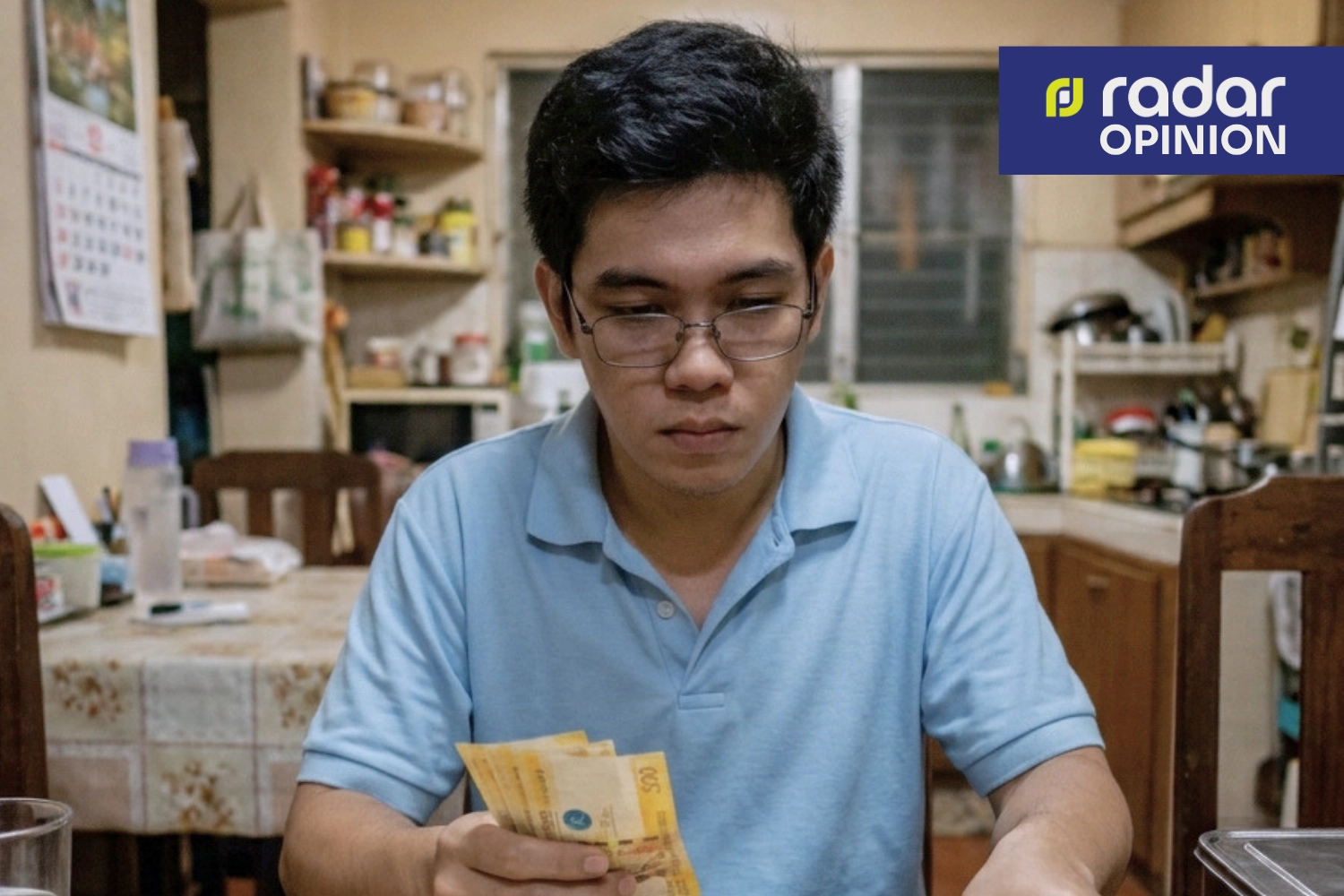
For many employed Filipinos, a monthly salary is already divided among rent, groceries, transportation, utilities, taxes, and mandatory contributions. By the time these obligations are settled, there may be very little left for savings, emergencies, or even a little breathing room before the next payday.
The situation also brings minimum-wage earners, voluntary SSS members, and self-employed individuals into the discussion, as some find themselves outside existing assistance programs despite struggling with the same rising costs. A possible tiered approach that considers both declared income and contribution history is also worth examining, particularly if the goal is to extend support to more people without losing sight of those who need it most.
Financial hardship doesn’t begin and end with the poorest income bracket.
Having a job and receiving a regular salary do not automatically translate to financial security. For some households, a paycheck provides a degree of stability. For others, it barely covers the necessities, leaving little room to absorb another increase in fuel prices, a higher electric bill, or an unexpected expense.
Of course, government resources are limited. No assistance program can cover everyone equally, and prioritizing households with the greatest need is a reasonable policy choice. But this shouldn’t mean overlooking those who are only slightly better off financially yet continue to struggle to make ends meet.
These Filipinos may not need the same level or kind of assistance as the poorest of the poor, but they deserve consideration in the government’s social protection programs, too. After all, the ability to earn a living shouldn’t be mistaken for the ability to live comfortably.
That’s the point.