The rare disease behind Julie Vega’s death — and the urban legends that it inspired

When people talk about Julie Vega decades after her death, the conversation almost always drifts toward urban legends.
Some remember the haunting story that her record player allegedly turned on by itself after her burial, playing her signature song “Somewhere in My Past” in the middle of the night. Others recall whispers that she had been cursed by engkantos after filming a horror-themed television episode in Bulacan. The darker versions even claimed she had been buried alive.
For many Filipinos who grew up in the 1980s and 1990s, Julie Vega’s story became more than a celebrity tragedy. It became folklore.
Yet behind the ghost stories was a heartbreaking reality: a gifted young star whose life was cut short by a rare illness that few people understood at the time.
The Princess of Philippine soap operas
Born Julie Pearl Apostol Postigo in 1968, Vega was one of the brightest young stars of her generation. She became a household name through the hit television drama Anna Liza, earning the title “Original Soap Opera Princess.”
She was more than just a child actress. Vega was a two-time FAMAS Best Child Actress winner, a commercial darling, and a promising singer whose hit song “Somewhere in My Past” remains one of the most recognizable OPM recordings of the era.
By the mid-1980s, her future appeared limitless.
Then, suddenly, everything changed.
When facts couldn’t keep up
In 1985, Vega’s health rapidly deteriorated. She became weak and exhausted, eventually being hospitalized. On May 6, 1985, just days before her 17th birthday, she died after suffering cardiac arrest.
Medical reports attributed her death to complications from a demyelinating disease, a rare neurological condition that damages the protective covering of nerve cells. Many accounts have linked her illness to a form of Guillain-Barré Syndrome, further complicated by bronchopneumonia and extreme physical stress.
Today, information about such conditions is readily available online. In 1985, it was not.
For many Filipinos, a healthy teenage superstar becoming gravely ill almost overnight seemed impossible to explain. The lack of public understanding created fertile ground for speculation.
The curse of Mount Manalmon
The most famous legend emerged from Vega’s participation in Akin Ang Walang Diyos, a horror-drama episode filmed near Mount Manalmon in Bulacan.
Rumors spread that the production had disturbed supernatural beings during filming. Stories circulated about mysterious sightings on set. Some claimed local spirits had been offended. Others alleged that Vega’s soul had been taken by engkantos.
The timing appeared uncanny to believers. She became seriously ill shortly after the shoot, fueling the myth for years.
No evidence ever supported the claims, but the story endured because it provided a dramatic explanation for an event that seemed incomprehensible.
Why the legend refused to die
Urban legends often emerge when tragedy arrives without warning.
Julie Vega was young, successful, beloved, and seemingly healthy. Her death shattered the public’s expectations. The supernatural stories filled the emotional gap left behind by unanswered questions.
In many ways, the myths reveal less about Julie and more about the Philippines of the 1980s—a time when rare neurological diseases were poorly understood and supernatural explanations still occupied a powerful place in popular imagination.
Somewhere in the past
More than four decades later, the stories remain.
But beyond the tales of haunted record players and offended spirits is a simpler truth: Julie Vega was a remarkable young performer whose life ended far too soon because of a devastating illness.
The urban legends may have kept her memory alive, but her real legacy lies elsewhere—in the songs she sang, the characters she brought to life, and the generations of Filipinos who continue to remember the girl who became a star long before her time.
READ:
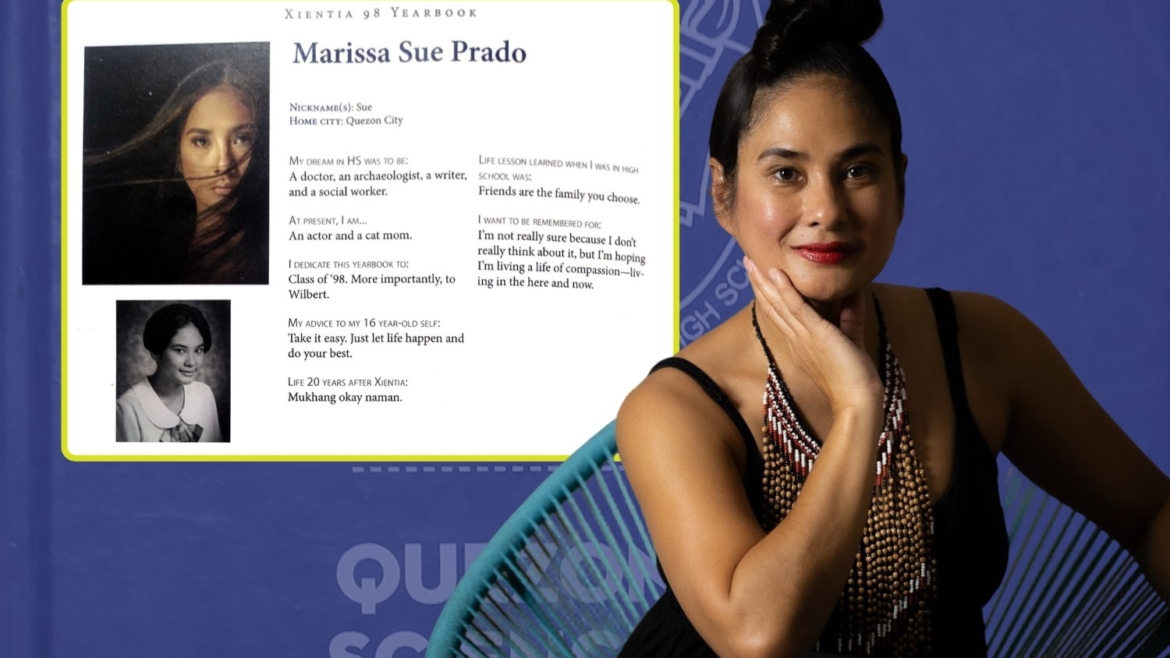
Sue Prado’s now-viral yearbook profile brims with wisdom, humility
Nikko Miguel Garcia
April 17, 2026

Miguel Rodriguez: The ‘Pinoy Superman’ who burned bright, and left too soon
radar Entertainment
May 2, 2026

When Weng Weng became the highest-exported film of its time
radar Entertainment
May 23, 2026