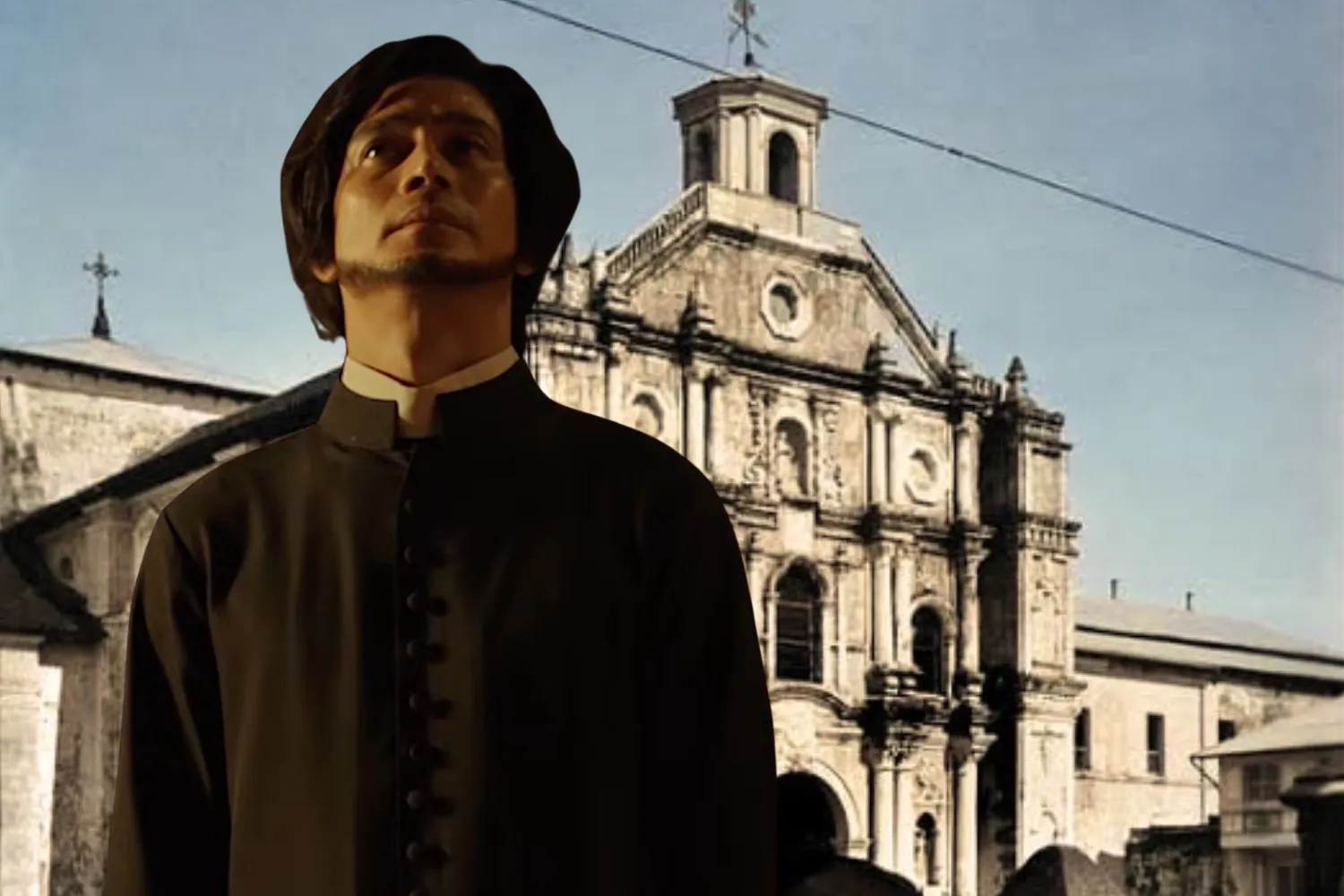
A respected parish priest celebrates Mass, hears confessions, and ministers to his flock. But in the quiet town of Magalang, Pampanga, residents begin turning up dead, their bodies reportedly stabbed or hacked.
The terrifying twist? The man entrusted with saving their souls is the one accused of taking their lives.
This is the chilling history of Fr. Juan Severino Mallari, widely regarded as the Philippines’ first documented serial killer and the inspiration behind the 2023 Metro Manila Film Festival horror movie “Mallari,” starring Piolo Pascual.
The priest behind the murders
Born in Pampanga in 1785, Mallari was an educated Filipino priest who studied theology at the University of Santo Tomas. He was also known for his exceptional calligraphy.
In 1813, he became parish priest of Magalang, Pampanga, during the Spanish colonial period.
Historical accounts attribute 57 murders to Mallari between 1816 and 1826, making his case one of the earliest documented serial murder cases in Philippine history.
His alleged motive was as disturbing as the crimes themselves.
Mallari reportedly believed his seriously ill mother was a victim of witchcraft. Convinced that killing suspected perpetrators would break the supposed spell, he allegedly murdered townspeople over several years.
Later interpretations suggest that Mallari may have experienced serious psychological disturbances, although no definitive modern psychiatric diagnosis can be established.
Historian and psychiatrist Dr. Luciano P. R. Santiago documented the case in his 2002 book “Laying the Foundations: Kapampangan Pioneers in the Philippine Church, 1592–2001.” His research helped bring the largely forgotten priest’s crimes back into public discussion.
The discovery and execution
Mallari’s killing spree eventually ended, and Spanish colonial authorities imprisoned him.
In 1840, he was executed by hanging, 32 years ahead of the execution of the three Filipino priests GomBurZa in 1872.
Santiago later questioned the handling of Mallari’s case, arguing that psychiatric treatment at Hospicio de San Jose might have been more appropriate than prolonged imprisonment and execution.
What the movie invented
Director Roderick Cabrido and screenwriter Enrico Santos transformed the historical tragedy into the 2023 horror film “Mallari.”
Piolo Pascual portrayed three characters across different historical periods, connecting the original priest to fictional descendants through supernatural curses and time travel.
The movie introduced an aswang transformation, human flesh consumption, occult rituals, and a family curse.
None of these supernatural elements is established by historical evidence. They were fictional additions to a documented criminal case.
The real horror
The historical Mallari case is disturbing precisely because it requires no supernatural explanation.
A priest allegedly murdered 57 people while believing he was saving his mother from witchcraft.
The exact circumstances remain difficult to reconstruct from surviving records, but the case exposes a terrifying intersection of religious authority, superstition, violence, and poorly understood mental illness.
The movie needed monsters and curses to frighten audiences.
The real story needed only one man wearing a priest’s cassock.