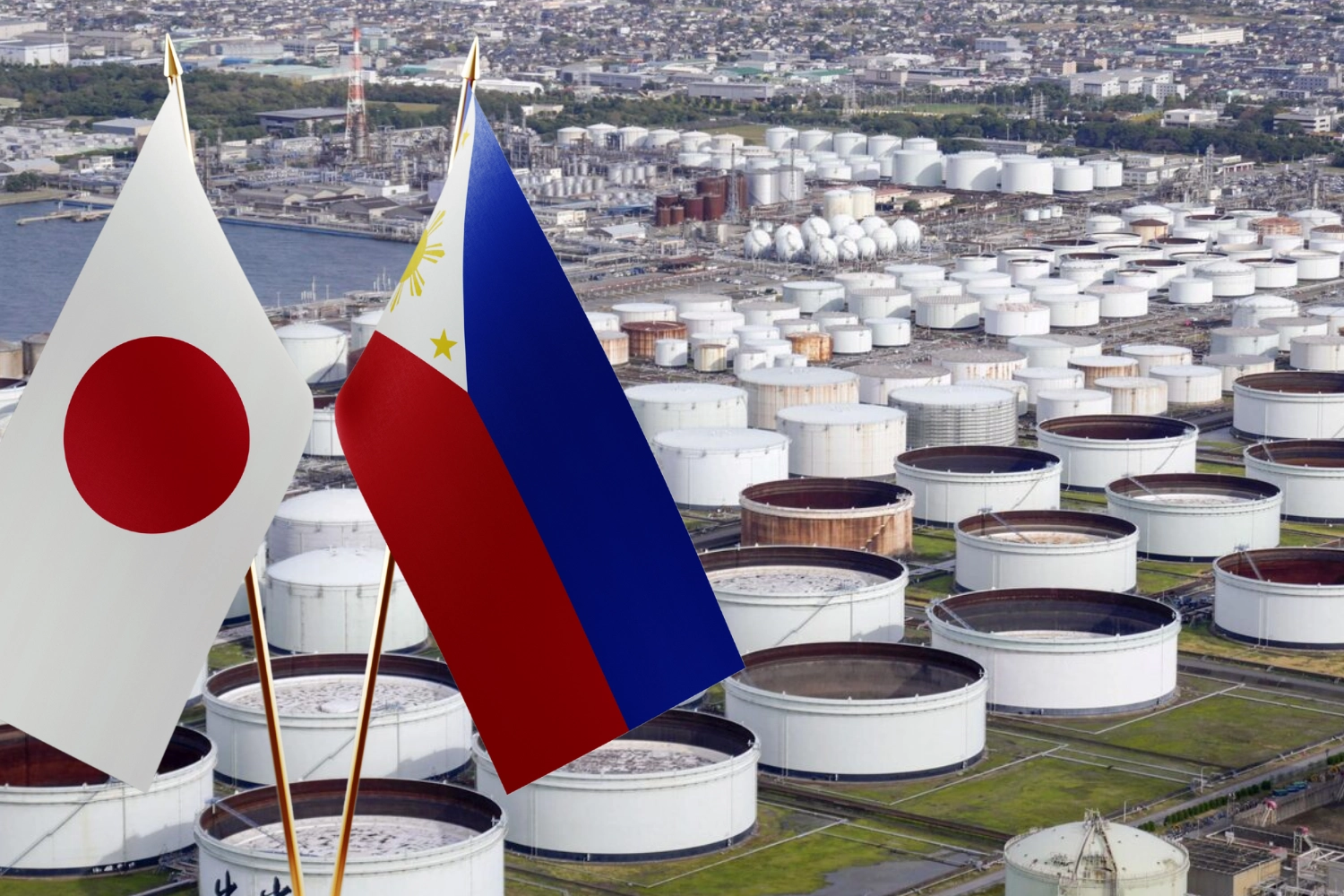
The Philippines could eventually store emergency oil supplies in Japan under a proposed regional stockpiling arrangement, giving the country another option to secure fuel when global disruptions threaten supplies and drive up prices.
Japanese Prime Minister Sanae Takaichi offered the use of idle oil storage facilities in Japan during the 4th Asia Zero-Emission Community Leaders’ Meeting in Manila on November 17, with the arrangement intended to support a Philippines-led regional stockpiling scheme.
The proposal comes as Asian economies remain exposed to disruptions in oil shipments from the Middle East, particularly through the Strait of Hormuz, a critical passage for global petroleum trade.
The arrangement could provide the Philippines, an oil import-dependent nation, access to emergency supplies without requiring the country to immediately build all the storage facilities needed for a strategic petroleum reserve.
This could help protect motorists, commuters, transport operators, and businesses from shortages when international supply routes are disrupted, giving the government additional stocks to draw from during emergencies.
The country had oil reserves equivalent to 53 days of domestic consumption as of May 3, while Japan’s public and private stockpiles could cover 207 days of consumption.
Under Takaichi’s proposal, participating Asian countries could store crude oil purchased from the Middle East or other suppliers in unused Japanese facilities and access those supplies when needed.
The Japanese government said the initiative would be coordinated with the Philippines-led ASEAN regional joint stockpiling scheme, although the participating countries, oil volumes, financing arrangements, and rules governing the release of supplies have yet to be finalized.
Separately, the Philippines and Japan signed a Memorandum of Cooperation on November 16 to develop the country’s strategic petroleum reserves.
The agreement, signed by the Department of Energy and the Japanese Ministry of Economy, Trade and Industry, provides a framework for developing oil storage infrastructure, conducting feasibility studies, and identifying possible financing arrangements.
It also allows Japanese companies to explore participation in Philippine National Oil Company-led commercial stockpiling projects.
The Department of Energy said the cooperation would run for three years after the required domestic procedures are completed.
However, access to emergency oil stocks should not be mistaken for a guarantee of cheaper fuel, as the arrangement is primarily designed to improve supply security and give governments more options during disruptions.
Its impact on consumers will depend on how much oil the Philippines can secure, how quickly reserves can be accessed, and whether the government can effectively release the supplies when market conditions deteriorate.