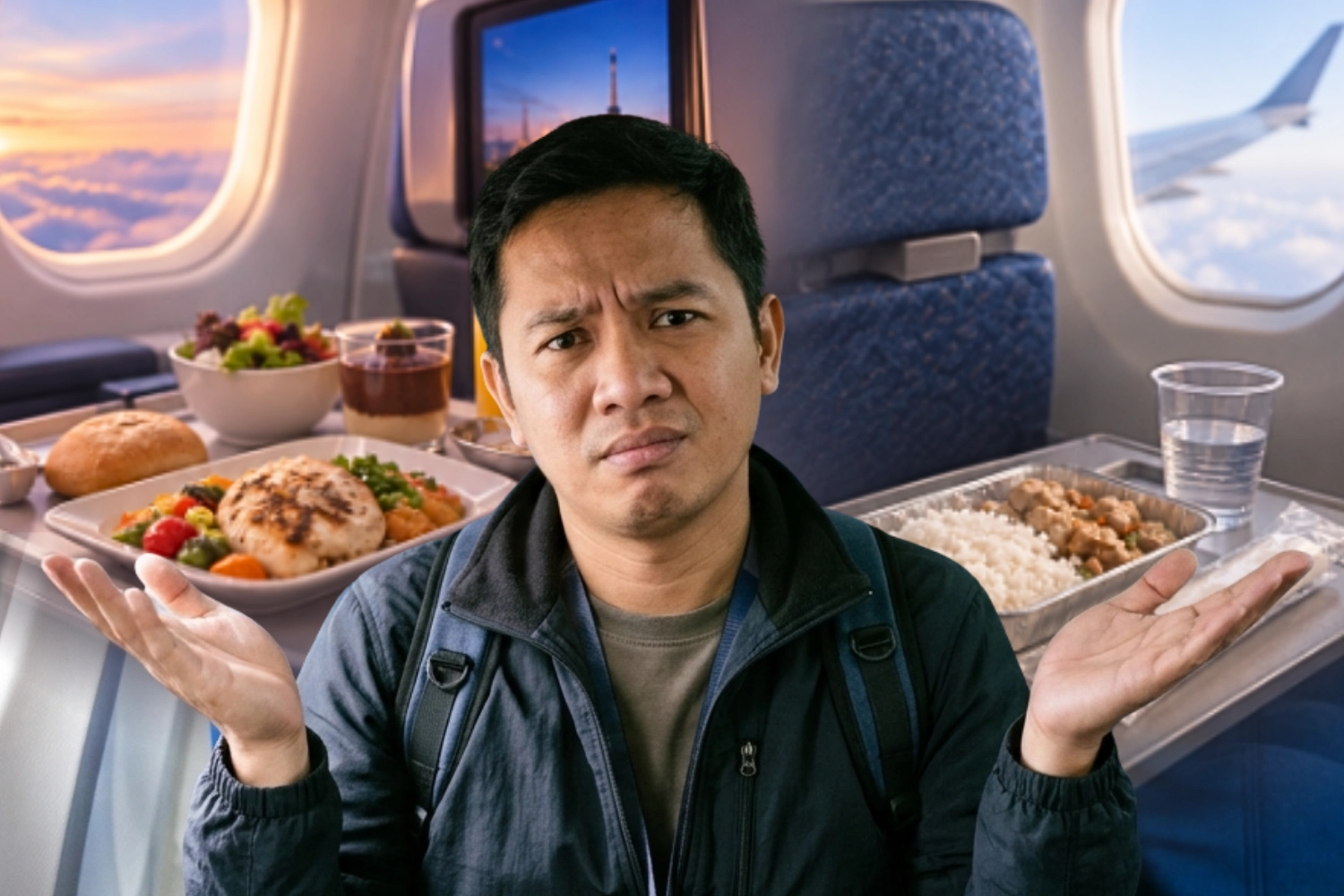
“Are they really treating us differently or lower market price point kasi?” the user asked, citing older aircraft, basic meals, incomplete amenities, and distant boarding gates.
Other travelers shared similar experiences involving Emirates, Qatar Airways, Cathay Pacific, and Etihad Airways.
One passenger claimed that a Cathay Pacific flight between Manila and Hong Kong offered only chicken rice and water, while another flight involving Hong Kong and Taipei provided a more substantial meal.
But are international airlines really treating Manila differently?
It’s about revenue, not just passengers
Airlines do not necessarily assign their newest aircraft to routes with the most passengers. They consider how much revenue each flight generates.
Manila serves substantial numbers of overseas Filipino workers, leisure travelers, and families visiting relatives.
These markets can be price-sensitive, with stronger demand for Economy Class than expensive premium seats.
Meanwhile, routes attracting corporate travelers willing to pay higher fares may justify aircraft with larger Business Class cabins and upgraded amenities.
A fully booked flight does not automatically mean higher profits. Ticket prices, operating costs, cargo revenue, and premium-class demand also matter.
Why some flights get older planes
Airlines frequently operate different versions of the same aircraft.
A Boeing 777 serving Manila may have an older cabin, different entertainment system, or more Economy Class seats than another Boeing 777 flying to London.
Aircraft assignments depend on passenger demand, fleet availability, maintenance, and profitability.
However, there is no established evidence that international airlines systematically reserve their oldest aircraft for Manila.
Why the food is different
Airline meals depend on flight duration, departure time, cabin class, and catering arrangements.
On shorter routes such as Manila–Hong Kong, airlines have limited time to complete meal service.
Even flights of similar duration may offer different menus because of catering contracts, schedules, and airline policies.
Why Manila flights get distant gates
At major airports such as Dubai and Doha, gate assignments depend on aircraft size, available facilities, flight schedules, and operational requirements.
Passengers may encounter remote gates or long walks regardless of destination.
A distant gate does not necessarily mean Manila flights receive lower priority.
Are Filipinos really getting less?
The Threads discussion raises a legitimate concern about consistency in international airline service.
Airlines make commercial decisions based on route economics, which can influence aircraft configurations and onboard amenities.
However, individual passenger experiences do not establish that Manila routes are deliberately given inferior service.
For Filipinos paying substantial amounts for international tickets, the expectation remains reasonable: They deserve the service and amenities promised by the airline, regardless of their destination.