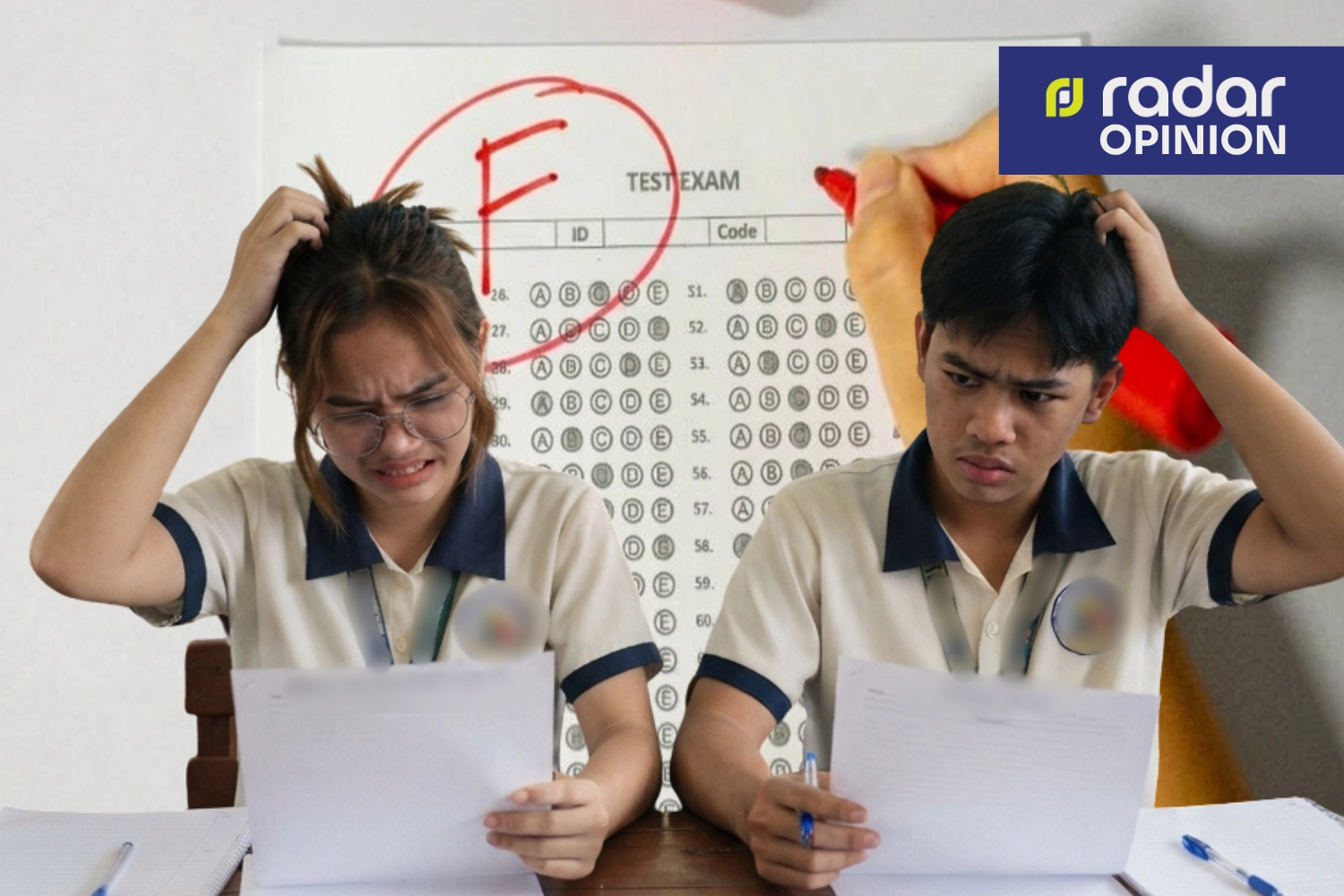
A high school student in Cavite reportedly could not recognize the letter R when his teacher pointed to the word “ROOM.”
The video circulated online, raising an uncomfortable question: How does a child reach high school without mastering something that should have been learned in Grade 1?
And more importantly, how many other students are being promoted despite lacking basic reading and comprehension skills?
I recently spoke with a teacher who described an even more disturbing problem.
According to this educator, students identified as needing reading intervention sometimes receive little sustained help because school administrators allegedly worry that acknowledging poor performance will hurt their school ratings.
If true, we have created an educational system where protecting statistics matters more than educating children.
When everyone passes, learning becomes optional
Officially, DepEd has no blanket no-fail policy. Yet the practice of mass promotion has become so concerning that the government itself is moving to address it.
The Second Congressional Commission on Education (EDCOM II) has raised serious concerns about students advancing without mastering foundational skills.
And what happens when students discover that they can advance regardless of how poorly they perform?
The incentive to study weakens.
Even the old concept of pasang-awa loses its meaning. At least students once understood that they had to earn a passing grade.
Now, the danger is that promotion becomes an expectation rather than an achievement.
We are failing children by refusing to fail them
Failing a student should never mean abandoning that child. It should mean identifying learning gaps, providing intervention, and requiring demonstrated improvement before promotion.
Teachers must be empowered to give honest grades without fearing punishment. Schools must be evaluated on actual learning, not artificially impressive passing rates.
DepEd’s 2026 move to phase out policies enabling mass promotion is overdue.
But reforms will mean nothing unless schools stop treating failing grades as institutional embarrassments.
We cannot keep producing graduates who hold diplomas but struggle to read, write, or comprehend basic instructions.
A failing grade is not necessarily a failure of education.
Promoting a child who has not learned, simply to protect a school’s performance record, is.