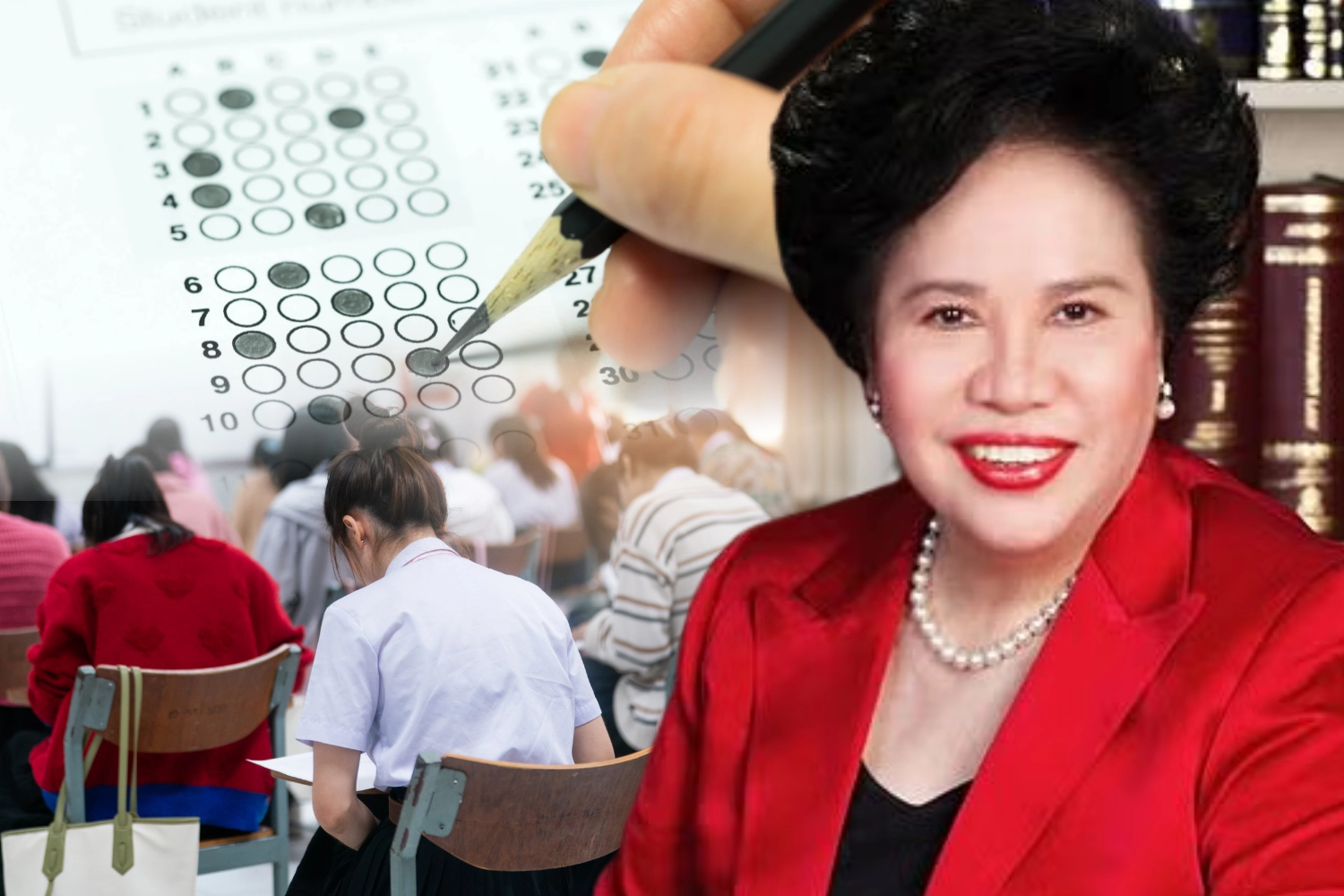
Passing the Bar may make someone a lawyer, but does it necessarily make that person a good one?
In April 2005, the late Senator Miriam Defensor Santiago challenged one of the Philippines’ most prestigious professional traditions by urging the Supreme Court to abolish the Bar Examinations.
Her argument was simple but provocative: the Bar was not necessarily an accurate measure of legal competence.
For Santiago, passing the examination could depend as much on memory and luck as on actual legal ability.
Why Miriam wanted the bar abolished
Santiago’s proposal followed the release of the 2004 Bar results, when only 1,659 of 5,249 examinees passed, representing a passing rate of 31.61 percent.
Citing a survey of the legal profession conducted by former UP College of Law Dean Merlin Magallona and lawyer Manuel Flores Bonifacio, she questioned whether a high-pressure examination could reliably determine who deserved to practice law.
She argued that memorizing enormous volumes of legal material was different from applying the law, defending clients, drafting legal arguments, and exercising sound judgment.
She also challenged the prestige attached to Bar rankings.
A topnotcher was not automatically destined to become an outstanding lawyer. Conversely, someone who barely passed—or needed several attempts—could eventually become an exceptional legal practitioner.
Santiago herself graduated cum laude from the University of the Philippines College of Law but did not top the 1969 Bar Examinations.
What she wanted instead
Santiago proposed replacing the Bar with two measures of legal readiness.
First was a National Law School Aptitude Test, similar in purpose to the National Medical Admission Test, to screen aspiring law students before admission.
Second was a mandatory one-year supervised legal internship after graduation.
Under her proposal, aspiring lawyers would demonstrate practical competence through actual legal work rather than depend entirely on written examinations.
In May 2005, she formally pursued the proposal through Senate Resolution No. 265.
Why the bar survived
The proposal generated debate but was never adopted.
Critics maintained that abolishing the Bar would eliminate an important independent safeguard, particularly because Philippine law schools differ significantly in educational standards.
The Supreme Court, which has constitutional authority over admission to legal practice, retained the examinations.
Nevertheless, subsequent reforms addressed some of Santiago’s concerns.
The Philippine Law School Admission Test was introduced in 2017, although the Supreme Court later invalidated its mandatory application.
Clinical legal education also became a requirement for Bar eligibility beginning in 2023, giving law students supervised practical experience before graduation.
The Bar itself has undergone major reforms, including digital examinations and greater emphasis on legal analysis.
A question that remains relevant
Twenty-one years after Santiago’s controversial proposal, passing the Bar remains the defining gateway to the Philippine legal profession.
But her central argument continues to challenge how Filipinos measure professional excellence.
Does an outstanding examination score prove someone will become an outstanding lawyer?
For Miriam Defensor Santiago, the answer was never that simple.