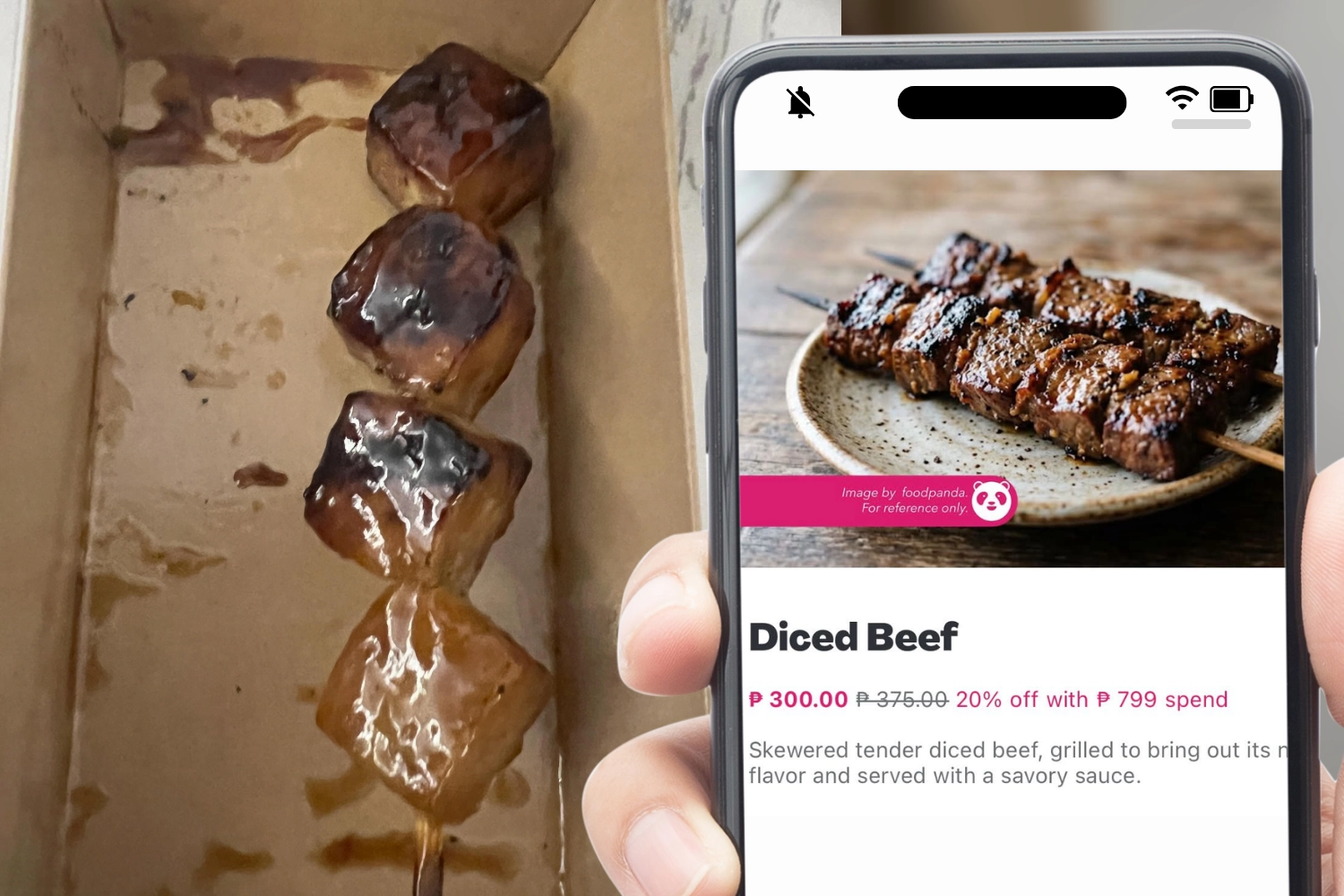
“Nabudol ako ng picture. Huhuhu. Isang stick lang pala and super liit lang ng beef (taba pa yung isa) for 375 pesos. Ang lungkot,” said Threads user @kamillejasmine.
The user initially blamed Watami and its operator The Bistro Group for allegedly misleading customers. However, the image displayed in the app contains a disclaimer indicating that it was provided by Foodpanda.
“Image by Foodpanda. For reference only,” the label on the image read. The illustration did not indicate that it had been generated with artificial intelligence, but many Threads users believed it to be so.
“Dapat talaga actual photos ang ginagamit ng mga restaurants para alam ng consumers kung ano ang binibili nila,” user @kamillejasmine added.
On other food delivery apps, the image displayed for Watami’s Diced Beef skewer matches the one on the restaurant’s menu, as shown on its official website. Only Foodpanda displays the image with two skewers.
Foodpanda discloses its AI use policy on its website, where it generally allows the use of the technology. The service informs vendors that it may use AI to enhance the photos and descriptions they provide.
“By uploading images of dishes onto the Vendor Portal, you hereby grant Foodpanda a non-exclusive, royalty free, worldwide right to use, process, modify, and enhance such images using AI or other means to improve the image quality before publication (provided that the product content remains materially unaltered),” the company’s AI policy reads.
Ultimately, the issue goes beyond whether the customer received one skewer or two. Food photos help set expectations before an order is placed, and when delivery platforms use images that differ from the actual dishes, customers may end up paying for something they never expected to receive.
Whether the image was AI-generated or simply an inaccurate representation, both restaurants and delivery platforms have a responsibility to ensure that what customers see is reasonably close to what arrives at their doorstep.