OPINION: One year later, the ₱500 Noche Buena looks even more ridiculous
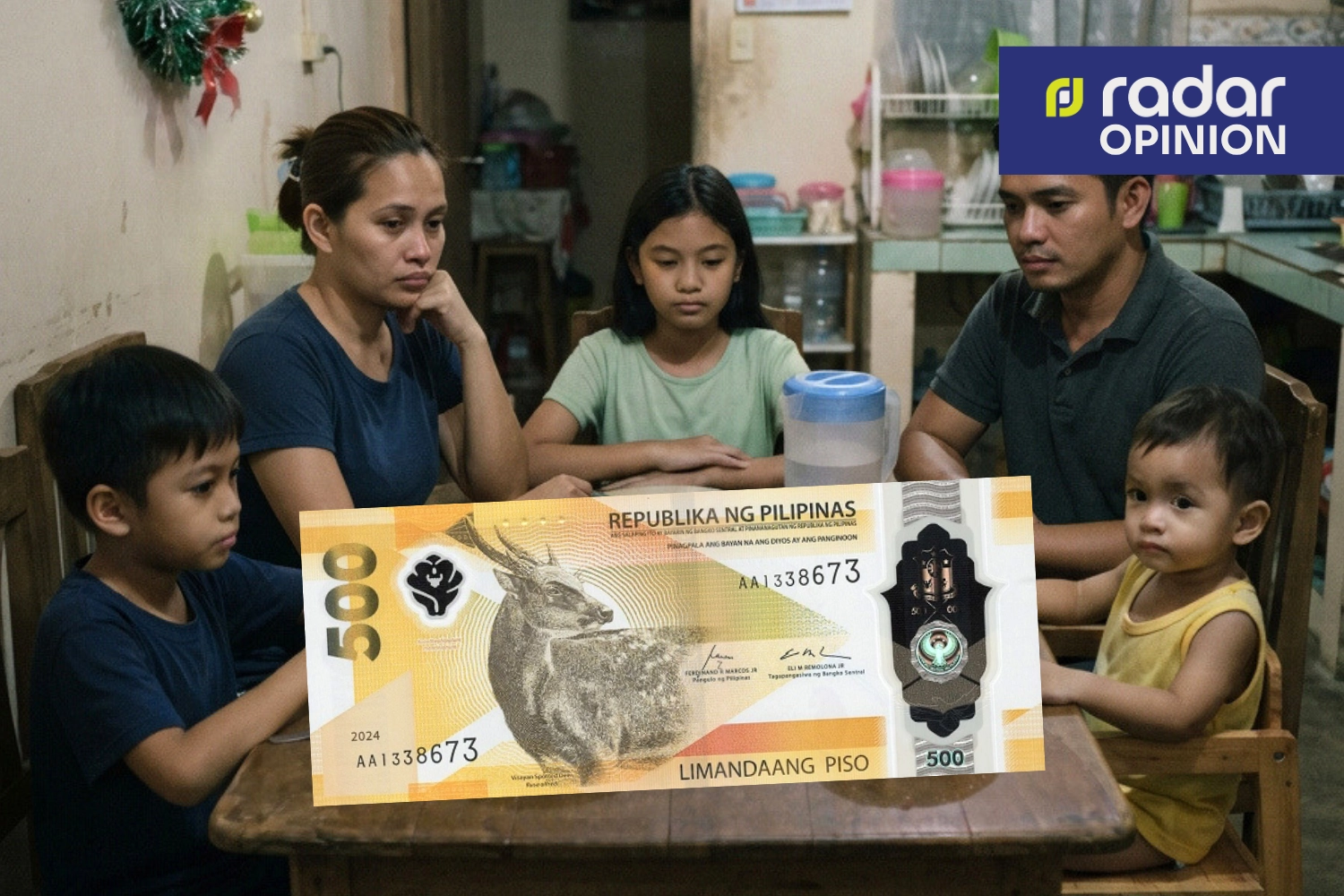
A year ago, Filipinos were told that ₱500 could be enough to prepare Noche Buena for a family of four. The suggestion drew criticism, and with another Christmas approaching, the estimate deserves another look. Some of the very products used to support that calculation now carry higher price tags.
Trade Secretary Cristina Roque made the remark in a November 27, 2025, interview with DZMM Teleradyo. She later explained her computation using the Department of Trade and Industry’s (DTI) Noche Buena price guide, laying out several possible combinations for a family of four.
One of the combinations included Christmas ham, spaghetti, macaroni salad, fruit salad and 10 pieces of pandesal. Its estimated cost was ₱526.95.
But that was not the only combination Roque presented. A meal with ham, spaghetti, macaroni salad and pandesal was estimated at ₱428.70, while replacing the macaroni salad with fruit salad brought the total to ₱374.50. The ₱526.95 figure applied when both salads were included.
That clarification is important, but it does not settle the issue. The controversy was never simply about whether someone could put together a list of food items that added up to less than ₱500. It was about whether that amount could reasonably cover a family’s Christmas meal.
There is a difference between a combination that works out on a price list and a meal that a family can actually prepare with the money available to it. The total alone tells us little about the portions each person gets, whether the quantities are enough for four people or whether the listed products are readily available at the prices used in the computation.
A year later, some of those prices have moved up.
CDO American Ham, 500 grams, listed at ₱170 in the 2025 DTI guide, is currently priced at ₱175 on ShopMetro. Magnolia All-Purpose Cream, 110 milliliters, has gone from ₱36.50 in the guide to ₱40 at SukiGrocer, based on an online price check on November 22, 2026.
These are listings from individual retailers, not nationwide averages, and they cover only two products from the original computation. They are not enough to establish how much the entire meal would cost today. But they do show that even some of the prices used in last year’s exercise have gone up.
And that is another weakness in treating ₱500 as a reassuring answer to a question about holiday affordability. Grocery prices do not stay put for a year, and a budget based on a particular set of prices can quickly become outdated. Households do not get to shop using last year’s figures.
The DTI’s Noche Buena guide can be useful. It gives consumers a reference when comparing brands and planning their purchases. But a guide is only as useful as the choices it offers and the prices shoppers can actually find. A product listed at a certain price is of little help if it is unavailable in a nearby store or if the package on the shelf costs more.
People need a real guide, not just a number to argue about
There is also the question of what the proposed budget is expected to cover. A family of four is not a uniform shopping unit. Appetite, age and household preferences differ. So do the expectations families bring to Christmas dinner. A budget estimate should be clear about the quantities behind it rather than leave consumers to assume that a few listed items will automatically make a sufficient meal.
The DTI’s 2026 Noche Buena price guide had yet to be released as of its latest public update reported by the Philippine Information Agency on November 20. DTI MIMAROPA said the central office expected to release it within November, following a market survey conducted in September.
With last year’s ₱500 controversy still fresh in public memory, it will be interesting to see how the department presents this year’s guide. Will it stick to listing affordable products and possible meal combinations, or will it also show how much a complete Noche Buena spread would cost for a family of four? The way the figures are explained could be just as important as the prices themselves.
Consumers will need more than a list of suggested prices. They need to know whether the products are available at those prices in ordinary supermarkets, whether the package sizes and quantities are enough to serve four people, and how much the complete combination would cost at the checkout counter.
These are practical questions, not demands for an extravagant Christmas spread. There is nothing wrong with encouraging households to celebrate within their means. Not every family needs an elaborate meal, and a modest Christmas dinner can still be meaningful. But advising people to spend wisely is different from suggesting that a particular amount should be enough without showing how that budget holds up in an actual grocery run.
The point should not be to convince Filipinos that they can make do with less. It should be to give them information they can use to make realistic decisions about their spending. A price guide can help with that, but a budget estimate should never be mistaken for proof that a family can comfortably afford what is on the list.
A year later, the ₱500 estimate still looks out of touch with the realities of grocery shopping. The DTI now has another opportunity to show consumers what a realistic holiday budget looks like. It would be a shame if this year’s guide simply gave us another set of numbers to argue about.
That’s the point.
READ:
OPINION: Thank you, ASEAN, for showing Filipinos what government can do
Top Dagohoy
November 14, 2026
OPINION: The best pasalubong from Taiwan isn’t pineapple cake
Mianne Cudal
November 23, 2026
OPINION: Politicians should experience the hardships their policies force Filipinos to endure
Top Dagohoy
November 18, 2026