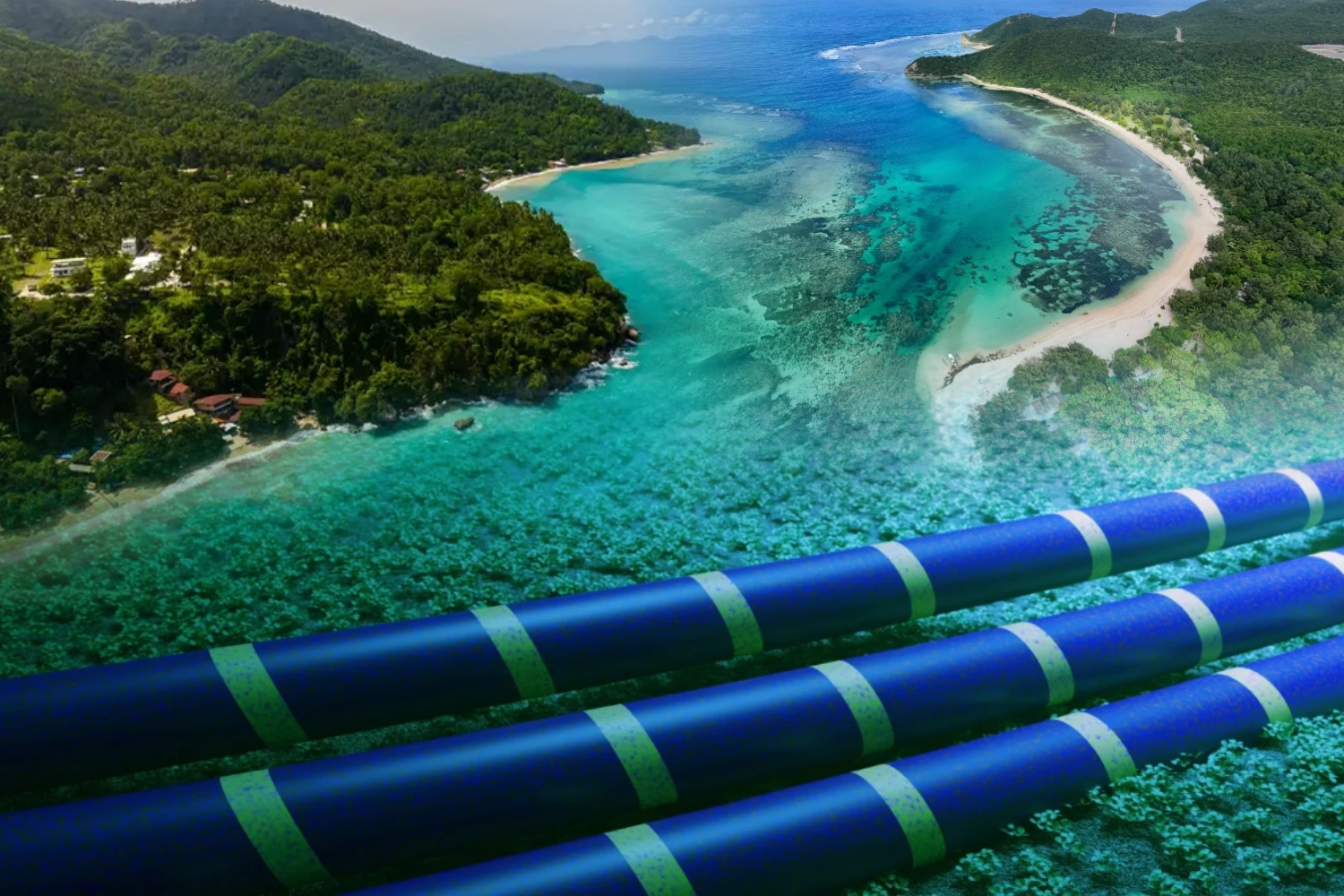
The United States is backing a proposed subsea fiber-optic network that would connect Cagayan in northern Luzon to Davao in Mindanao, potentially easing domestic data bottlenecks and supporting the Philippines’ bid to attract more data center investments.
The US Trade and Development Agency (USTDA) has awarded a grant to InfiniVAN, Inc., a Japanese-affiliated telecommunications and ICT solutions provider in the Philippines, to fund a feasibility study for the Silangan Submarine Cable System. The proposed 2,166-kilometer network would run along the country’s eastern seaboard.
The system would connect a cable landing station in Claveria, Cagayan, to Davao, with between seven and 15 landing points planned along the route, including one in Baler, Aurora.
The study will assess the project’s technical, environmental, and financial viability, including its final route, regulatory requirements, equipment procurement, and financing structures.
Nevada-based Lambda Consulting LLC has been selected to conduct the assessment, which is also intended to help attract telecommunications capacity buyers and institutional investors.
The project comes as the Philippines seeks to expand its digital infrastructure and position itself as a regional data center hub, although domestic fiber transport capacity remains limited relative to the growth of international subsea cable connections.
The push for greater digital infrastructure comes amid growing public opposition to Pax Silica, a separate US-led initiative aimed at securing supply chains for semiconductors, artificial intelligence, and critical minerals. The proposed technology hub in New Clark City, Tarlac, has drawn criticism over concerns about land displacement, environmental protection, and the use of local resources.
According to the USTDA, the gap in domestic fiber transport capacity leaves telecommunications operators with limited alternative routes when existing cables experience disruptions and makes it harder for data center operators to expand beyond Metro Manila.
A domestic subsea network could provide additional transmission routes between regions, improving network redundancy and reducing reliance on existing terrestrial fiber infrastructure.
The project could also support connectivity in underserved coastal communities, as well as systems used for maritime domain awareness and early disaster warnings.
At this point, it remains at the feasibility study stage, and its final route, technical specifications, financing arrangements, and construction timeline have yet to be established.