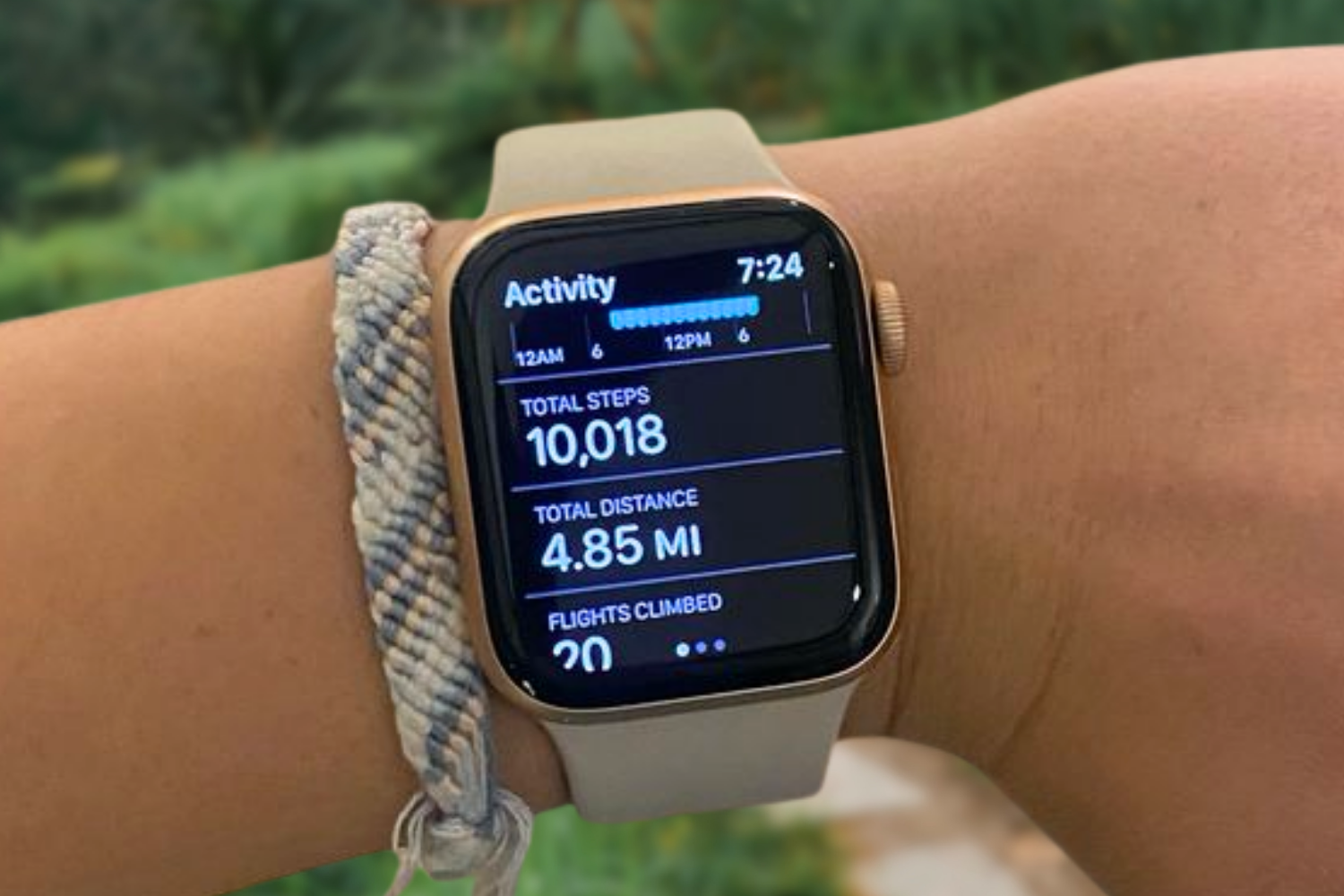
It’s almost bedtime, and your smartwatch tells you that you’ve only walked 7,000 steps. Determined to hit your daily target, you start walking around your bedroom just to complete the remaining 3,000.
But is reaching 10,000 steps really necessary? Science says otherwise.
According to UCHealth, the popular 10,000-step target originated from a Japanese marketing campaign in 1965 for a pedometer called manpo-kei, which translates to “10,000-step meter.” It was not originally based on medical research.
A review of 57 studies published in the medical journal “The Lancet Public Health” in July 2025 found that walking 7,000 steps daily is already associated with substantial health benefits.
Compared with those who walk 2,000 steps daily, people who reach 7,000 steps have a 47% lower risk of premature death, a 38% lower risk of dementia, and a 25% lower risk of developing cardiovascular disease.
Even walking 4,000 steps daily was associated with a 36% lower risk of death from all causes compared with walking 2,000 steps.
Age also matters
A separate 2022 study published in “The Lancet Public Health,” involving 47,471 adults, found that reductions in mortality risk tend to level off between 6,000 and 8,000 daily steps for adults aged 60 and above.
For younger adults, the corresponding range is around 8,000 to 10,000 steps.
Pace matters, too
According to the US Centers for Disease Control and Prevention (CDC), brisk walking is considered moderate-intensity exercise. A simple way to determine whether you are walking fast enough is to check whether you can hold a conversation but cannot comfortably sing.
The CDC recommends at least 150 minutes of moderate-intensity physical activity weekly, equivalent to 30 minutes of brisk walking five days a week.
While there is nothing wrong with aiming for 10,000 steps, there is no reason to feel guilty about falling short. For many adults, 7,000 steps is already an excellent daily target.
What matters more is moving regularly, reducing sedentary time, and maintaining a routine you can realistically sustain.