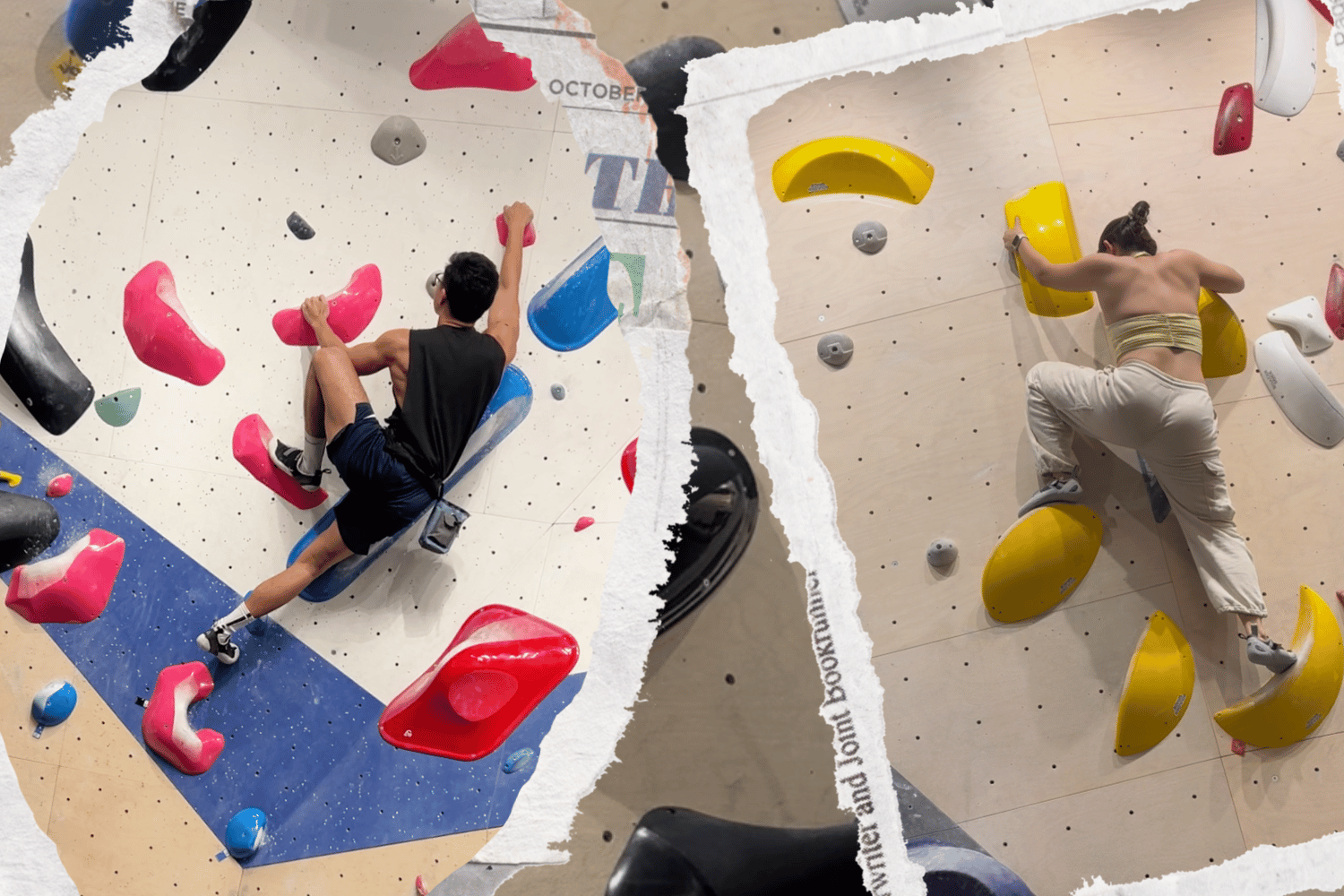
Climbing gyms are attacking more first-timers looking for a different kind of workout.
Climbing gyms across Metro Manila are drawing more people looking for a different kind of workout. Inside, walls covered in colorful climbing holds become the center of attention as climbers study possible routes, cheer one another on, and head back for another attempt after landing on thick crash pads. It doesn’t take long to realize that bouldering is as much about problem-solving as it is about exercise.
Once considered a niche sport, it is steadily becoming part of the local fitness scene by combining exercise, strategy, and a strong sense of community.
First-time jitters
For first-timers, stepping inside a climbing gym can feel overwhelming. Every wall is lined with routes of different colors and difficulty levels, while climbers take turns working through them at their own pace. Successful climbs are met with applause, while unsuccessful ones usually end with a smile and another attempt. Chalk dust settles on the walls and mats, hinting at the hundreds of climbs that came before.
Cheers echo throughout the gym as climbers tackle difficult routes, often accompanied by the familiar call of “allez.”
Welcome to bouldering, an indoor climbing discipline where participants tackle short walls without ropes or harnesses. Each climb follows a single color-coded route, with success depending on balance, coordination, technique, and strength. As more climbing gyms open across Metro Manila, the sport is attracting seasoned athletes and people trying climbing for the first time.
Climbing is a different experience for everyone. Some people move confidently across walls like they’ve memorized them, while others, myself included, spend longer than expected just trying to figure out where to start. Falling, it turns out, is not a failure here. It’s just part of the process.
Brain over brawn
A common misconception about bouldering is that you need a strong upper body to successfully complete the routes. While strength is helpful, bouldering is a mental workout just as much as it is a physical one.
Every route presents a different challenge. Some require careful footwork, while others demand better balance or body positioning. Reaching the top often depends on figuring out the sequence of moves before leaving the ground rather than relying on strength alone.
During my first few attempts, I found myself doing more thinking than moving. Where should my foot go? Is that hold actually usable? Do I really trust that tiny edge enough to shift my weight onto it?
The final effort is left in the climber’s hands as they move their body strategically, oftentimes in positions that feel new and slightly awkward. Beyond physical strength, there’s also the mental hurdle of committing to a move—trusting friction, your feet, and your gut to push through one of the sport’s most common challenges: heights.
People watching from the mats often notice a different way to approach a climb. A suggestion about foot placement or body position can completely change how a route feels, and those observations are freely shared regardless of whether the climber is a friend or someone they just met.
Progress rarely comes on the first attempt. A climb that feels impossible at first can become manageable after trying a different approach or making a small adjustment in movement.
A playground for all
Depending on the gym, the difficulty of problems is determined either by color or grade, where V0 is beginner level and V4 and above are more advanced. It’s typical to see a beginner working through large, forgiving holds known as jugs next to a more experienced climber navigating tiny crimps using just the pads of their fingers. Still, the effort feels the same for many climbers, especially in the moment a problem is finally completed. Nothing compares to feeling a mix of relief, pride, and celebration.
The atmosphere changes between climbs. People gather on the mats to recover, watch others attempt the same routes, exchange ideas, or celebrate successful climbs together. The experience feels more collaborative than competitive, no matter a person’s skill level.
The biggest surprise wasn’t reaching the top of a route. It was how naturally conversations started between attempts. Advice came without being asked, encouragement came from people I had only just met, and every successful climb seemed to become a shared moment for everyone nearby.
Outside the gym
After several hours of climbing, the physical fatigue is obvious. Your hands are covered in chalk, your forearms are tired, and every completed route feels earned. At the same time, spending hours focused on one climb at a time leaves little room to think about anything else.
Outside the gym, the experience lingers in small ways, in how you think through movement, or how you remember that most routes didn’t work on the first try.
Before long, you’re already thinking about the next visit—another route to figure out, another climb to finish, and another excuse to head back to the wall.
READ:

Why Manila’s top young executives are obsessed with pickleball
Walter C. Villa
June 6, 2026

Traffic and long work hours leave Filipinos with no time for hobbies
Allyson Capati
July 1, 2026
Why Filipinos celebrate every Alex Eala victory like it’s a championship
Matahari
July 5, 2026