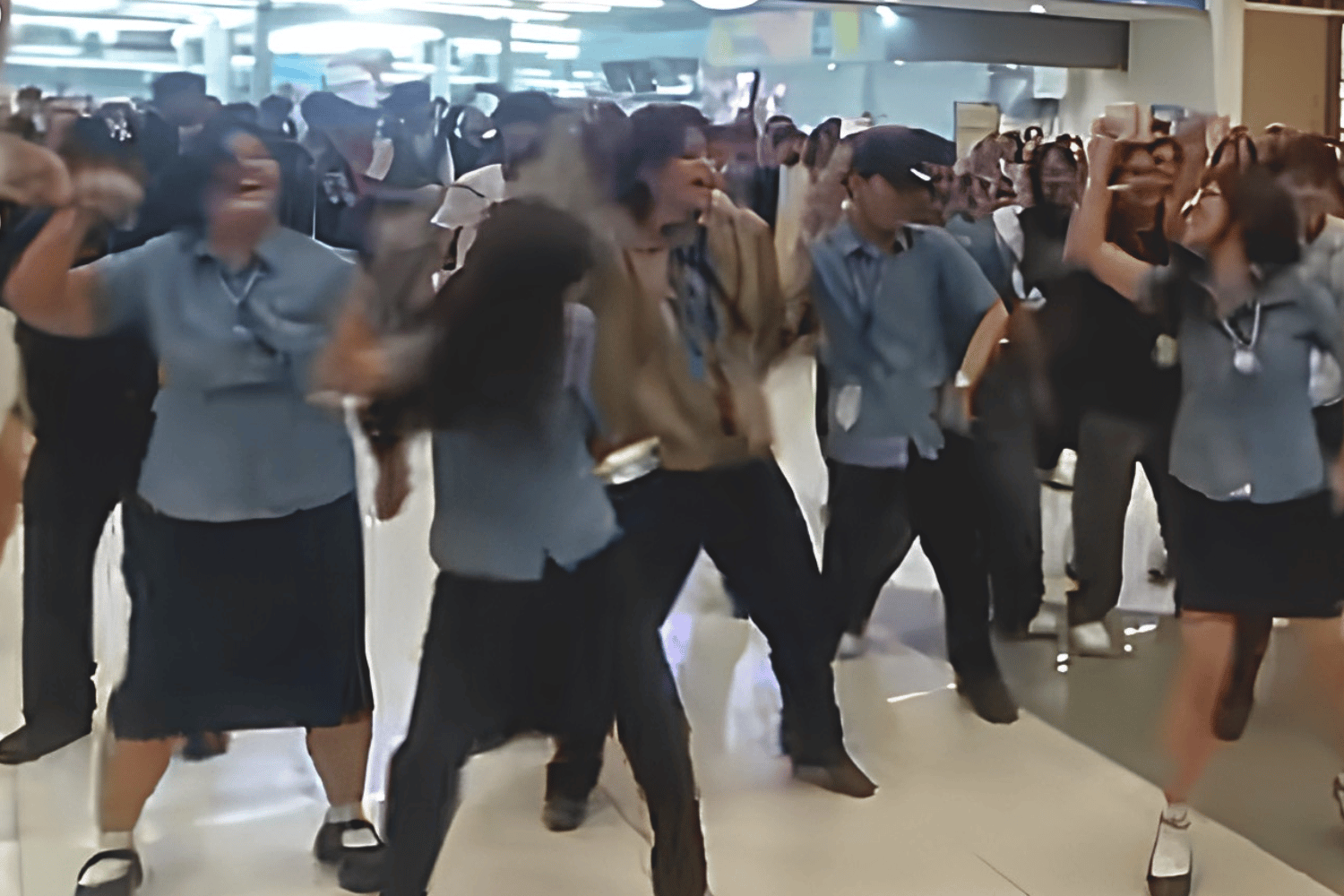
The moment was lighthearted enough. But one comment pointed to something more interesting: Why do scenes like this so often happen inside malls in the first place?
Looking beyond the dance itself, a commenter suggested that moments like this could be more common if the Philippines had more “proper public and walkable spaces,” rather than relying on malls and other enclosed establishments as gathering places.
The point is worth considering. Buskers, for one, can turn an ordinary space into a gathering place. Musician Leo Santos previously caught the attention of netizens while busking inside a mall to support his daughter’s education. His story resonated not only because of his music, but because passersby became part of the moment.
And malls have become natural gathering places partly because there simply aren’t enough alternatives. The Philippine Statistics Authority’s 2024 Census found that 62.22 million Filipinos, or 55.2% of the population, lived in urban barangays. Yet UN-Habitat data estimates that only 1.56% of Manila’s urban area is open public space, with just 28.75% of its population living within convenient walking distance of one.
That leaves malls filling a role they were never really meant to occupy. They’re accessible, air-conditioned and relatively safe, with food, seating, restrooms, entertainment and transport all in one place. But there’s a catch: many of the spaces where Filipinos socialize are still tied to consumption.
Other cities show that public spaces can offer the same opportunities for people to meet, play and simply stay without having to buy anything. Singapore’s Somerset Belt, Copenhagen’s Superkilen and Barcelona’s Superblocks all incorporate spaces for recreation, walking and community life.
The Philippines is also exploring similar approaches. Quezon City’s Katipunan Academe Corridor includes plans for improved pedestrian facilities, bike lanes, open spaces, and a linear park, while Pasig’s floating parks project envisions playgrounds, gardens, and multipurpose areas along the Pasig River.
These efforts show that community spaces do not have to be grand, but give Filipinos more choices. A sidewalk, plaza, riverwalk, or open area can give people somewhere to walk, stay, and connect.
In the recent viral TikTok video, all it took was music, a little space, and people willing to join. Perhaps the challenge is not whether Filipinos want to come together, but whether our cities give them enough places to do so.
READ: