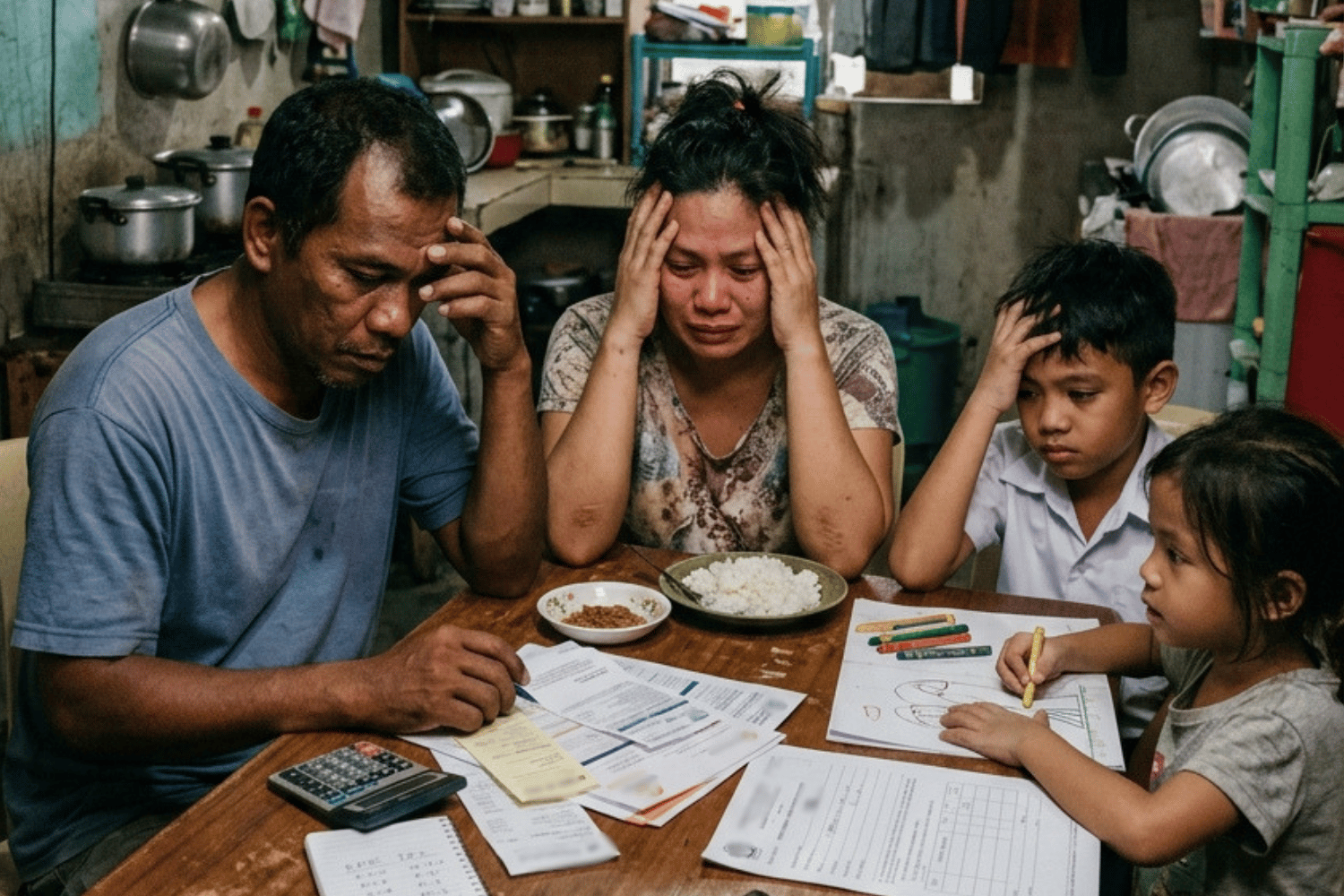
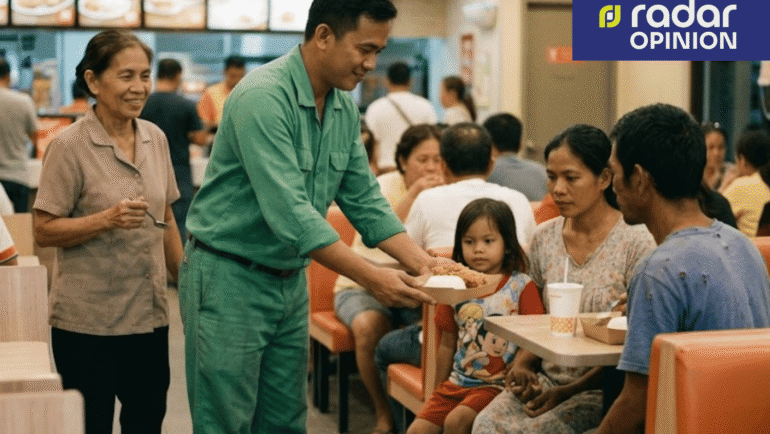
Stolen public funds directly burden ordinary Filipino families.
Corruption can feel abstract when the numbers run into billions and trillions. But divide the losses among Filipino families and the scandal suddenly becomes painfully personal.
In 2019, then-Deputy Ombudsman Cyril Ramos estimated that the Philippines was losing around ₱700 billion—or roughly 20% of the national budget—every year to corruption. The same estimate was subsequently cited by the Philippine Senate in discussions on corruption and government transparency.
The figure is historical and should not be treated as a measurement of corruption today. But apply that 20% estimate to a hypothetical ₱1.4-trillion annual leakage and divide it among roughly 26 million households, and the result is staggering: about ₱53,800 per family.
That does not mean somebody literally takes ₱53,800 from every household. It represents the public value families lose when taxpayers’ money disappears: hospitals that could have been better equipped, classrooms that could have been built, roads that could have worked and social services that could have reached more people.
And families eventually pay to replace what government fails to provide.
Consider healthcare. According to the Philippine Statistics Authority (PSA), households still shouldered 42.7% of the country’s current health expenditure out of pocket in 2024. When medicines are unavailable, families buy them. When public facilities cannot accommodate patients quickly enough, those who can afford it turn to private care. Those who cannot borrow, sell possessions or postpone treatment.
Education tells a similar story. The Department of Education has acknowledged a classroom shortage that reached approximately 165,000 classrooms in 2022. Families compensate through private schooling, tutorials, transportation to farther schools and countless smaller expenses that should not be necessary in a properly functioning public system.
Then there are flooded homes, broken roads, miserable commutes and unfinished infrastructure. Every overpriced, substandard or nonexistent public project can produce a private expense: higher transportation costs, damaged appliances, vehicle repairs, lost wages and hours of life wasted in traffic.
This is why corruption should never be discussed merely as politicians stealing government money.
They are stealing services people have already paid for through taxes.
The poor pay through deprivation. The middle class pays twice—first through taxes, then again for private substitutes. Even families who have never handed a bribe to anyone can still bear the economic consequences of corruption.
One important update makes the calculation even more conservative: the 2024 Census of Population by the PSA counted 29.67 million households, up from 26.39 million in 2020. Using today’s household count would therefore change the per-household figure depending on what estimate of national corruption losses is used.
So ₱53,800 should not be presented as an actual bill received by every Filipino family. It is an illustration of how staggering national losses become when translated to the household level.
But the larger point remains.
Corruption is not victimless, and its cost is not confined to government accounting books.
The bill eventually reaches our homes—and ordinary Filipinos keep paying it.
READ: