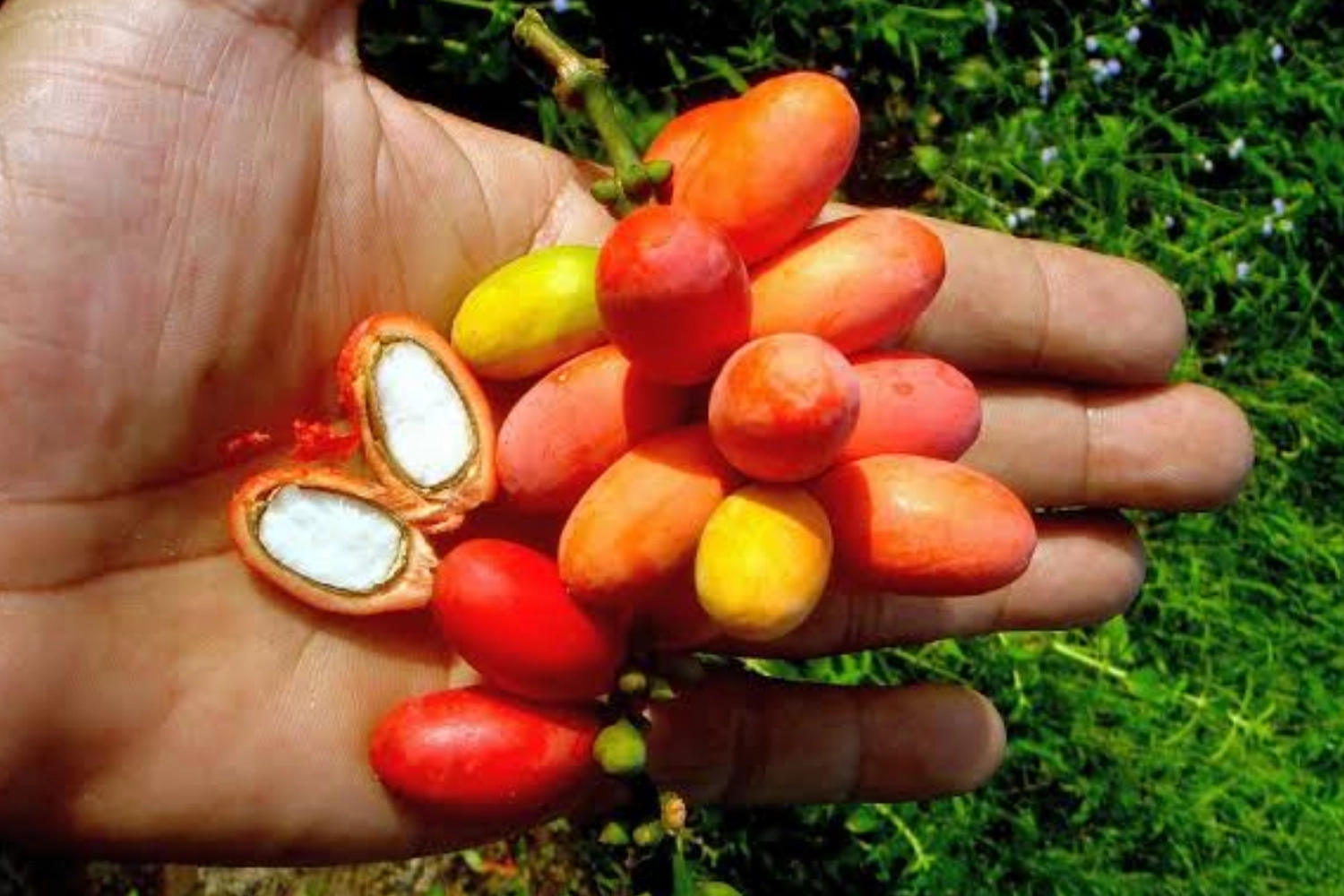
Those colorful, oval-shaped seeds hanging from a tree might look like ordinary wild fruits. But they belong to bago, one of the Philippines’ lesser-known native food plants.
Scientifically called Gnetum gnemon, bago is also known as melinjo or belinjo in other Southeast Asian countries. It grows naturally in parts of the Philippines, including Bataan, Batangas, Camarines, and Bohol.
Interestingly, bago is not technically a fruit tree. It belongs to an ancient group of plants called gymnosperms, making it a distant relative of pine trees. Those yellow, orange, and red structures that resemble fruits are actually seeds covered in fleshy layers.
And yes, Filipinos have been eating them for generations.
The young leaves, locally called talbos ng bago, are cooked in coconut milk, mixed with smoked fish, or added to vegetable dishes. The seeds can also be boiled or roasted.
In Indonesia, bago enjoys greater culinary popularity. Its mature seeds are flattened, dried, and fried into crispy, slightly bitter crackers called emping.
Beyond its culinary value, bago contains protein, minerals, and natural antioxidant compounds called stilbenoids. Researchers have studied these compounds for their potential health benefits, although they are not proven treatments for disease.
Despite growing naturally in Philippine forests and appearing in some provincial markets, bago remains unfamiliar to many urban Filipinos.
Perhaps that is what makes this native plant fascinating. While Filipinos enthusiastically discover imported superfoods, another nutritious and edible plant has been growing in their own backyard all along.