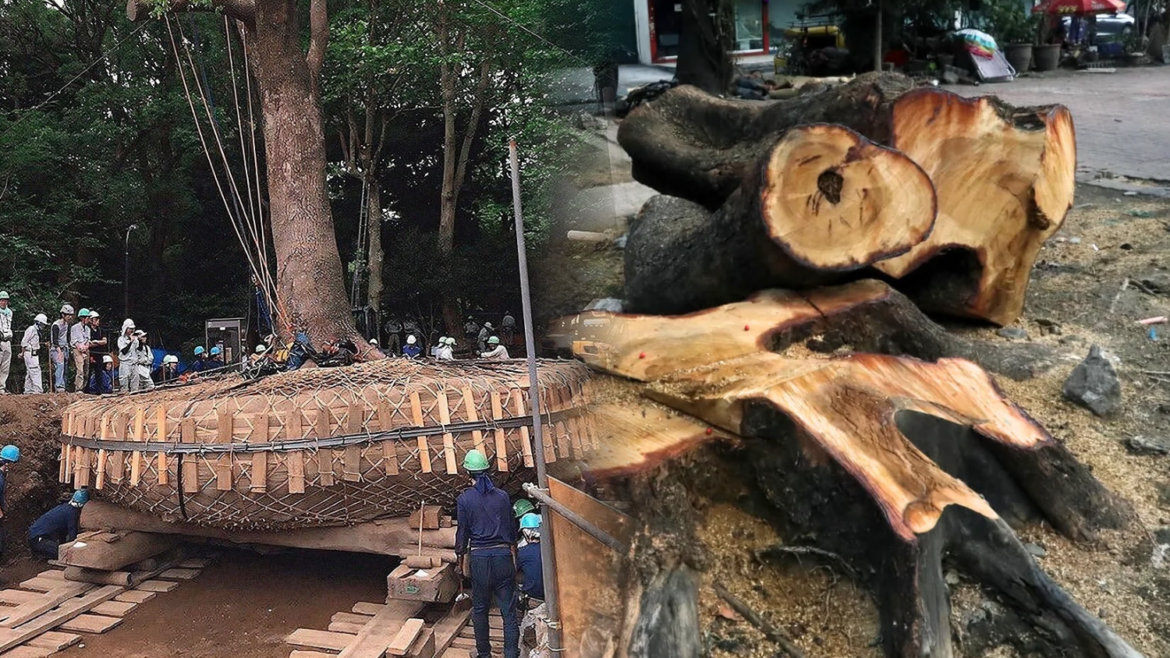
Travel columnist and heritage advocate Kara Santos has identified the trees.
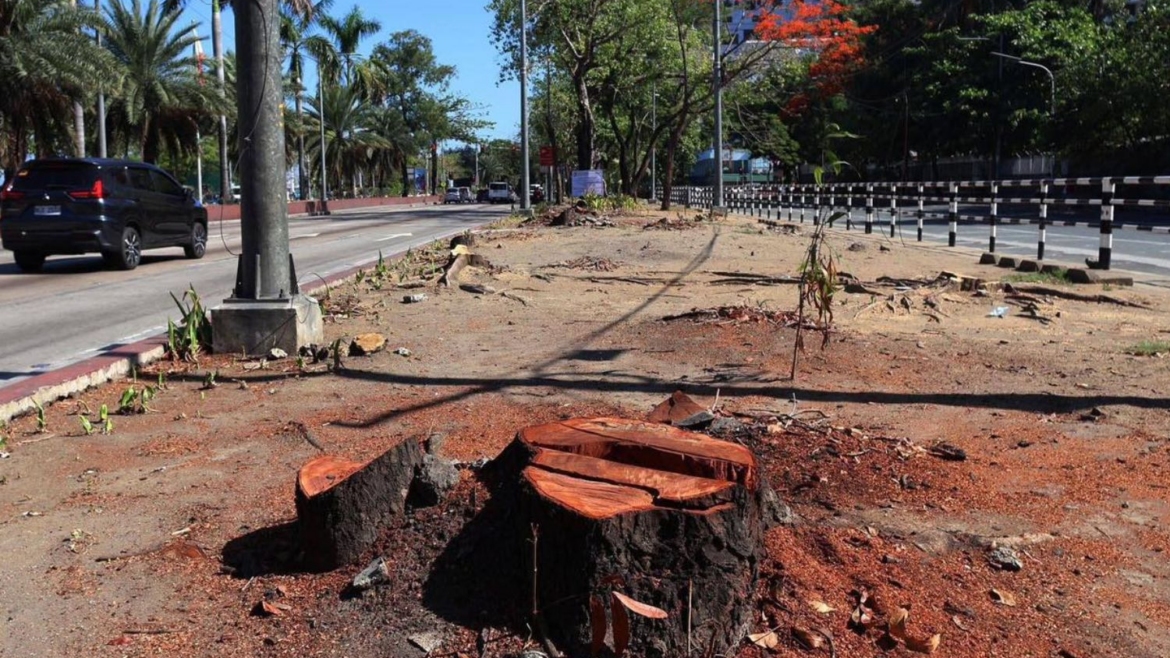
A travel columnist and heritage advocate’s piece on heritage trees around Metro Manila resonates anew following the DENR’s massive tree-cutting project along Quirino Avenue.
In a May 22 column for PhilSTAR Property, Kara Santos revisited the capital’s trees—many of which have outlasted wars, revolutions, and urban rapid development.
Often found in schools, hospitals, government institutions, churches, and even cemeteries, Santos noted that the trees are protected under the Department of Environment and Natural Resources’ Heritage Tree Program of 2009.
Santos outlined the criteria for designation: at least 50 years old; have a circumference of at least one meter measured one-half meter above the ground; free from major pests and diseases; may be native or endemic, exotic, rare, threatened, or endangered; and has significant historical, cultural, or aesthetic value.
Her fieldwork shows that most heritage trees—including acacia, kamagong, duhat, balete, narra, sampaloc, ipil, and botong—are concentrated in Quezon City (11) and Manila (8). Others are in Caloocan, Pasig, Pasay, San Juan, Marikina, Mandaluyong, Makati, Taguig, Valenzuela, Parañaque, Muntinlupa, and Pateros.
Among them was a century-old acacia outside Marikina’s Shoe Museum, one of Santos’ personal favorites. It survived Tropical Storm “Ondoy” in 2009, but was uprooted by a tornado in 2018.
She said locals revived and saved it, and has since grown back: “Residents consider this tree a symbol of their own survival and resilience.”
Other notable trees
A century-old acacia lies within Pasig Catholic Cemetery, which previously served as a camp for US soldiers during the Philippine–American War. Its massive trunk stood as a boundary marker between the old cemetery (El Cementerio Viejo) and the new extension cemetery (El Cementerio Nuevo).
At Malacañang Palace, a century-old balete endured has World War II, multiple presidencies, Martial Law, EDSA I, and EDSA II. Legend has it that it’s home to a kapre known as “Mr. Brown.”
The Veterans Memorial Medical Center in Quezon City hosts a kamagong, reportedly the first heritage tree declared in Metro Manila.
The Lichauco Heritage House in Sta. Ana has a 200-year-old baleteng baging, seen as a witness to Pasig River’s evolution.
In Makati, two naturalized acacia trees at Saints Peter and Paul Parish Church are believed to have been planted after the Philippine–American War. They’re nicknamed Pedro and Pablo, serving as twin guardians of the city’s Heritage District.
“Trees are living landmarks of history, marking specific events, people, and community identity,” Santos said. She also urged the public to think of the trees’ history, cultural value, and significance amid danger of being cut for yet another parking lot, high-rise building, or road widening project.
“Perhaps they could be protected under the Heritage Tree Program,” she said.
In May, the DENR ordered cutting 600 trees along Quirino Avenue for the Southern Access Link Expressway. The agency later suspended the plan following public backlash—though over 200 trees had already been cut.
READ: