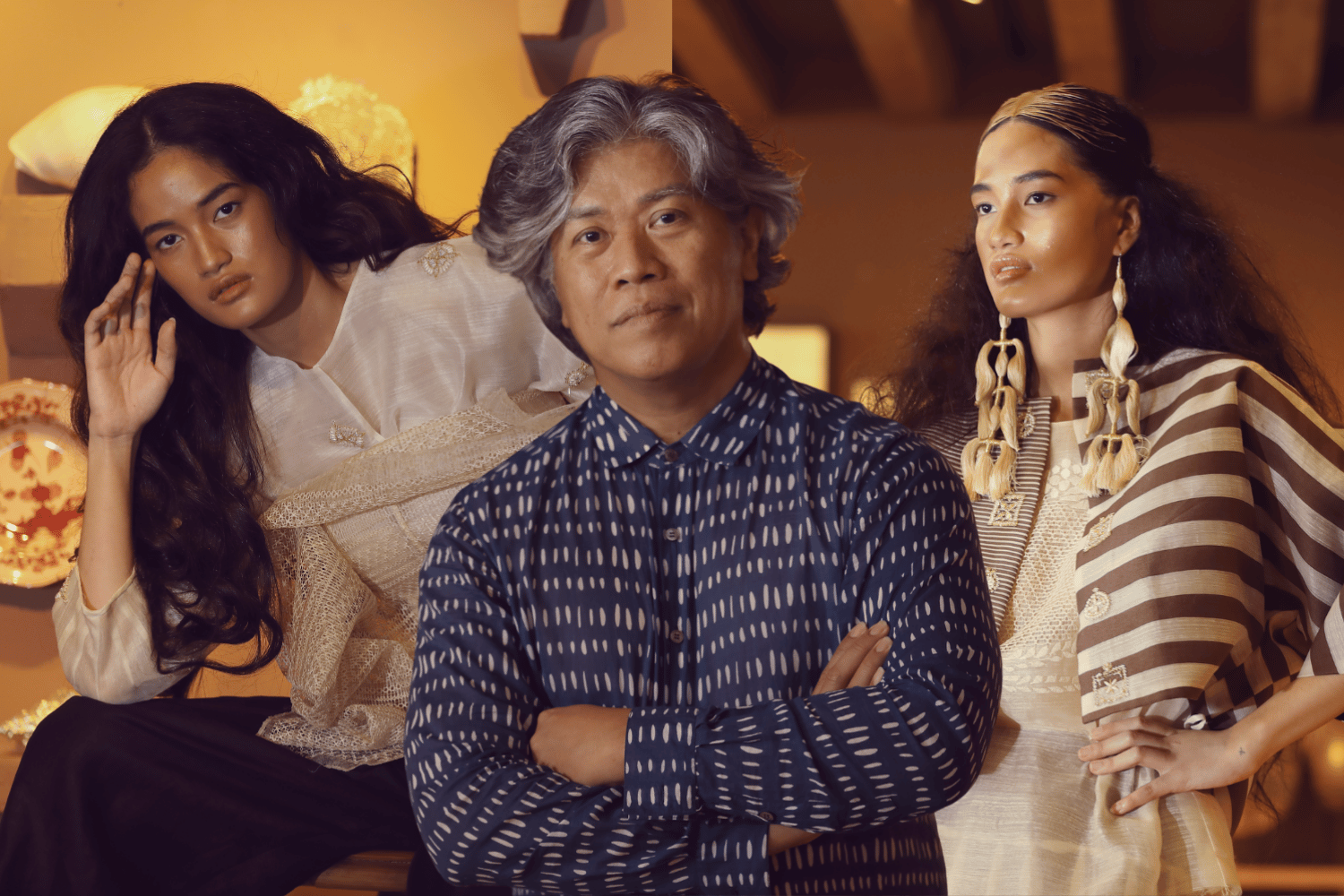
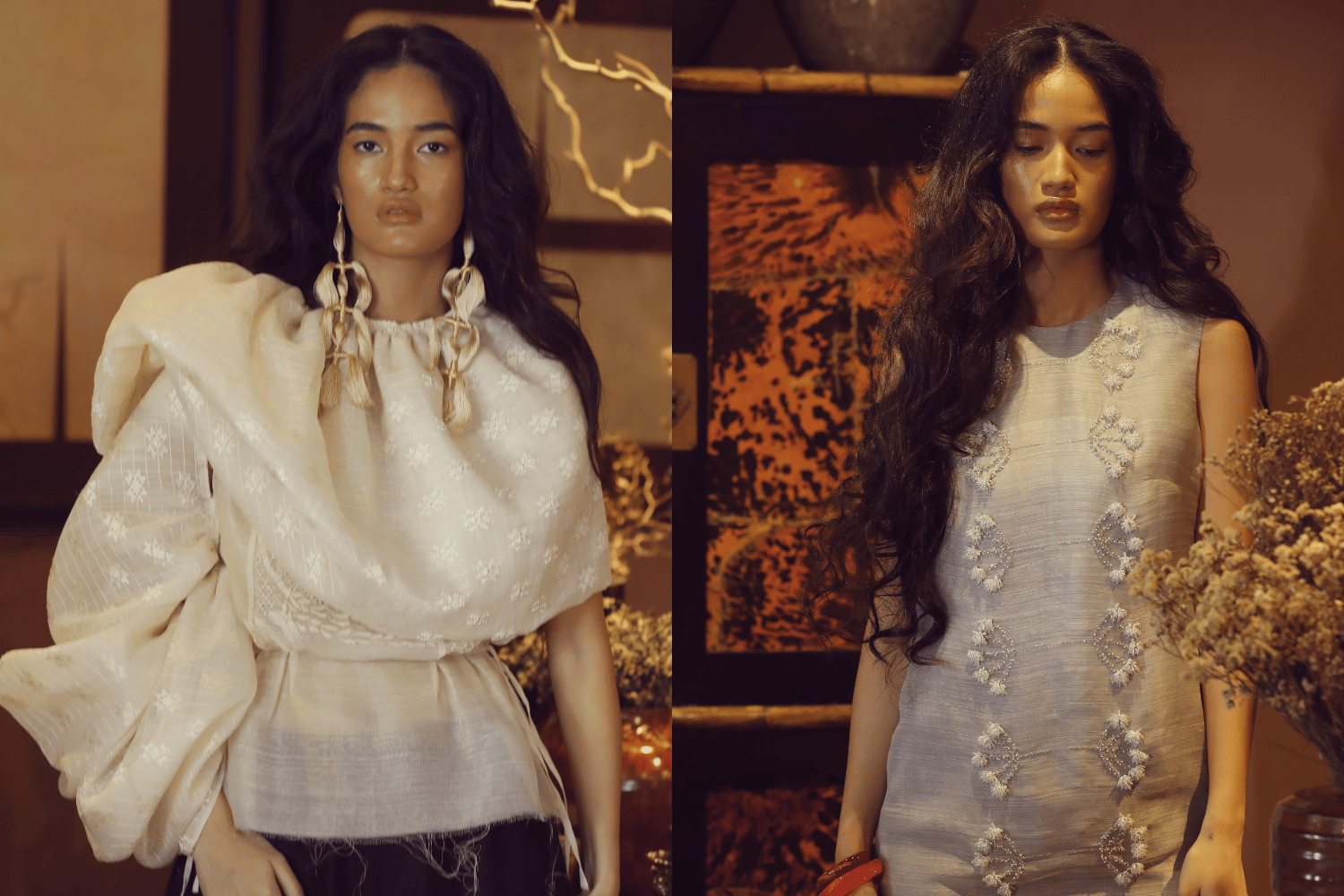
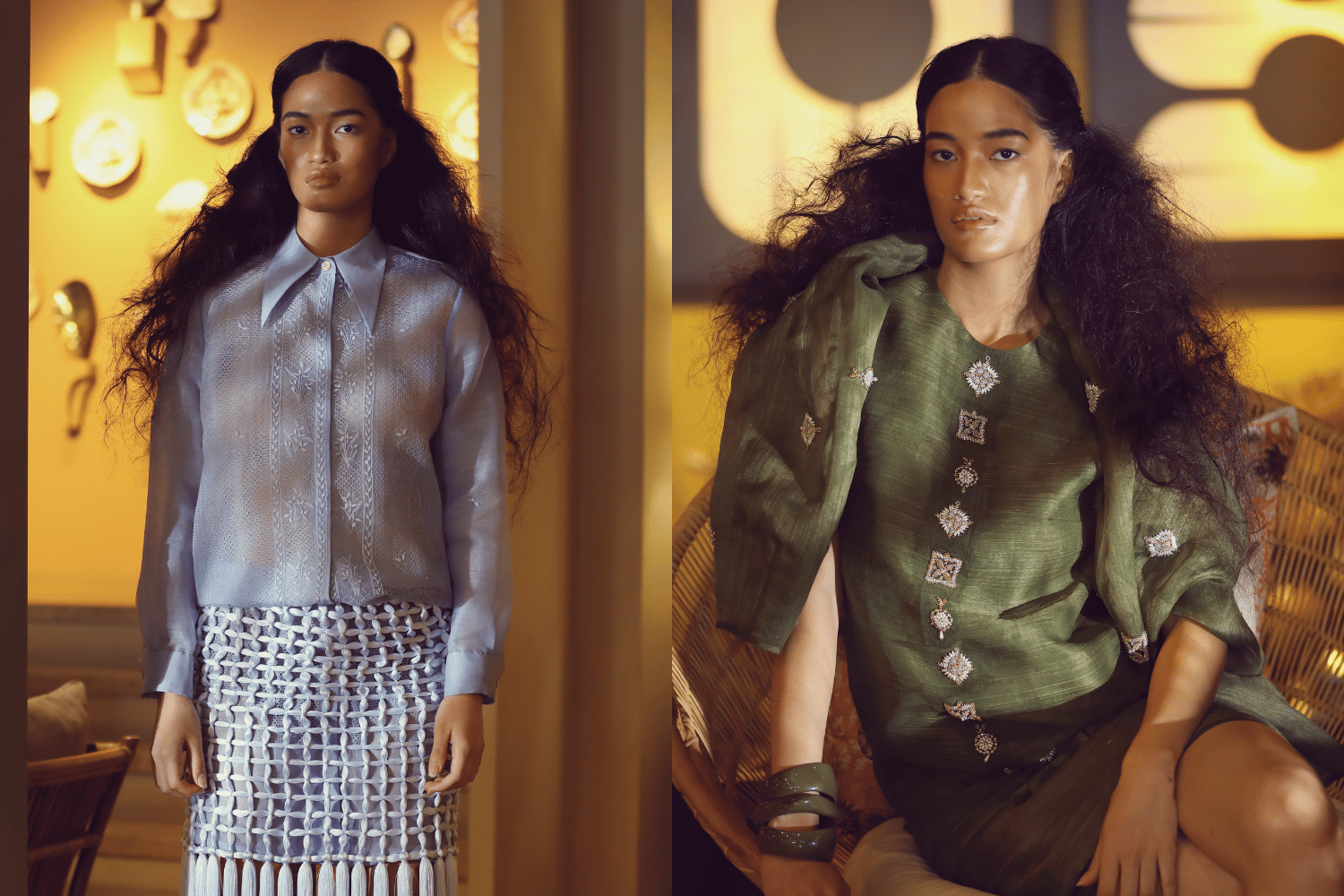
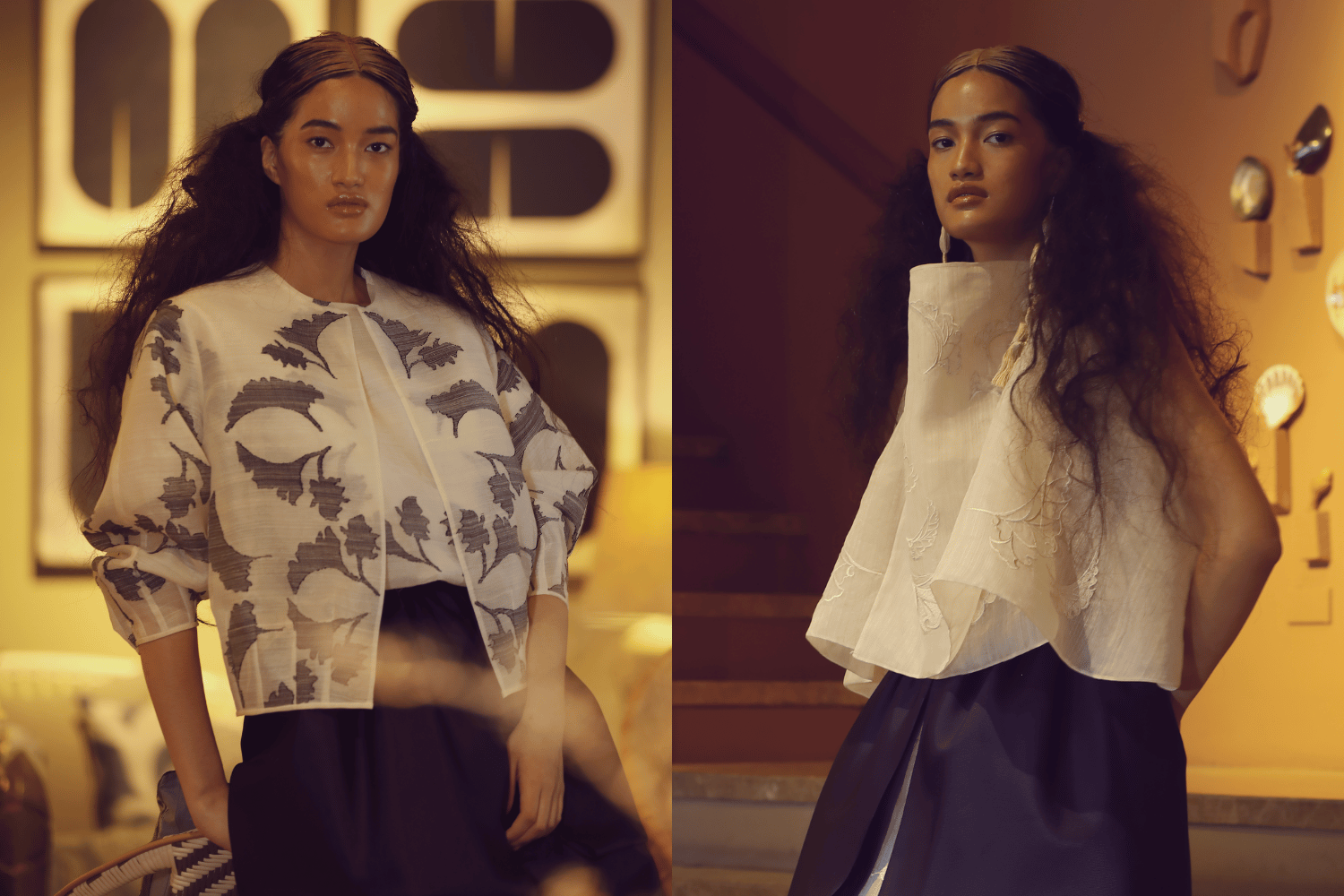
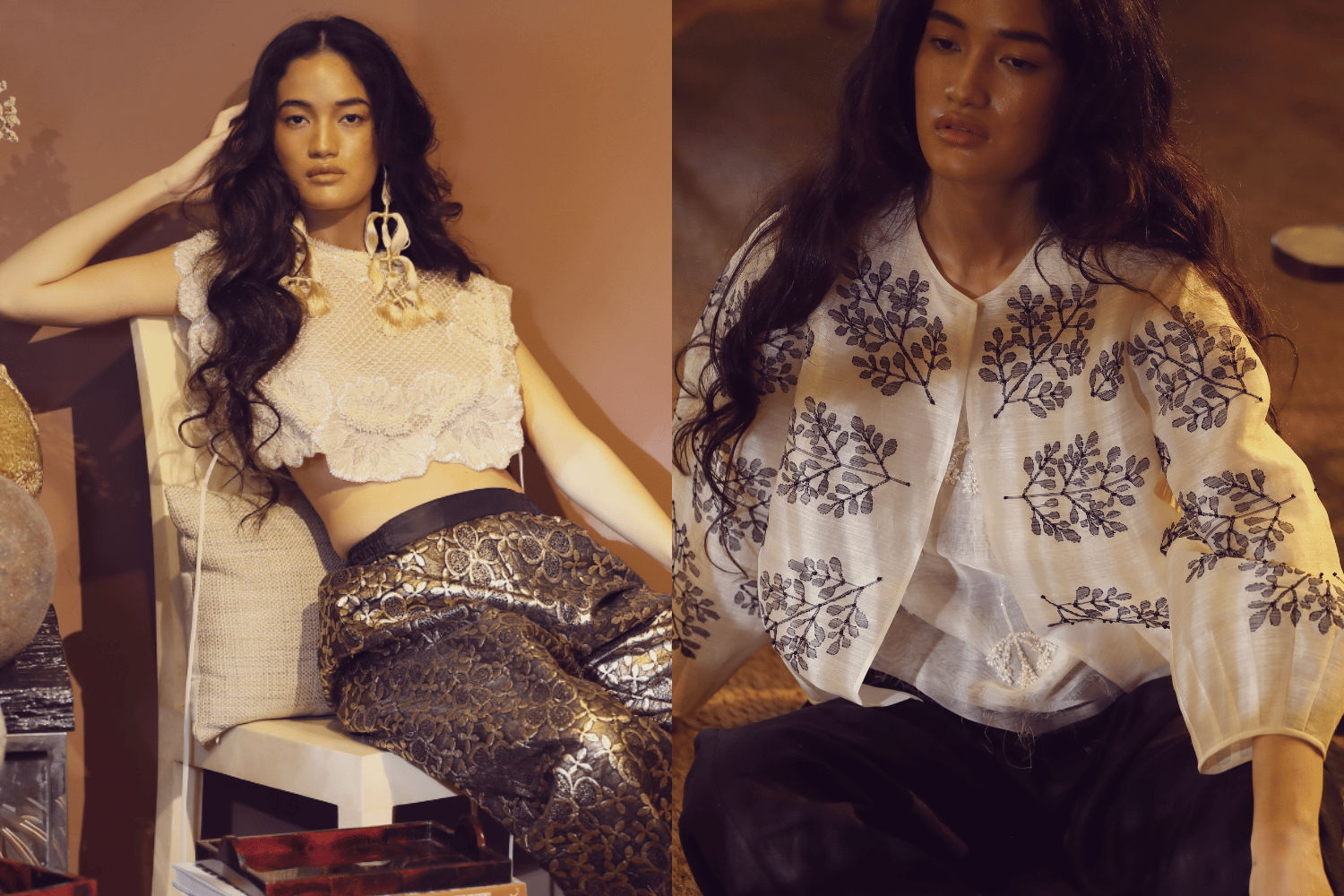
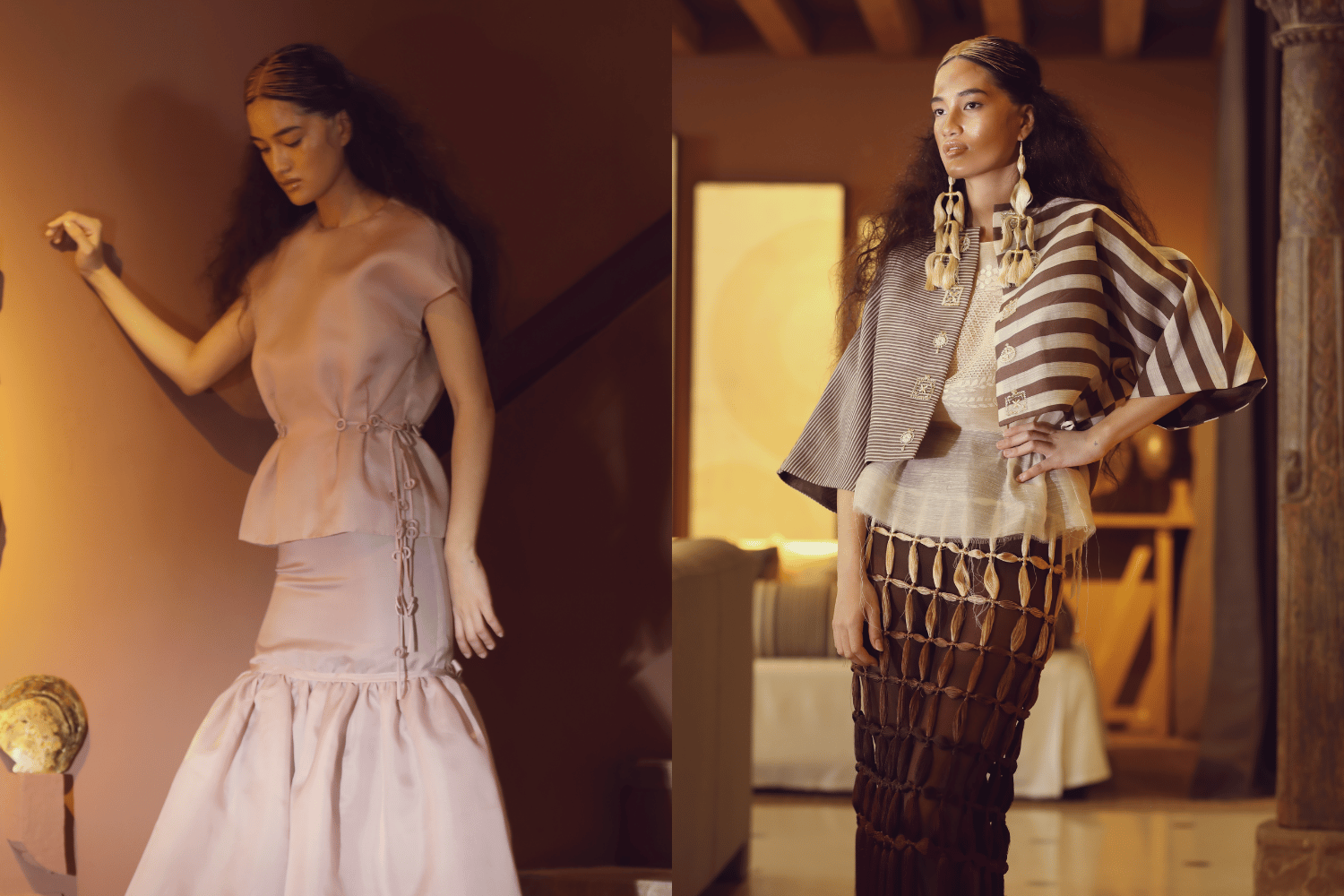
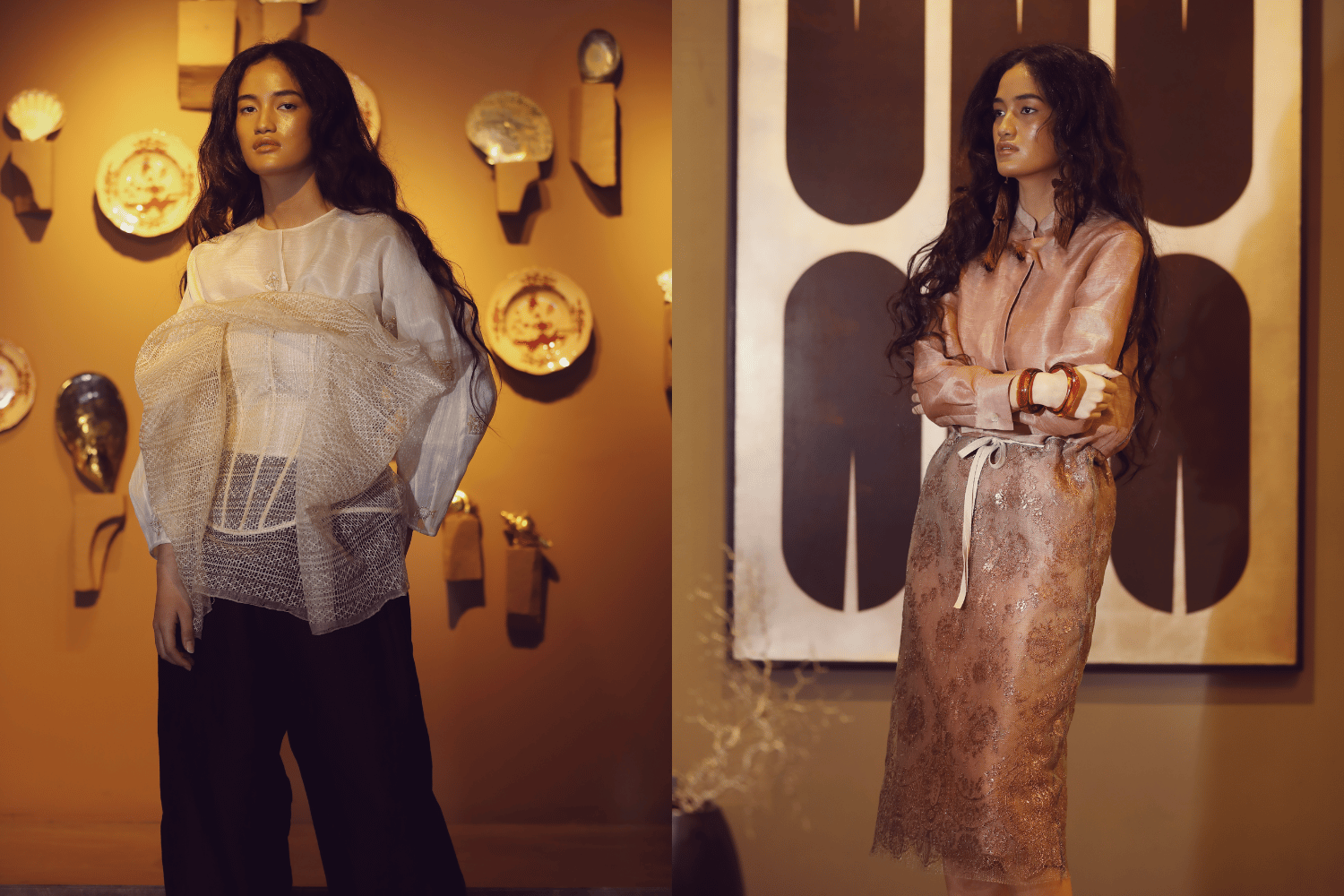
Filipino Luxe, which will be showcased at his holiday pop-up at Powerplant Mall in Makati throughout October, asks what Filipino design can look like when sophistication is not tied to formality.
Lustico described the collection as a “reimagining of a contemporary, transseasonal wardrobe.”
“I made a deliberate choice,” he said. “Pieces were crafted so that you can wear them abroad or for any occasion all year round. There is a global air about them while still highlighting local craft.”
The collection puts Filipino materials at the center of that reinterpretation.
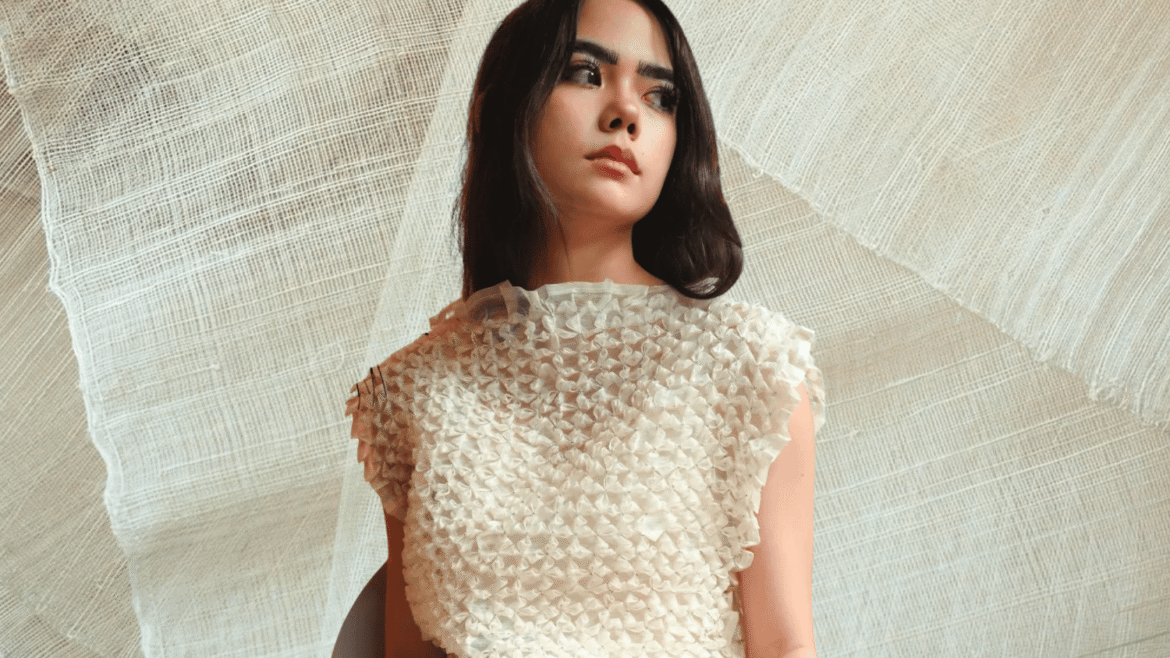
Piña and binakol—a traditional abaca-piña material from Aklan—are woven, tucked, and dyed by hand by local artisans. Lustico pairs them with French and Italian fabrics, Indian linen, silk dupioni, and macramé, creating pieces that feel rooted in Filipino craft without looking bound to tradition.
Though the collection was intended for ready-to-wear, its pieces continue to embody couture attributes.
The silhouettes remain easy and relaxed, while thoughtful details keep them elegant and elaborate.
A light blue piña barong, for example, becomes a shirt dress with intricate callado needlework. Silk blousons are cinched by wooden rings wrapped in matching silk threads, each wound by hand. A corset piña callado explores the fabric’s texture and structure, while Camisa de Chinos, shift dresses, and tops carry needlework inspired by everyday Filipino life, from malunggay and kalabasa leaves to ancestral-house windows and betel nuts.
Even the holiday palette moves away from the usual seasonal colors, favoring natural tones, mauve, light blue, denim blue, and ash gray.
“I’ve been perfecting the fusion of colors and texture,” Lustico said. “There are so many things happening in the world today that I felt more drawn to colors that are subdued and calm.”
For Lustico, refinement also means creating pieces that are unaffected by the passage of time and trends—clothes that can feel distinctly Filipino without requiring a formal occasion to justify wearing them.
“Filipino-ness,” he said, “is anchored on craftsmanship.”
READ: