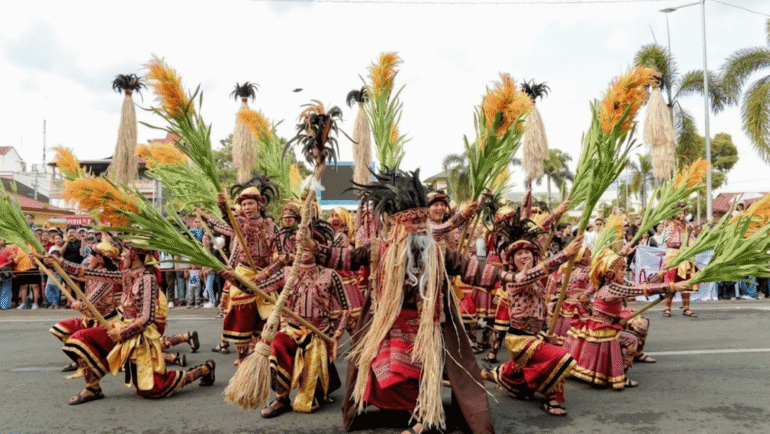
Piña fabric isn’t just for formal wear anymore.
When you think of streetwear and tailored casuals, piña isn’t really the first fabric that comes to mind. It isn’t the type to hang around with cotton, linen, or corduroy. Made from the fibers of the pineapple plant using traditional looms, piña has endured for centuries. And with its age comes a certain sense of gravitas.
The terno and the barong—the heritage attire of the Philippines—have traditionally been made from piña, and they have since become associated with formality, being seen mostly during weddings, contract signings, government functions, and other more sombre occasions.
While years of history have given people that impression, piña has been heading in a different direction. And recently, it found an unlikely audience at Ino Caluza’s upscale streetwear show in MNL Fashion Week.
Piña fabric breaks into high-end streetwear
Caluza is a designer and entrepreneur, known for the premium denim label Viktor. And for MNL Fashion Week, his show was themed after the post-apocalypse—dark, moody, and foreboding, with Radiohead blaring in the background and hard light and deep shadows to set the atmosphere. When his models took to the runway, they wore a collection that played with textures, using a mix of leather and denim in relaxed, generous cuts.

However, some of the pieces labeled as denim were not actually made from traditional denim fabric. At least, it wasn’t denim in the traditional sense. Caluza used a sustainable fabric called poly-piña, which uses pineapple fibers blended with synthetic materials, a creation of the Department of Science and Technology — Philippine Textile Research Institute.
Some of the pieces that stood out in his show—a cropped blue jacket and a voluminous ball gown that took up about half of the runway—showed what could be done with the fabric. The audience could not distinguish it from the rest of the collection. Viktor pushed the fabric to such an extreme that people were still congratulating Caluza more than a few days later. Rare for a fashion show.
“This blue fabric that we used for the show—kakaiba siya, ang ganda,” Caluza says. “It’s super light, pero may form.”
Designing with Poly-Piña: lightweight and versatile
Caluza describes it as being similar to cotton-linen—with a slight roughness in the hand, though still quite soft. And while his team has washed and ironed the material, it held up quite nicely. Impressed, he ended up ordering more of the fabric for the show.

Even blended with synthetics, piña retains its breathable nature, which does well in the Manila heat. Caluza also mentions that it’s thinner than chambray—a lightweight cotton fabric—though it keeps volume and has its own drape. Some of his older clients, he adds, would prefer the softer material.
Still, Caluza says piña isn’t yet at a stage of development where people can use it every day, but he hopes the creators come up with a thicker, slub-textured version, which would be perfect for the local weather. Perhaps a new piña collection from Caluza might be in the cards for the future. He hopes this happens before his vision of the apocalypse occurs.
Piña in the sartoria and bespoke tailoring
Streetwear isn’t the only area of fashion that piña is breaking into. It’s heading into upscale menswear as well. However, it is not entering upscale menswear in the way you might expect.
While it will always remain the staple material for the barong, piña fabric has also made its way into suits. Not as the main material, but as the interlining instead
The interlining is a piece of fabric that’s woven between the layers of a suit jacket. This interlining, also known as the canvas, provides structure to a suit jacket, allowing it to retain its shape. Over time, the canvas inside a suit conforms to the wearer’s figure, making it fit better as you wear it more often and giving the jacket a sense of ownership.
Traditionally, a suit’s canvas is made out of horsehair, though the people at tailoring boutique Tiño have found that piña fabric does the job just as well.

“We tried using it in the coat. The construction of the jackets is our innovation,” says Eileen Ramirez, founder and CEO of Tiño Group, a multi-brand clothing company that deals in bespoke, made-to-measure, and retail.
Ramirez says she got the idea after learning how much biowaste the Philippines produces and thought that, in her own way, she could contribute to its reduction.
Piña Canvas: A Local Touch for Bespoke Suits
Tiño uses a pineapple-polyester blend sandwiched between the layers of their suits. Today, it is their preferred material for suit canvas, though some clients, Ramirez says, still go with the traditional horsehair canvas from Italy.

But Tiño has tried its hand at using it as a main fabric as well. On display at the corner of their Makati boutique is a safari jacket made entirely from a blended piña fabric.
As far as style goes, the safari jacket suits the fabric well. It was originally intended as a utilitarian piece of outerwear for the climate in Africa and was naturally made out of breathable fabrics. Ernest Hemingway and Hunter S. Thompson—legendary rogues in the literary world—have both worn it, giving it a sense of adventure and a bit of edge. However, in contemporary fashion, it functions primarily as an urban casual item that can be styled either formally or informally.
“It’s not going to compete in terms of designs…color patterns, texture. I think it would still need a lot of product development,“ Ramirez says of the fabric.
But looking at the jacket in their boutique—an iconic piece of menswear given a local touch—it’s already getting somewhere.
It may be a while yet before we see piña being embraced for fashion on a larger scale. For now, we’re seeing it in cutting-edge streetwear and tailored casuals—already a long way from the formal outfits it’s normally reserved for. Research and development on the material is still ongoing, so we may not have to wait too long to see where it goes from here.
Piña fabric has gone beyond the barong and is making its way to casual wear.