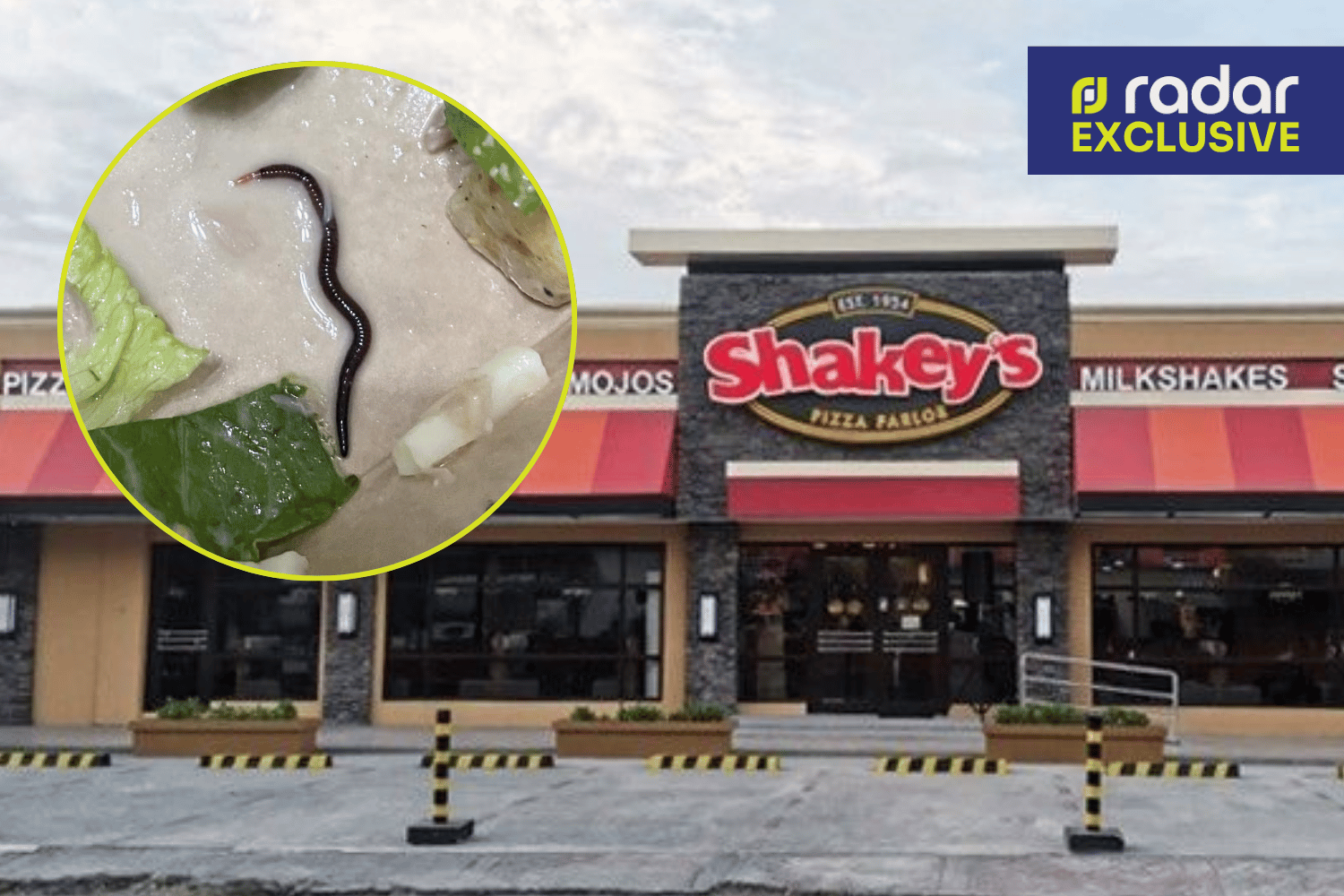
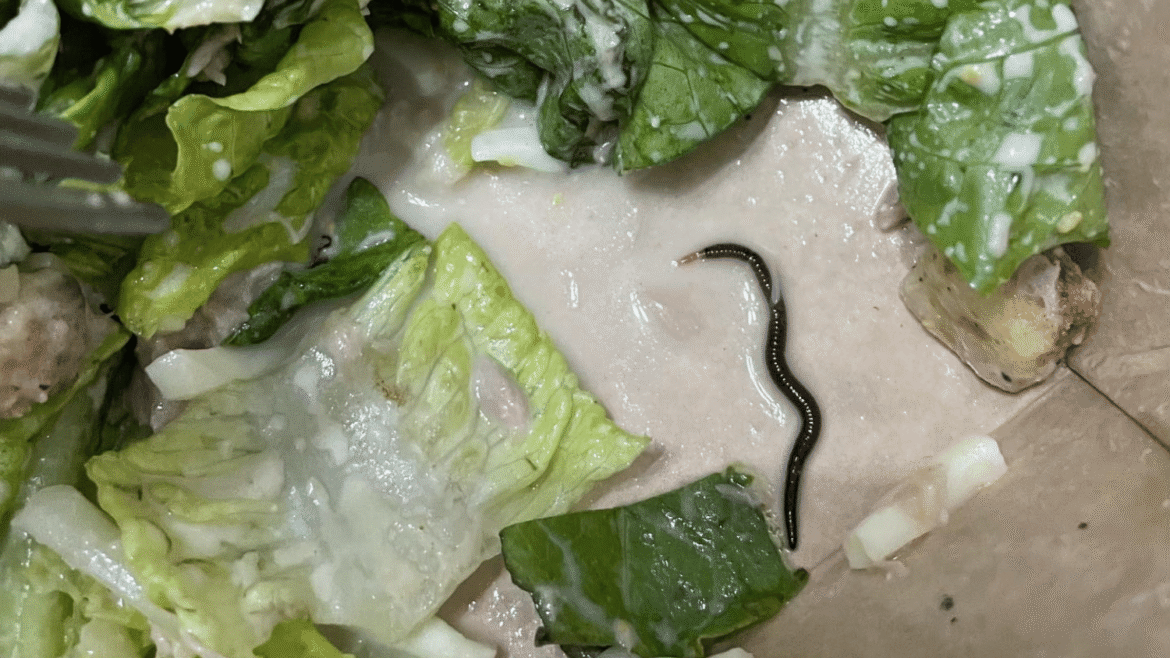
Shakey’s response follows Jocson’s allegation that she found a live worm in a salad ordered from the store’s Abad Santos branch in Tondo via Grab. She shared photos and a video of the worm wriggling.
Jocson said she reported the order to Grab and received a refund for the salad, but criticized Shakey’s for allegedly failing to adequately address her concern.
The post drew comments from netizens expressing concern over food safety. Some speculated that the worm could be a juvenile cutworm or armyworm, both of which can affect crops. However, its species has not been independently confirmed.
The photos and video shared by Jocson do not also establish how the worm entered the salad or whether pesticides were used on the vegetables.
Philippine food safety laws require food establishments to implement sanitation and pest-control measures and provide for regulatory oversight by local health authorities and other agencies.
Under the Sanitation Code of the Philippines, food establishments must source their meat and produce from suppliers “under sanitary or veterinary supervision.” It also requires food businesses to maintain their own vermin abatement programs.
Section 20(c) provides for local health agencies to carry out pest-control work at an establishment’s expense if its owners or operators “fail, neglect or refuse to maintain” the required program.
The Food Safety Act of 2013, or Republic Act No. 10611, also outlines food businesses’ responsibilities when a product may pose a safety risk. Section 14(b) requires a food business operator that considers its product noncompliant with food safety requirements to “immediately initiate procedures to withdraw the food in question from the market and inform the regulatory authority.”
Under Section 14(c), operators must also allow inspections and cooperate with regulatory authorities on measures to address risks posed by food products they have supplied. Section 29 provides for regulatory agencies to conduct regular inspections of food business operators.
READ: