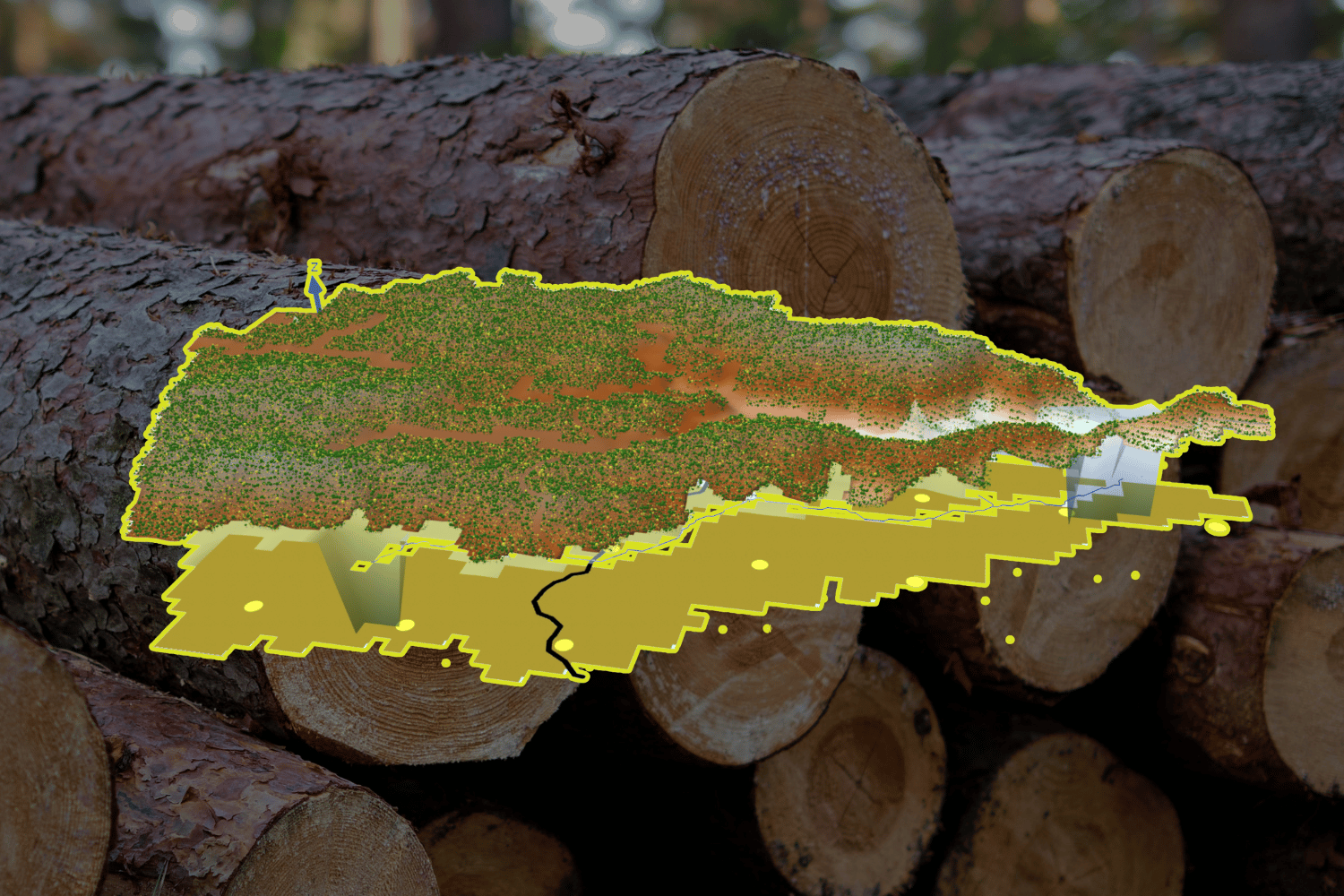
LUNTIAN simulation models forestry systems to test plantation strategies, boost yields, and guide policy decisions.
Researchers have developed a computer simulation that could help the country rebuild its timber supply.
It works by allowing forest managers to test different plantation strategies before implementing them in the real world.
The tool lets planners experiment with different approaches in a controlled “virtual forest” environment before applying them in actual plantations.
It’s called LUNTIAN (Labor, University, Timber Investment, and Agent-based Nexus), a computer simulation designed to model forestry systems in a controlled environment. The project was led by researchers from the University of the Philippines Los Baños, Université Toulouse Capitole, and Université Toulouse Jean Jaurès.
Unlike traditional forestry models that only estimate tree growth, LUNTIAN also simulates how people influence forests, including investors deciding where to invest, workers looking for jobs, and forest patrols tasked with preventing illegal logging.
Researchers said the model offers a safer and cheaper way for policymakers to evaluate “what-if” scenarios, instead of relying on costly field trials or trial-and-error approaches.
In its best-performing simulation, the model increased tree populations by 55% over 17 years despite continuous harvesting, while generating income for investors and resource managers, supporting stable jobs in nearby communities, and eliminating unauthorized tree cutting.
The study also found that adjusting factors such as harvest schedules, profit-sharing arrangements, local hiring, and enforcement levels could significantly improve both forest regeneration and financial returns.
Researchers said a more sustainable timber supply could lessen the country’s dependence on imported wood while supporting industries that rely on locally sourced materials.
LUNTIAN can also serve as a decision-making tool for government agencies, universities, and private plantation operators as the country attempts to restore degraded forests while supporting rural livelihoods and long-term wood production.
READ: