The alleged theft and butchering of an arapaima in Quezon has sparked public curiosity.
Three workers at a resort in Quezon allegedly saw a giant fish swimming in a pond and thought they had found the perfect lunch.
Instead, they allegedly ended up butchering one of the country’s most valuable captive fish.
The bizarre case made headlines after authorities arrested the three workers accused of stealing, slaughtering, and preparing to cook a 25-year-old arapaima at a resort in Pagbilao, Quezon. The fish measured nearly 6.7 feet long, weighed around 90 kilograms, and was valued by the resort at an astonishing ₱7 million.
For many Filipinos, the obvious question was: How can a single fish cost as much as a house?
The answer has very little to do with its meat.
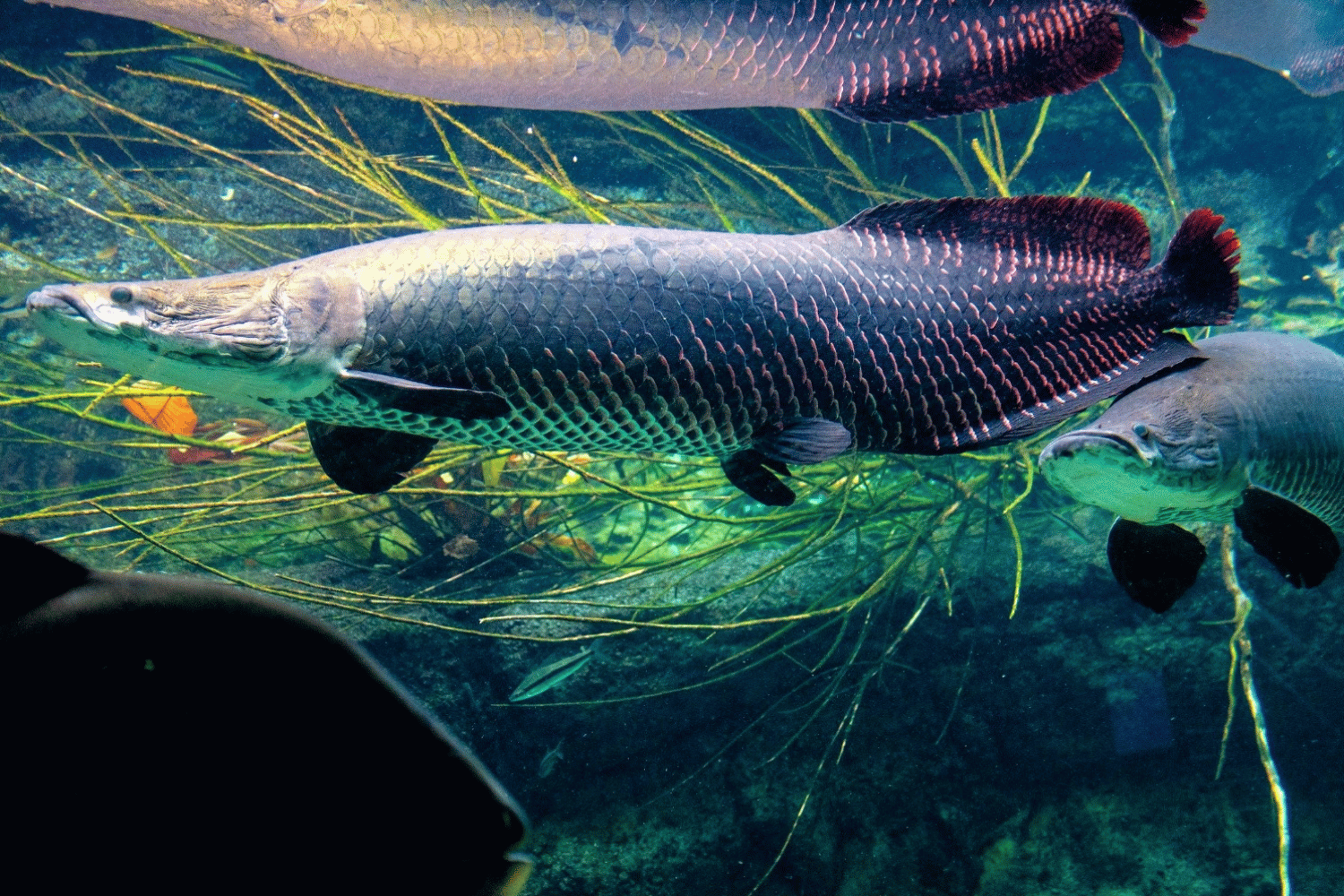
The arapaima (Arapaima gigas), also known as the pirarucu or paiche, is one of the largest freshwater fish on Earth. Native only to the Amazon River Basin in South America, it can grow up to three meters (10 feet) long and weigh more than 200 kilograms, making it a true freshwater giant.
Unlike ordinary fish, the arapaima is also an obligate air-breather. Every few minutes, it must rise to the surface to gulp air because its modified swim bladder functions almost like a lung. This unusual adaptation allows it to survive in oxygen-poor waters where many other fish cannot.
Its size is only part of what makes it extraordinary.
Scientists consider the arapaima a “living fossil” because its ancient lineage has changed little over millions of years. It belongs to the bony-tongued fishes, using a tongue lined with hard, tooth-like structures to crush prey. Its overlapping scales are so tough that researchers have found them remarkably resistant to punctures—even from the bites of piranhas.
Despite its fearsome appearance, the fish’s high value is rarely because of its meat.
The ₱7-million valuation in the Quezon case reflected decades of care, maintenance, and rarity. The resort had reportedly raised the fish for 25 years, making it one of its biggest tourist attractions. Replacing a mature specimen is virtually impossible.
Arapaimas are not native to the Philippines and are regulated under the Convention on International Trade in Endangered Species (CITES), meaning their international trade is strictly controlled. Importing, transporting, and legally keeping one requires permits and compliance with wildlife regulations.
Keeping one alive is also expensive.
Young arapaimas grow rapidly, consuming enormous amounts of food as they mature. Adult specimens require massive ponds or aquarium systems with excellent filtration and water quality. Because they can live for two decades or more in captivity, owning one is a long-term commitment that only a handful of facilities can realistically sustain.
Ironically, in parts of South America, arapaima is also a prized food fish. Its meat is known for having very few bones and is often called the “cod of the Amazon.” Sustainable aquaculture has made it commercially farmed in countries like Brazil and Peru.
But a giant, decades-old display specimen is an entirely different story.
Much like a centuries-old tree or a rare zoo animal, its value comes from years of growth, conservation, permits, public attraction, and the fact that it simply cannot be replaced overnight.
The Quezon incident has therefore become more than an unusual theft story. It has introduced many Filipinos to one of the world’s most remarkable freshwater creatures—a prehistoric giant whose real worth lies not on the dinner table, but in the decades it takes to become one.
READ: