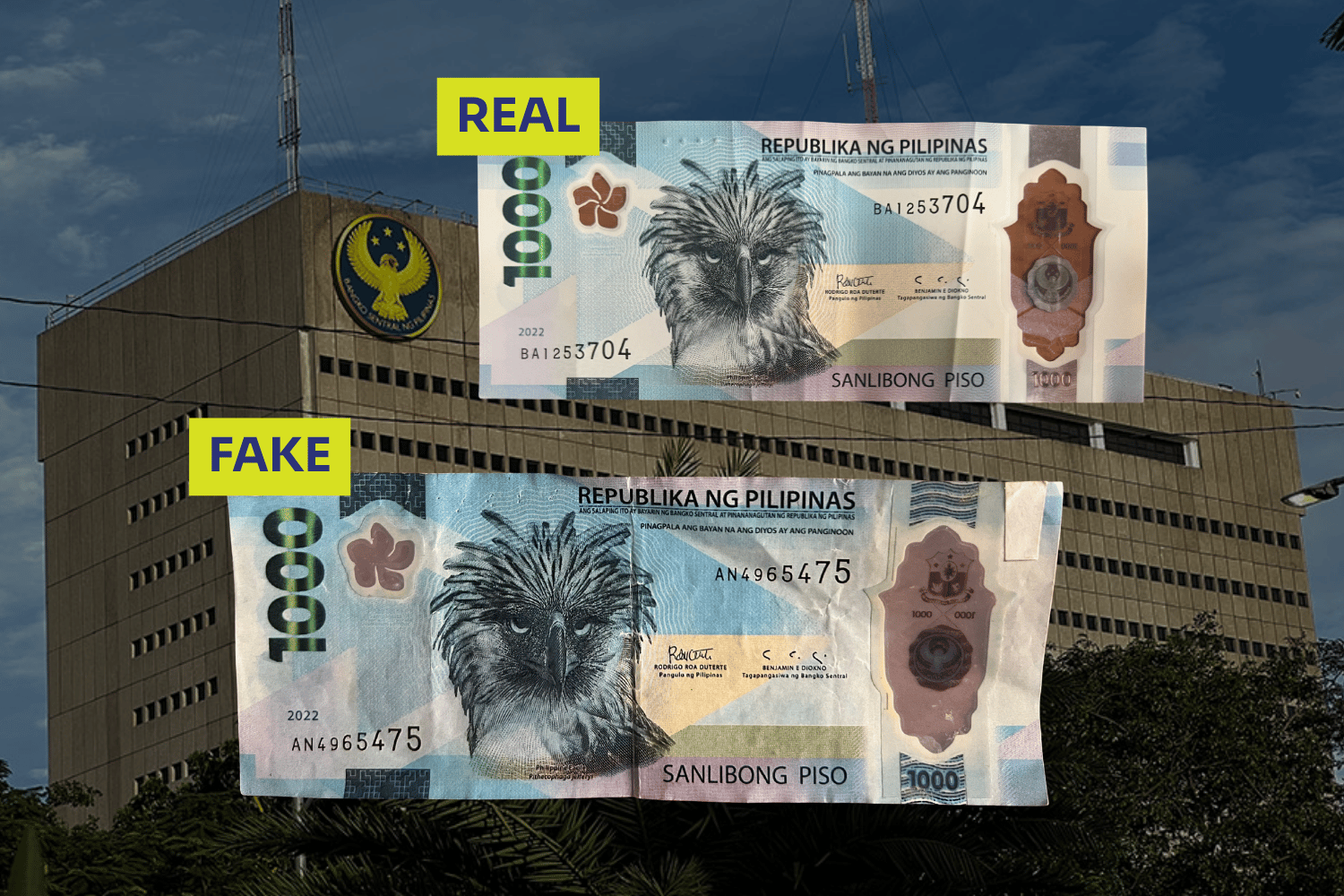
The decline in counterfeit bills may reflect the increasing use of digital payments. Photos by u/DocOnTheCourt / Reddit
The central bank recorded a sharp increase in counterfeit polymer banknotes in 2025, even as overall fake bills fell 17.1% from the previous year.
Fake polymer banknotes are becoming a growing concern even as overall counterfeit money becomes less common, exposing consumers to a new fraud risk as the country’s newer bills gain wider circulation.
Bangko Sentral ng Pilipinas (BSP) flagged 1,358 counterfeit polymer banknotes in 2025, a sharp jump from just three fake polymer bills recorded in 2024.
The BSP first launched the polymer banknote series in 2022 to prolong the circulation of the bills and strengthen their security features.
Despite the increase, polymer banknotes accounted for only 2.3% of the total counterfeit bills recorded last year.
Overall counterfeit bills in 2025 fell 17.1% from the previous year to 57,954 pieces. That translates to roughly 10 counterfeit notes for every one million genuine bills in circulation.
The BSP attributed the improvement to more sophisticated security features on paper banknotes and greater public awareness of counterfeit money.
The decline in overall counterfeit bills may also reflect the growing use of digital payments. Still, the rise in fake polymer banknotes shows that consumers need to remain vigilant as the newer currency becomes more widely used.
Kiara Gorrospe is a journalist, creative, and self-proclaimed internet sleuth. When not writing about business and tech, she’s on the lookout for the best matcha in the metro.