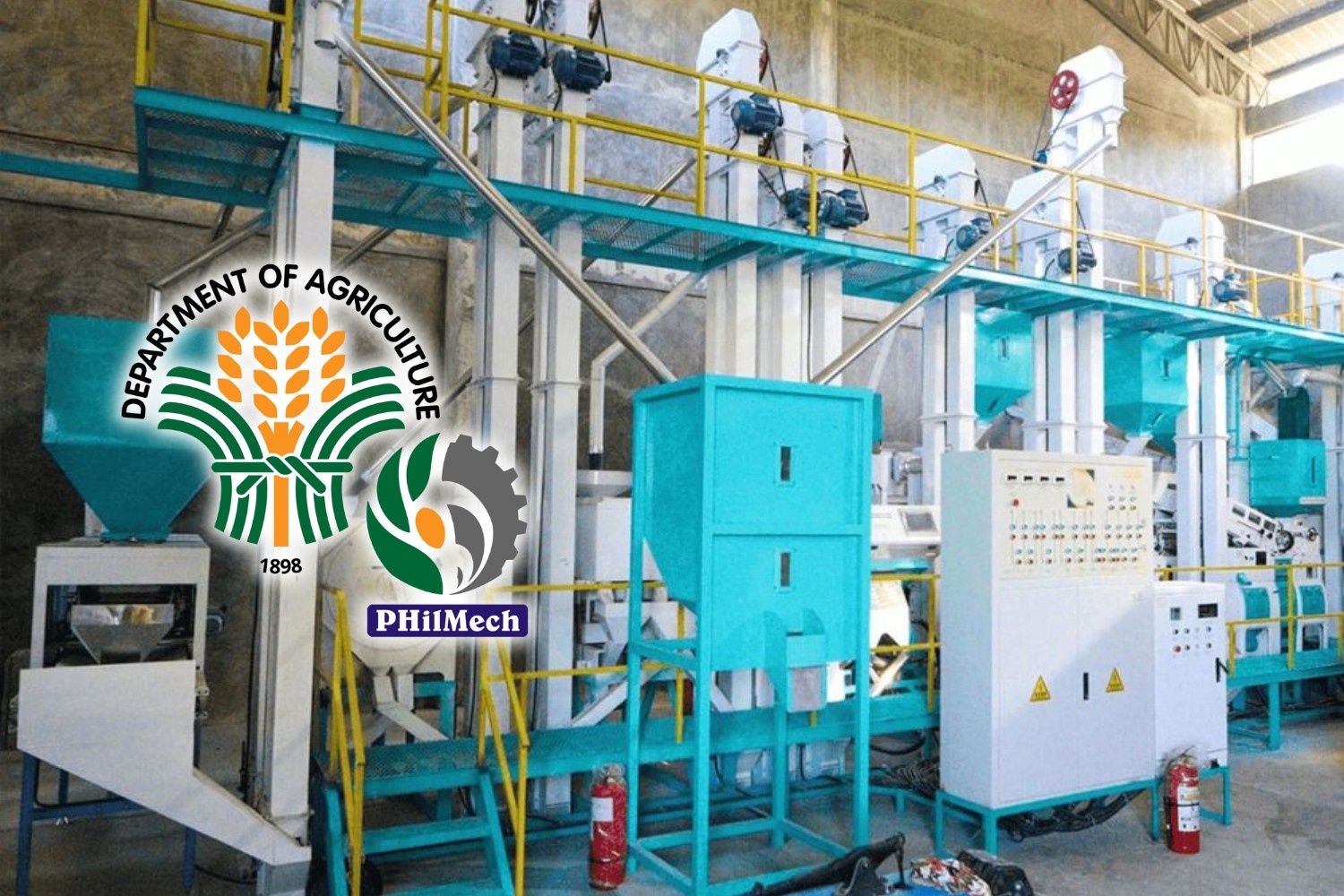
151 PHilMech facilities rolled out under ₱10B annual RCEF support.
Rice farmers can now take part in the rice value chain by milling and selling various grades of rice directly to wholesalers, retailers, and consumers. This, in turn, allows them to expect higher yields and better earnings as modern processing systems continue to roll out nationwide, under projects funded through the Rice Competitiveness Enhancement Fund (RCEF) between 2019 and 2024.
The Philippine Center for Postharvest Development and Mechanization (PHilMech) said it has installed 151 Rice Processing Systems (RPS) nationwide, including in Nueva Ecija, Isabela, and Misamis Oriental.
The RCEF provides an annual guaranteed ₱10 billion fund for various farm development programs, including mechanization. Under the program, the deployment of RPS facilities forms part of a nationwide push to modernize postharvest systems, with 132 units already operational and the rest expected to be completed by the end of the year.
PHilMech said about 1.2 million farmers have benefited from the broader mechanization program, which aims to modernize production and stabilize supply.
Each facility includes dryers, rice mills, and storage for palay and milled rice, enabling farmers and cooperatives to process and sell rice directly to buyers and capture more earnings across the supply chain, rather than relying on traders alone.
The systems also improve efficiency, cutting milling and storage time and reducing postharvest losses. With cooperatives now able to mill palay themselves, dependence on middlemen is also reduced, allowing farmers to retain more income.
RPS units also deliver a higher milling recovery rate of 7%, translating to increased output and earnings.
As fuel prices continue to rise, reducing processing and logistics costs has become more critical, making these upgrades a buffer against inflation while strengthening food security efforts.
Farmers are reclaiming the value chain. With 151 PHilMech facilities now operational, learn how a 7% boost in milling recovery and RCEF-funded mechanization are shielding 1.2M farmers from rising fuel and logistics costs.
READ: