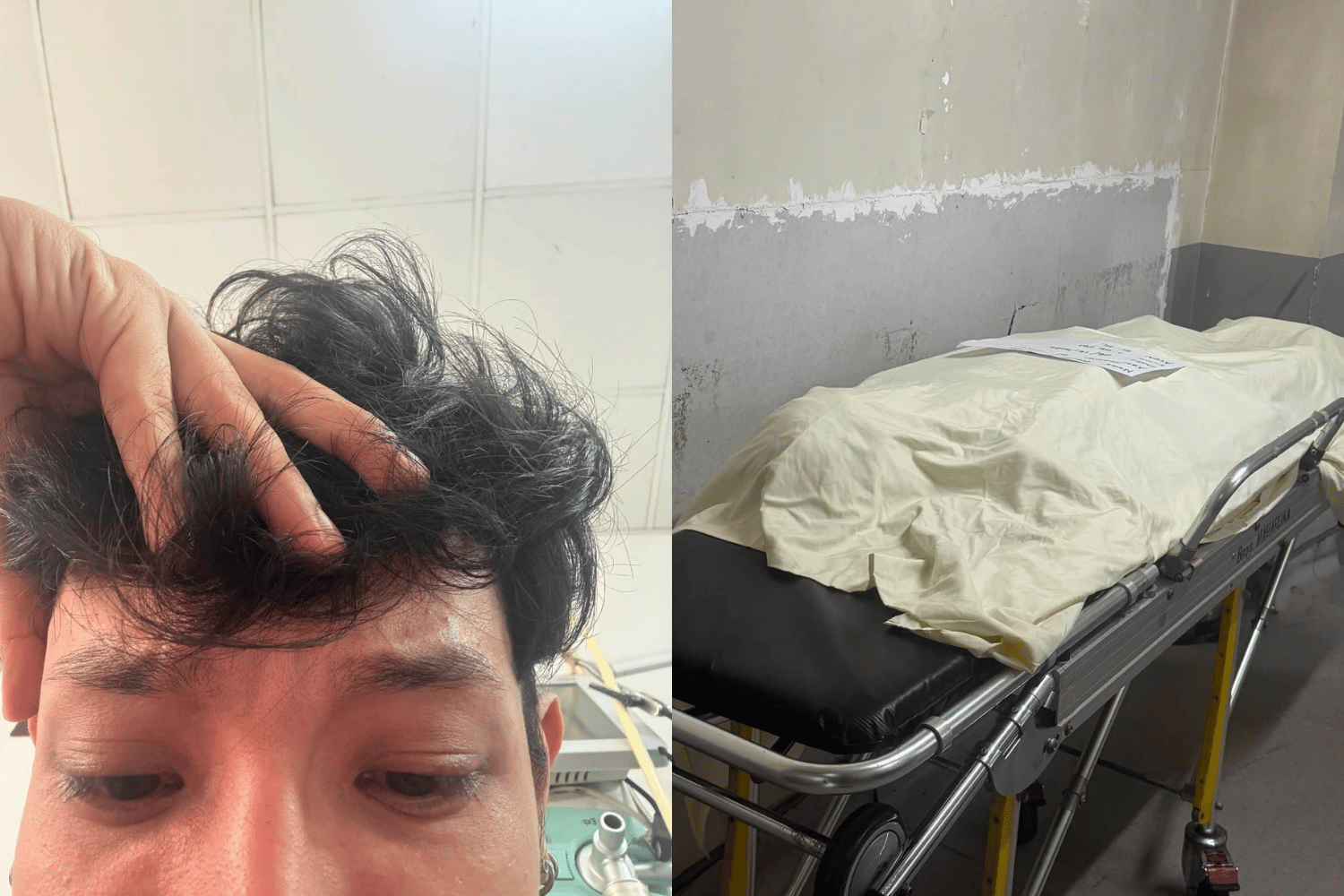
“Halos 10 minutes na akong tumatawag sa 911 pero wala pa ring sumasagot,” Askri wrote in a Facebook post Saturday, August 15.
According to Askri, the ordeal only became more frustrating when someone finally answered. He alleged that he was repeatedly told to “wait” and could hear laughter and conversation in the background while he desperately sought emergency assistance.
Then his father suffered cardiac arrest.
“Ako mismo ang nag-CPR sa kanya,” Askri wrote, saying he continued performing CPR while waiting for an ambulance.
But Askri claimed the problems did not end when responders finally arrived. He alleged that the ambulance had no automated external defibrillator or AED and lacked adequate equipment. He also claimed nobody immediately took over CPR, forcing him to continue trying to revive his father himself.
“Ako pa rin ang gumagawa ng CPR,” he wrote.
Askri said he shared his experience because he wanted Filipinos to realize how difficult it can be to get emergency assistance when every second counts.
“Galit ako dahil naranasan ko mismo kung gaano kahirap humingi ng emergency assistance kapag ang mahal mo sa buhay ay nangangailangan nito,” he wrote.
His allegations put a harsh spotlight on the government’s Unified 911 Emergency Hotline, which was launched nationwide in September 2025 to consolidate police, fire, medical and disaster emergency services under a single number.
The Department of the Interior and Local Government said at the system’s launch that Unified 911 was designed to deliver faster emergency assistance, with a target response time of five minutes.
That promise makes Askri’s account particularly disturbing.
If verified, waiting nearly 10 minutes just for an emergency call to be answered—followed by further delays and an allegedly inadequately equipped ambulance—raises serious questions about whether the country’s emergency response system can deliver when a life is literally hanging in the balance.
Askri’s allegations have not been independently verified, and 911 authorities and the concerned local government have yet to publicly explain the circumstances surrounding the incident.
But for a son who says he desperately performed CPR on his own father while waiting for help, the failure he alleges is no longer an abstract problem with government services.
It became a matter of life and death.
READ: