The debate between local brand Carry Om and retail giant SM Store highlights a crucial lesson for Filipino entrepreneurs.
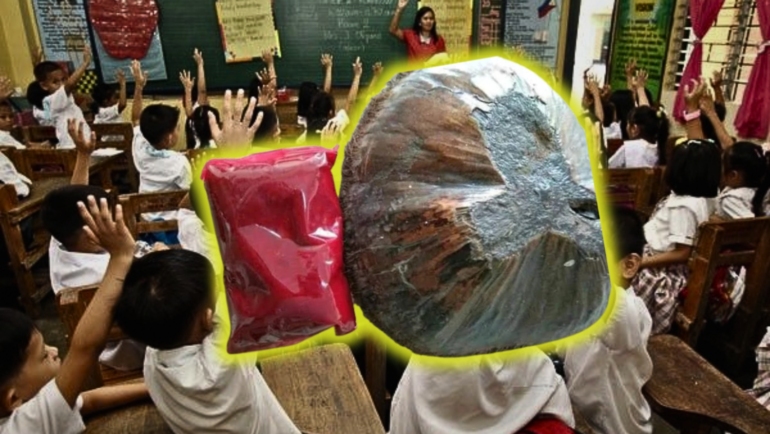
When Carry Om founders Viktoria Salazar and Dhanvan Saulo pulled two bags from an SM Store shopping bag and placed them beside their own products, the similarities they alleged immediately became a social media controversy.
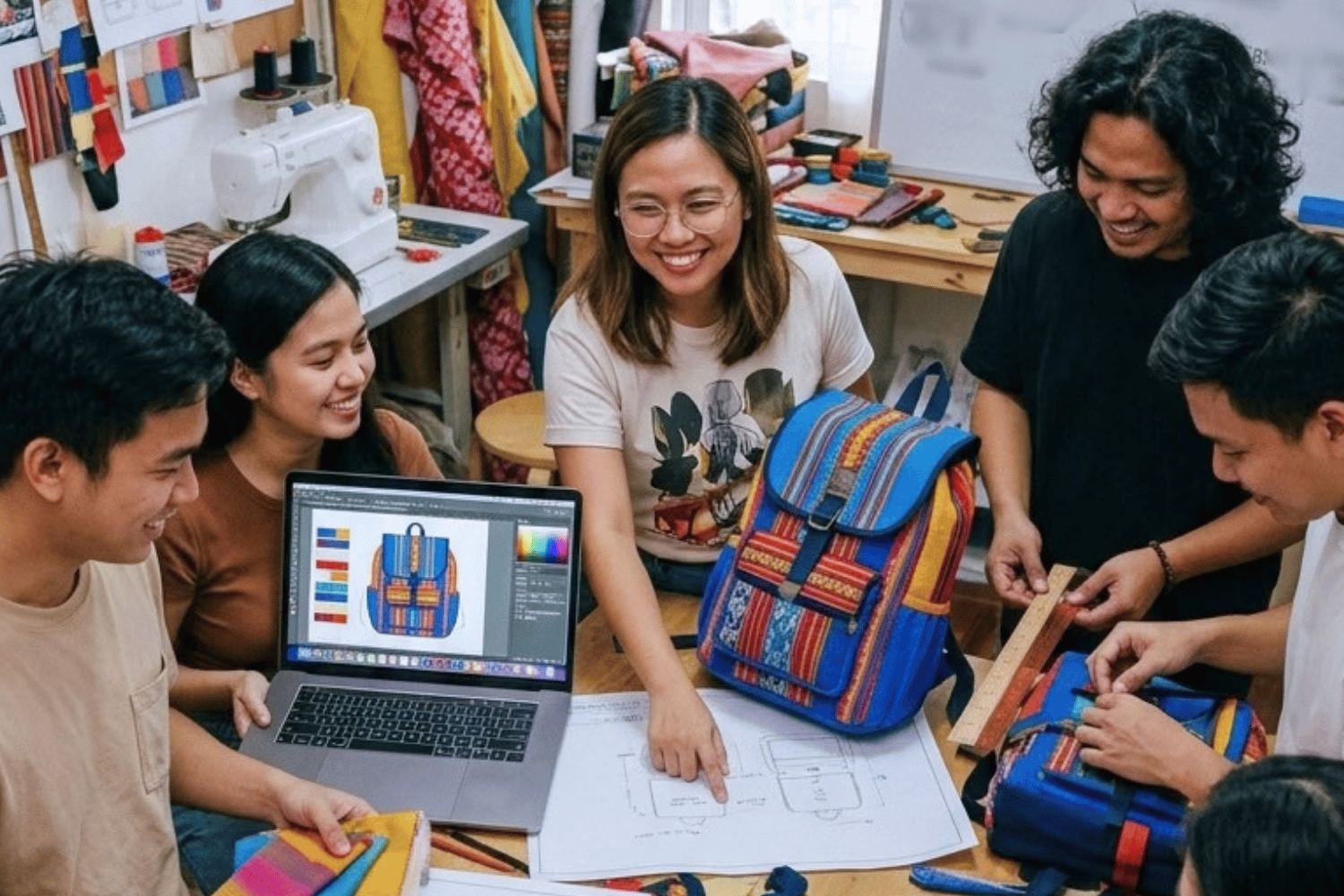
The local brand said bags sold at SM Store resembled its Garuda tote and Ganga hybrid backpack. SM Retail responded that SM Store is a marketplace for suppliers and does not itself design or manufacture the products it sells. Carry Om countered that this did not answer its central question: how did the allegedly similar products reach SM’s shelves?
Then came a detail that should make every Filipino entrepreneur pay attention.
IPOPHL Director General Teodoro Pascua told reporters that the agency checked its records and found that Carry Om had not registered the designs in question. His broader message to businesses: protecting intellectual property early is cheaper than fighting over it later.
Whatever ultimately comes of the dispute, it provides a useful lesson for thousands of Filipino designers and small businesses.
Your design needs its own protection
A trademark, copyright and industrial design registration protect different things.
For a bag, chair, bottle, jewelry piece or other manufactured product whose distinctive value lies in its appearance, one of the most relevant tools is industrial design registration.
The Intellectual Property Office of the Philippines defines industrial design as the ornamental or aesthetic appearance of a manufactured article. It can cover three-dimensional features such as shape and surface or two-dimensional elements such as patterns, lines and colors.
To qualify for registration, the design must meet legal requirements, including being new or original.
Registration gives its owner the right to prevent others from commercially making, selling or importing products embodying a copy or substantial copy of the protected design. Protection initially lasts five years and may be renewed twice, for a maximum of 15 years.
That is far more useful in a dispute than simply saying, “We designed it first.”
Trademark is different
Your company name and logo are another matter.
These are generally protected through trademarks. The Philippine trademark system follows a first-to-file rule, making early filing particularly important.
But registering a trademark does not automatically give a company ownership over every product design it sells. A trademark primarily identifies the commercial source of goods or services; an industrial design protects the aesthetic features of a product.
A serious brand therefore needs to think of IP as a portfolio, not one certificate.
Copyright can also matter
Copyright protection is generally automatic from the moment an eligible original artistic work is created. Registration is not required for copyright to exist.
Creators can nevertheless register and deposit qualifying works to establish additional documentary evidence of creation and ownership—potentially valuable when licensing or disputes arise.
That distinction matters: automatic protection does not mean automatic proof or automatic victory in a dispute.
And whether copyright protects particular elements of a commercial product can be more legally complicated than protecting an illustration, photograph or other conventional artistic work. Businesses should not assume copyright alone covers every feature of a physical product.
Protect the design before the fight
There is another weak point many young brands overlook: the supply chain.
A design may pass through employees, freelance designers, pattern makers, photographers, suppliers and factories before reaching consumers.
Contracts should therefore clearly address confidentiality, ownership of commissioned work, assignment of applicable IP rights and what manufacturers may do with prototypes, patterns, specifications and production files.
Brands should also preserve their own evidence: dated sketches, prototypes, invoices, emails, design files, manufacturing instructions and records showing when products were developed and released.
Think of it as building the product’s legal paper trail while building the product itself.
The real lesson from Carry Om
The Carry Om controversy became an argument about expensive bags, originality, big corporations and small Filipino businesses.
But beneath the social media noise is a much more practical question:
If somebody reproduces what you believe you created, what can you actually prove—and what rights did you secure before the alleged copying happened?
For Filipino entrepreneurs, intellectual property protection should not begin when a viral post appears.
It should begin while the product is still on the drawing board.
Because the worst time to discover what you failed to protect is when you see something that looks like your creation already sitting on somebody else’s shelf.
READ:

Filipino brands urged to protect designs as Carry Om-SM dispute puts IP rights in focus
Kenneth M. del Rosario
October 1, 2026
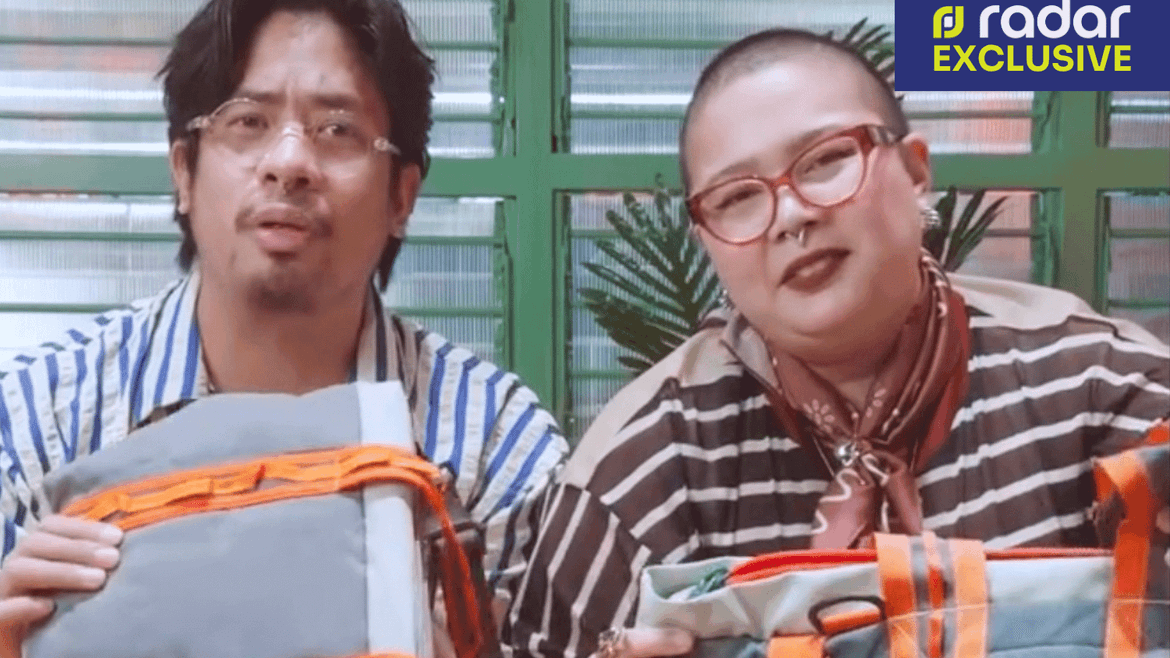
EXCLUSIVE: Carry Om fires back: ‘SM’s statement does not answer the issue we raised’
Kiara Gorrospe
September 25, 2026
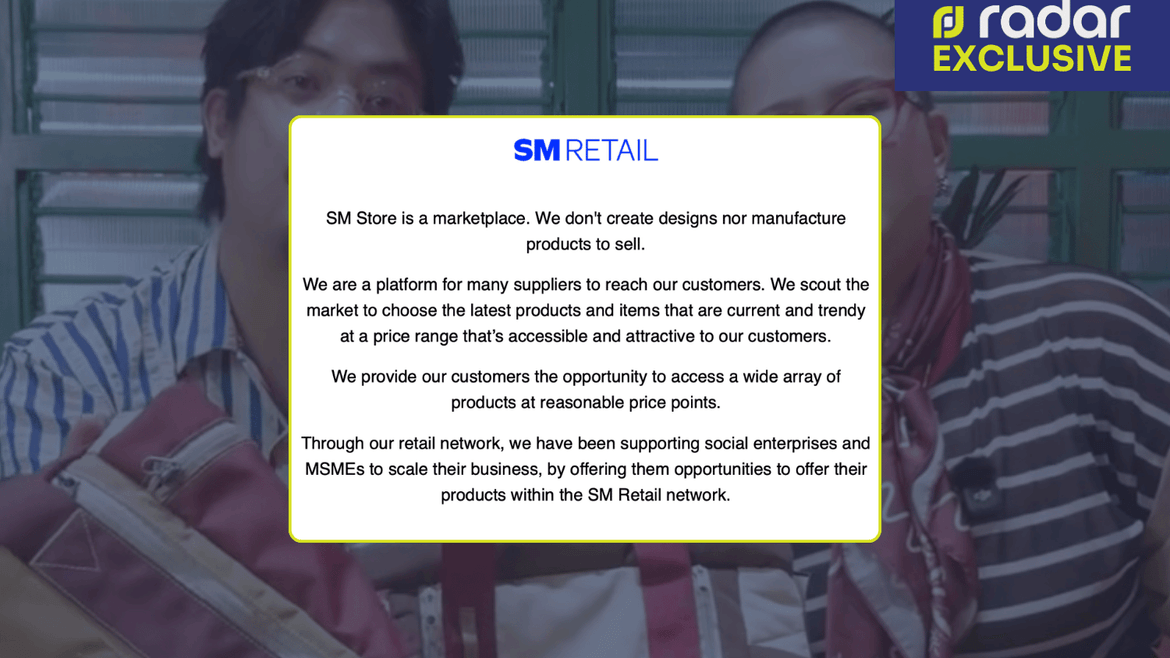
EXCLUSIVE: SM Retail responds to Carry Om copying allegations: ‘We don’t create designs’
radar Business
September 25, 2026