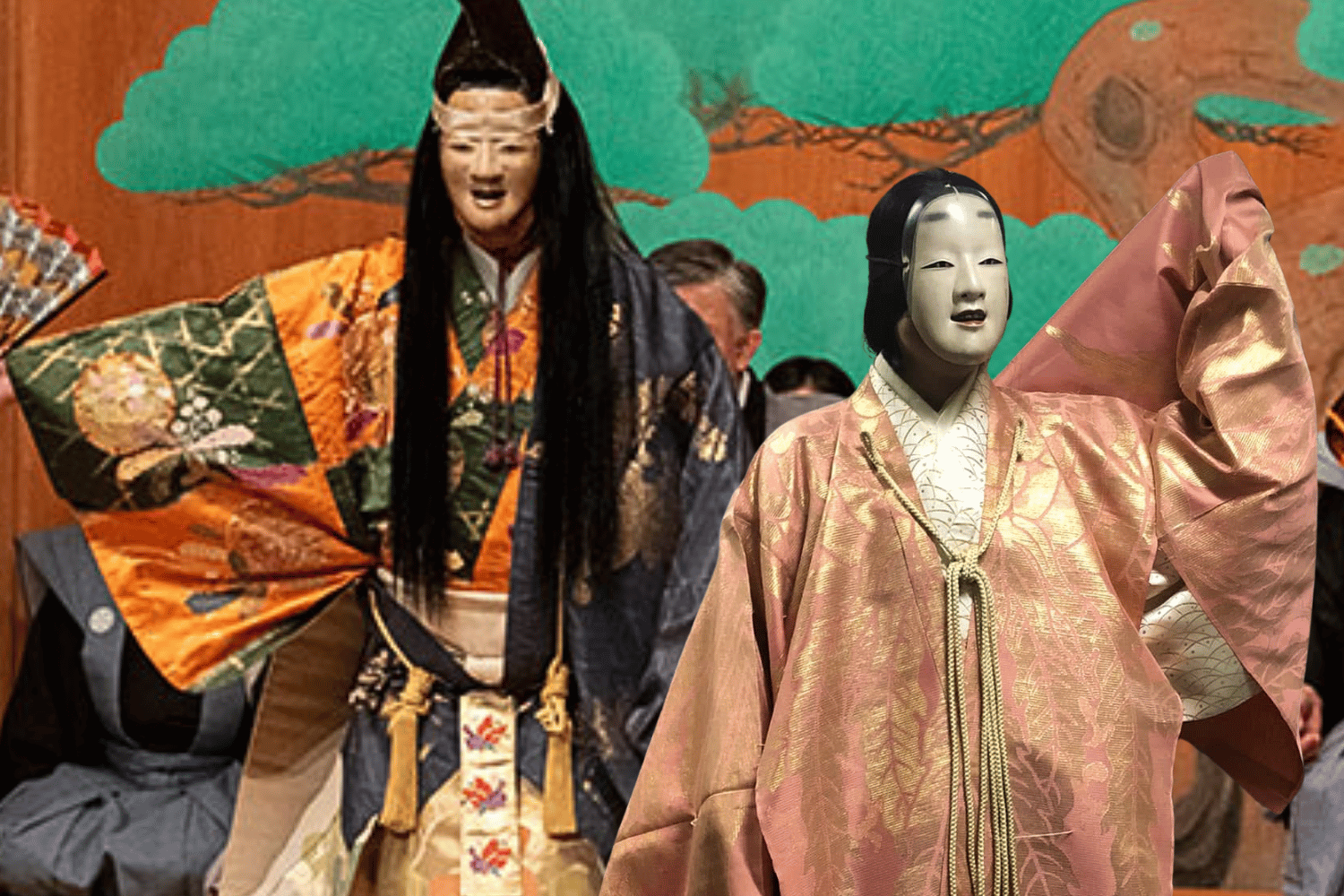
The Philippine-Japan Noh collaboration actually goes back two decades. Photos from UPCIS Noh Ensemble / Facebook & Japan Cultural Expo
One of Japan’s oldest theatrical traditions is coming to Manila—with a distinctly Filipino story at its center.
Japanese Noh grand masters will join Filipino performers for “Ranshō: Paglusong sa Sigwa (Soaring Through the Storm),” an original FilipiNoh production commemorating the 70th anniversary of diplomatic relations between the Philippines and Japan.
Presented by the University of the Philippines through the Center for International Studies (UPCIS), in cooperation with the Embassy of Japan in the Philippines and The Japan Foundation, Manila, the 2026 project is the third commemorative collaboration, culminating years of training and artistic exchange between Japanese Noh grand masters and the UPCIS Noh Ensemble.
“Ranshō” takes the centuries-old Japanese art form and places it in conversation with Philippine history and cultural memory. Using Filipino language instead of Japanese in its Noh vocal performance, the production explores the country’s recurring struggles for freedom, democracy, and national renewal using the movement, music, and performance conventions of Noh.
This August, Noh Grand Masters Yasunori Umewaka, also known as Umewaka Chozaemon, and Shigeji Ōmura will return to Manila for intensive rehearsals with the Filipino ensemble.
Umewaka, from the Kanze school, specializes in shite or principal roles. Ōmura, from the Ōkura school, specializes in the traditional ōtsuzumi drum. Both are recognized as Holders of Important Intangible Cultural Property in Japan.
A special 30-minute preview of “Ranshō,” featuring performers in full kimono costume, will be presented to members of the media on August 24.
The Philippine-Japan Noh collaboration actually goes back two decades.
In 2006, Japanese Noh masters and the UPCIS Noh Ensemble staged the Noh classic “Okina” and the Filipino original, “Dance of Sisa” for the 50th anniversary of Philippine-Japan diplomatic relations. They reunited for the 60th anniversary in 2016 with “Cedula sa BGC: Isang Kontemporanyong Noh,” which explored the life and revolutionary role of Andres Bonifacio.
For this year’s project, intensive flute training began in Japan in April, followed by ensemble workshops and rehearsals with the Noh grand masters at UP Diliman in June.
Eight Noh masters from Japan will ultimately join the UPCIS Noh Ensemble for three performances in December.
“Ranshō: Paglusong sa Sigwa” will be staged at the UP Theater on December 6 and 7 at 3 p.m. The performances will also be accompanied by a curated exhibition of Edo-period Noh costumes and masks.
The production then moves to Makati for its final performance on December 9 at 6:30 p.m. at the Carlos P. Romulo Hall, RCBC Plaza.
Seventy years after the Philippines and Japan established diplomatic relations, the collaboration shows how an art form preserved for centuries can find new life by telling stories rooted in another country’s history and imagination.