How a forgotten U.S. congressional vote changed the fate of Philippine freedom.
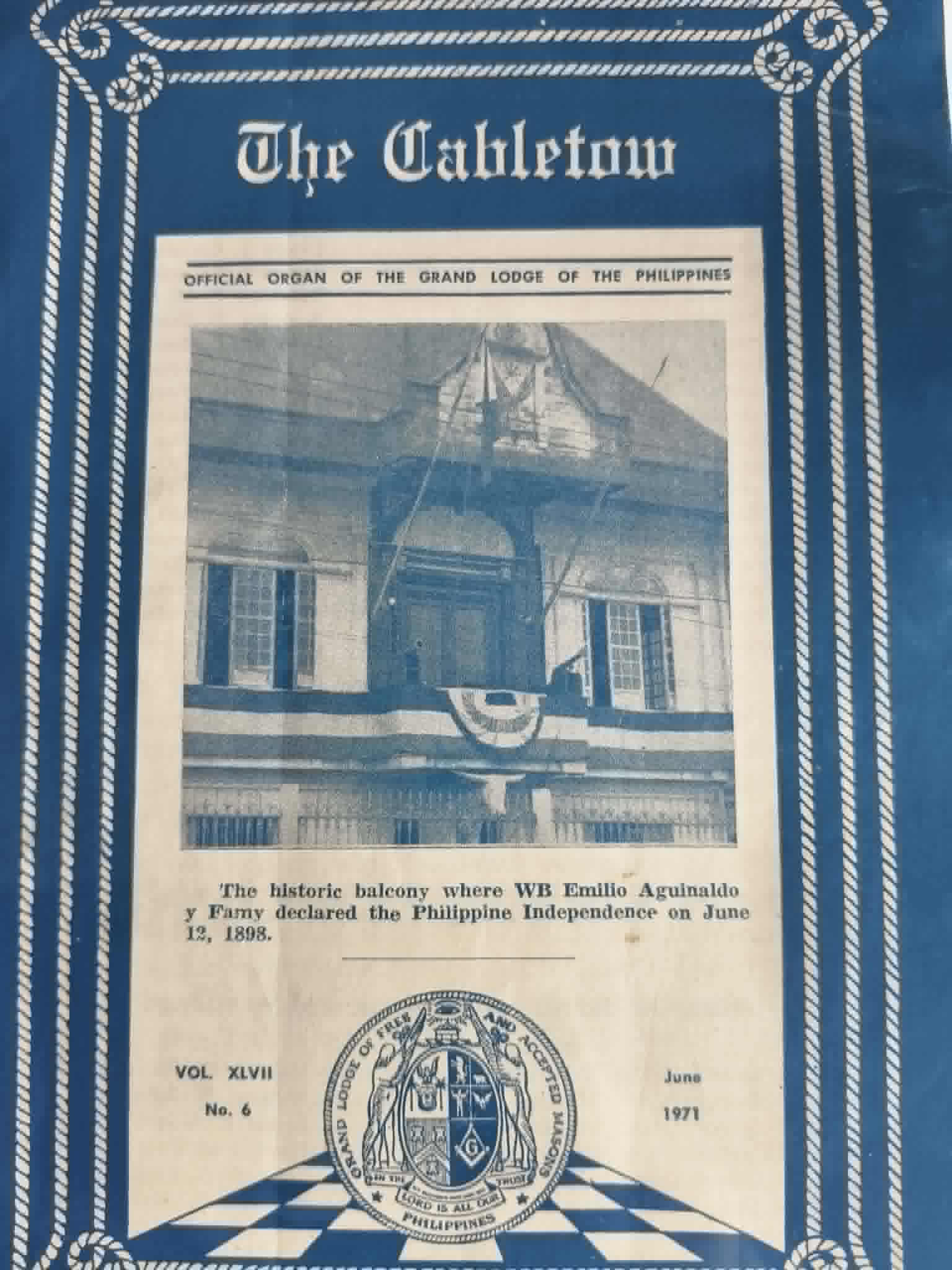
When history is squeezed into the pages of elementary school textbooks, it tends to lose its edges. The traditional representation of the birth of the Philippine Republic is a pristine, romanticized scene: a uniform wave of patriotism, a triumphant new anthem, and a heroic general waving a flag from a balcony in Kawit, Cavite.
But the real story, as it is told in dusty letters and private journals, is much more complicated. Filipino freedom was not easily won. It was an experiment in chaos, high stakes, deep political fissures, outright international deception, artistic stubbornness, and a contemporary logistical compromise that almost didn’t happen.
Apolinario Mabini was initially opposed to the declaration of independence
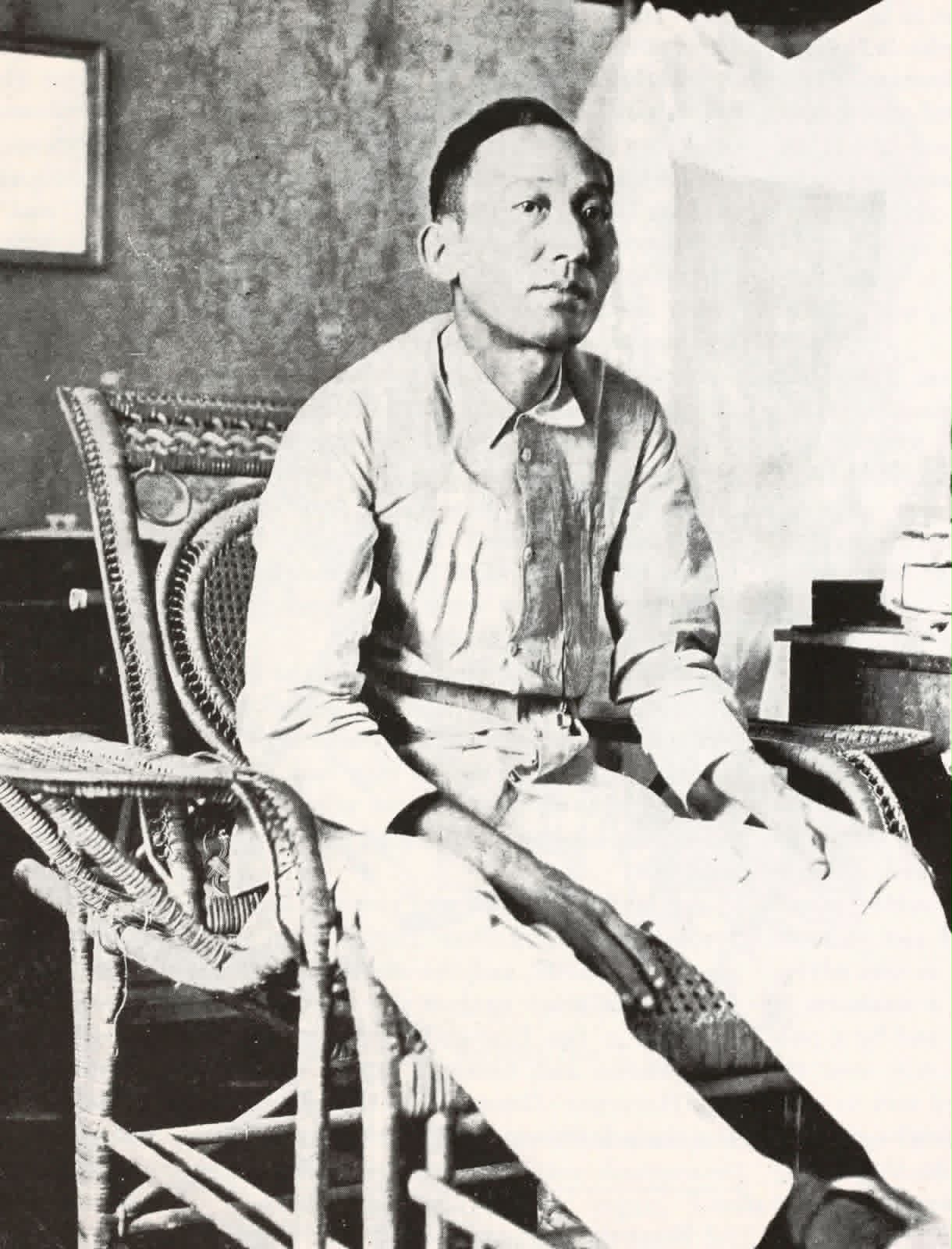
Mabini was recommended to Aguinaldo as an adviser by Filipino lawyer Felipe Agoncillo, who told the young president that Mabini had an “ulong ginto,” meaning his wise advice and opinions were valuable to the plan in creating an independent nation. Aguinaldo quickly had Mabini fetched from Los Baños, Laguna, where he was resting.
When he finally arrived in Kawit, Aguinaldo was disappointed at what he saw: his recommended adviser was a paralytic. For the president, Mabini was not only physically useless in the government; he might also become a burden.
But Mabini’s words and advice after talking to Aguinaldo overcame the latter’s doubts. It was the start of Mabini’s job as presidential adviser.
When he learned of Aguinaldo’s plan to declare independence on June 12, Mabin tried to dissuade him, saying it was premature. What Mabini advised was to reorganize the government first to convince foreign countries that the newly freed colony was worthy to be part of the family of nations in the world.
But Aguinaldo argued back that declaring independence wasn’t a matter of convincing other countries of the Philippines’ new stature. He also wanted the loyalty of the Filipinos who were still fighting in the field. It was only then that Mabini agreed to the president’s plan.
The Marcha Real of Spain was the inspiration for the Marcha Nacional Filipina that later became our national anthem
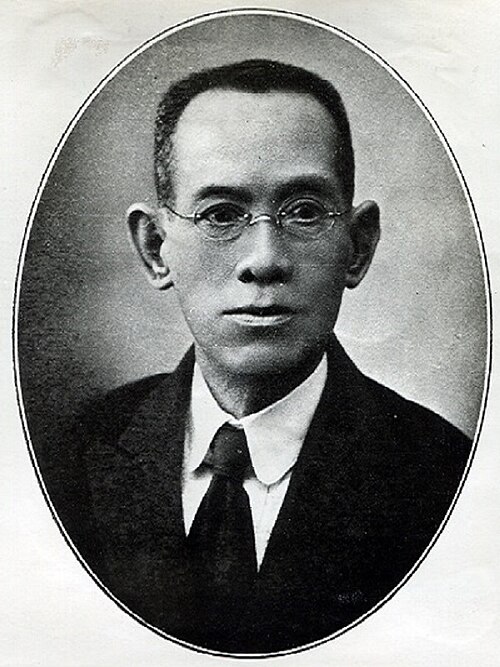
Interviewed by a local magazine at his residence in Manila, composer Julian Felipe was asked what was the inspiration for his composition that later became our national anthem. One would expect a reply of Filipino patriotism and heroism in the revolution as the source of his inspiration.
Instead, Felipe said that the inspiration for his composition was the Spanish national anthem, the Marcha Real, saying that his motivation to use the march was for the Filipinos to continue remembering their Spanish heritage even though they were free from Spanish colonial rule.
He originally gave his composition the title “Marcha Magdalo Filipina” in honor of President Emilio Aguinaldo, but this was later changed by the President himself to “Marcha Nacional Filipina.”
There is an amusing anecdote about the anthem narrated by Cavite food historian Guillermo “Ige” Ramos, whose family lived in Cavite City and were practically townmates and neighbors with Felipe.
Felipe was once asked about his opinion in making the National Anthem melody a beat slower to accommodate lyrics to the march since it was too fast to be sung. The original anthem was a march with a paso doble beat to which Felipe always insisted that it had to be played in exactly 59 seconds, “walang labis, walang kulang.”
As for the plan to change the speed of his music, Felipe became annoyed and said “Hindi ko isinulat ang Marcha Nacional na punebre ng patay.” (I didn’t write the Marcha Nacional as a funeral dirge).
There is no known existing manuscript copy of the Marcha Nacional Filipina. Two copies that Felipe donated to the National Library were destroyed during World War II. Another two copies were given to Commodore George Dewey in 1898 and are probably in some library or archives collection in the United States waiting to be found.
The lone American “officer” who signed the Declaration of Independence was a scammer
Among the signers of the Declaration of Independence was a lone American military officer named L.M. Johnson was reportedly a “Colonel of Artillery.” Who was this officer, and where did he come from?
And most importantly, did he really represent the Americans who had arrived in the Philippines during the Spanish-American War in 1898?
Johnson remained a mysterious figure to Filipino historians, who gave him different identities ranging from Commodore George Dewey’s secretary to an artillery officer until an investigation done by the late history researcher and writer, Bob Couttie, revealed the man’s true identity—Lewis Marcina (LW) Johnson, the American who attended the first Independence Day rites and allegedly affixed his signature on one of the most important documents in Philippines history was not the man he claimed to be.
He was described as a “soldier of fortune” by American writers who was a former hotelkeeper in Shanghai, China, and was managing a “cinematograph” (moviehouse) in Manila when he allegedly consented “to appear as Aguinaldo’s chief of artillery and a representative of the North American nation.”
Couttie added in his published book Fool’s Gold that we do know that “Lewis became an adventurer, occasional soldier of fortune, maybe smuggler, hotel manager, and movie mogul.” He inserted himself in the military service in different countries in South America and Hawaii, where he became a non-commissioned officer to the National Guard when the US took over Hawaii as a state.
He then moved to China (where he opened a movie house), then to Hong Kong, and later to the Philippines, doing odd jobs. It was in Hong Kong that he met the Filipino revolutionaries who were preparing to return to the Philippines to resume the Philippine Revolution following the collapse of the Truce of Biak na Bato.
It was probably in Hong Kong that Johnson met Aguinaldo, for by 1898, we find him under the service of the Filipino army as an artillery colonel. How he obtained such a high military rank is not known, for in a letter to Aguinaldo offering his services, he already signed his name with the rank of “Colonel.” He eventually fought the Spaniards under Aguinaldo’s command and later became part of the celebration of Independence Day on June 12, 1898, where he was said to have delivered a speech. Oddly, even though there were claims that he affixed his name on the Declaration of Independence, his signature could not be found on any of the existing copies.
He did some business smuggling arms and ammunition from China and Hong Kong for the Filipinos, arrested by civilian authorities but eventually released. He was known to have left Aguinaldo’s service in December 1898, before the Philippine-American War erupted two months later, and then spent time travelling and doing business between Manila and China before settling in the Philippines again, where he died during a typhoon in the first decade of the 20th century attempting to set up a pearl fishing business in the Visayas.
President Aguinaldo himself took note of the actual date and time of our first Independence Day celebration
It was well-known that Emilio Aguinaldo was a habitual scribbler who always took notes about events in his life as well as observations of things that came his way. Among his handwritten papers was a document that recorded the day of our independence.
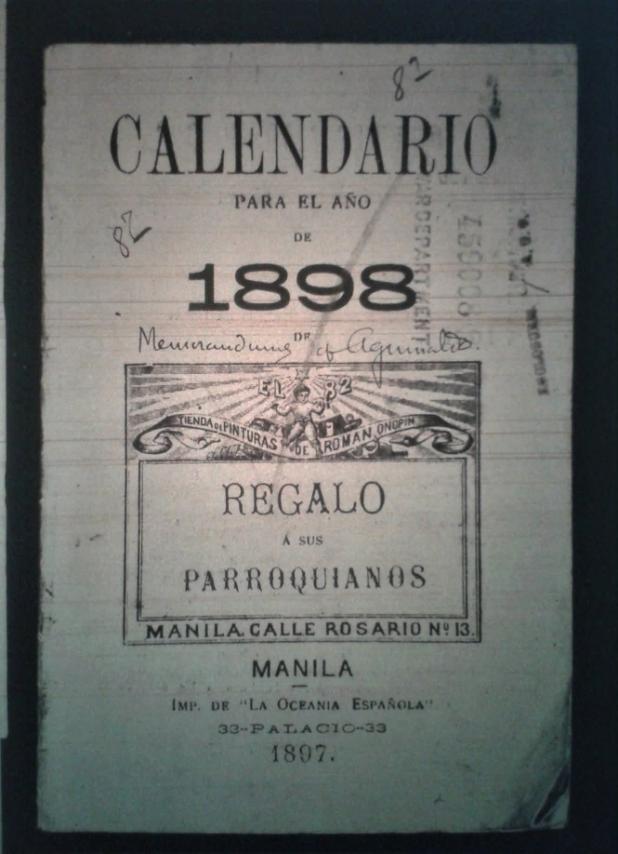
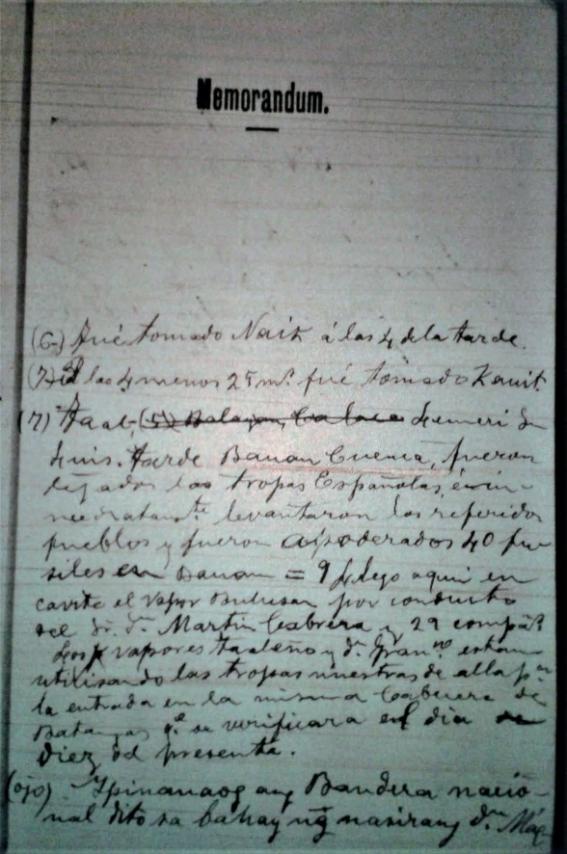
Found among the files of the Philippine Revolutionary Records (PRR), formerly known as the Philippine Insurgent Records (PIR), is a planner for the year 1898 with a notation on the cover reading “Memorandum of Aguinaldo.” Written inside its pages are a number of notes made by President Emilio Aguinaldo himself.
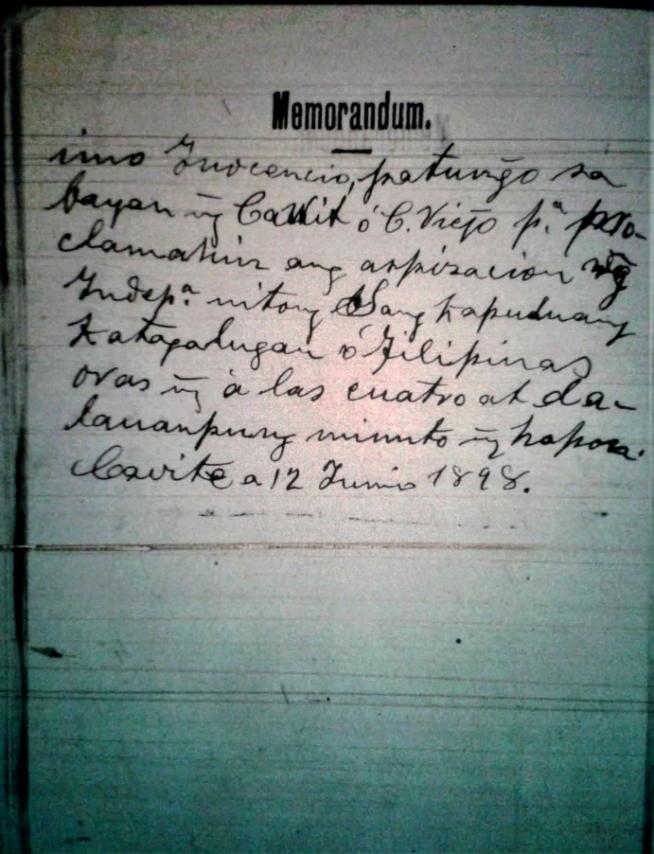
On the bottom part and the next leaf for the entry of June 12, 1898, is the following notation written in abbreviated Tagalog:
(Ojo) Ypinanaog ang Bandera nacional dito sa bahay ng nasirang Dn Maximo Inocencio patungo sa bayan ng Cauit o C. Viejo pa. proclamahin ang aspiracion ng Indepa nitong Sankapuluang katagalugan o Filipinas oras ng alas cuatro at dalawampung minuto ng hapon. Cavite a 12 Junio 1898.
The notation reads:
(Basahin: Ipinanaog ang Bandera Nasyonal dito as bahay ng nasirang Don Maximo Inocencio patungo sa bayan ng Kawit o Cavite Viejo para proklamahin ang aspirasyon ng Independencia nitong Sankapuluang Katagalugan o Filipinas oras ng alas kuwatro at dalawampung minuto ng hapon. Cavite ika-12 ng Hunyo 1898.)
In English:
(Note: The National Flag was brought down from the house of the late Maximo Inocencio and brought to the town of Kawit or Cavite Viejo in order to proclaim the aspirations of Independence of this Tagalog nation or Filipinas at four o’clock and twenty minutes in the afternoon. Cavite, 12 June 1898.)
Swipe or click arrows to see photos