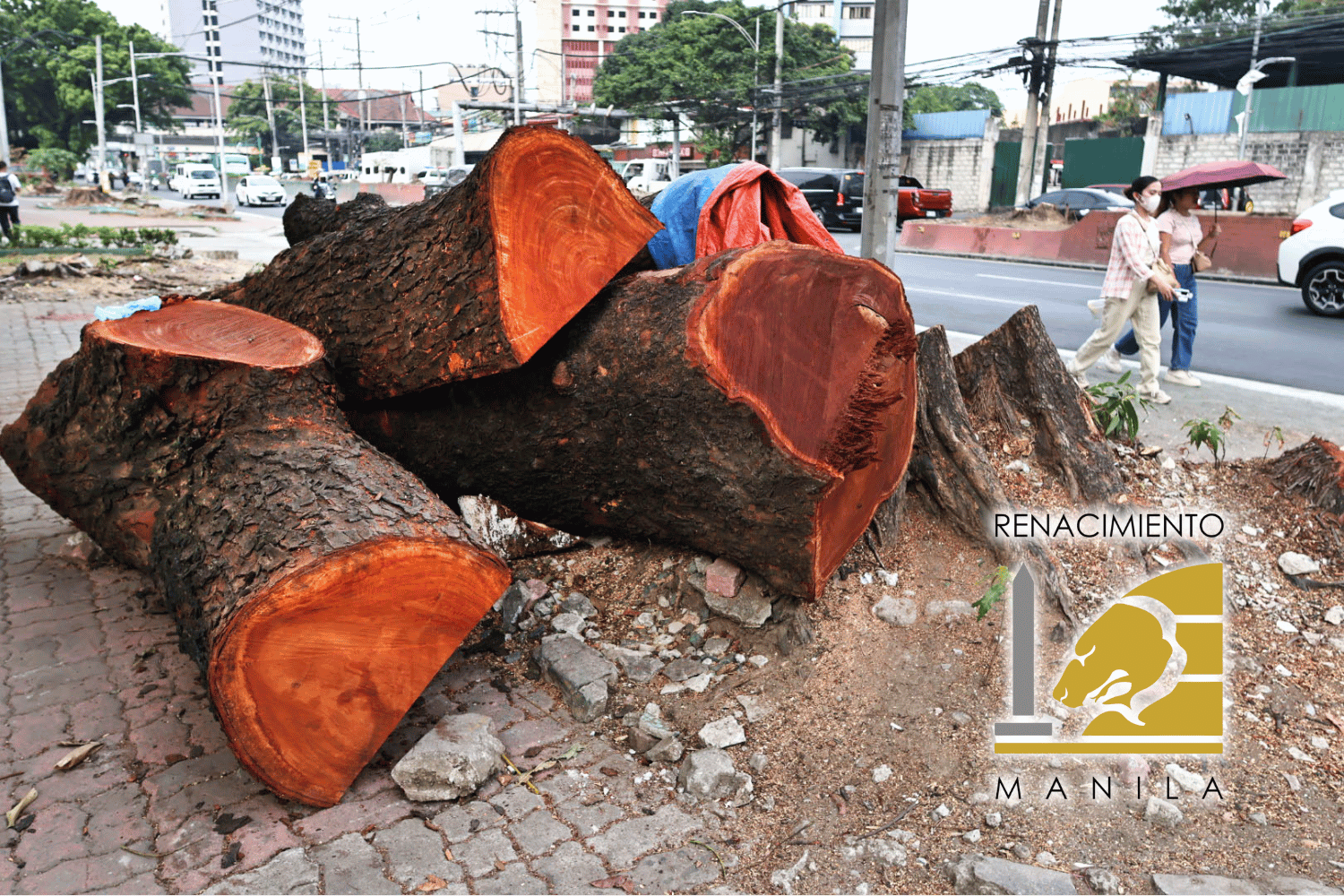
A heritage and urban advocacy group has rejected the Department of Environment and Natural Resources’ (DENR) temporary suspension of tree-cutting activities along Quirino Avenue, arguing that the move fails to address what it describes as the root problem: the continued construction of major elevated expressway projects in Metro Manila.
In a strongly worded statement, cultural organization Renacimiento Manila said the recent suspension announcement and the relocation of two trees to Plaza Lawton amounted to little more than a damage-control effort amid growing public backlash over the cutting of mature trees linked to the planned expressway developments.
“Temporary Suspension is NOT Cancellation!” the group declared.
The organization argued that public opposition extends beyond the issue of tree-cutting itself and is fundamentally directed at projects such as the Southern Access Link Expressway (SALEX), the Northern Access Link Expressway (NALEX), and the controversial Pasig River Expressway (PAREX).
“We do not need more skyways,” the group said, describing elevated highways as “massive concrete heat sinks” that worsen urban heat and degrade communities.
Renacimiento Manila also criticized proposals to replace removed trees with seedlings, arguing that newly planted trees cannot immediately replicate the environmental benefits provided by decades-old mature trees.
The group warned that the expressway projects could have long-term impacts on some of Manila’s most historically and culturally significant areas, including Roxas Boulevard, the Pasig River, Ermita, Malate, and Intramuros.
The statement further expressed skepticism over the DENR’s characterization of the halt as temporary, pointing to previous developments involving PAREX. The group noted that San Miguel Corporation had earlier announced it was reconsidering the Pasig River project before later indicating that it would proceed with modifications.
“We are not fooled by this so-called temporary suspension,” the organization said.
The group also accused project proponents of “greenwashing” infrastructure developments by highlighting tree relocation and replacement efforts while continuing with plans that critics argue could permanently alter Manila’s remaining green spaces and heritage districts.
The statement comes as public debate continues over the recent removal of mature trees along Quirino Avenue, a move that sparked criticism from environmentalists, urban planners, heritage advocates, and local residents.
While DENR has announced a temporary halt to tree-cutting operations pending further review, critics continue to call for a broader reassessment of expressway projects they believe prioritize vehicle traffic over environmental protection, public spaces, and long-term urban livability.
Renacimiento Manila ended its statement with a direct appeal to policymakers and project proponents: “Kill the Skyways — Not Our Trees and Communities.”
The group also called for accountability from officials and agencies involved in approving projects that they claim threaten Manila’s remaining urban forests and historic districts.