The Sarakiki-Hadang Festival happens every September 1 to 8.
Imagine hundreds of dancers suddenly transforming into roosters.
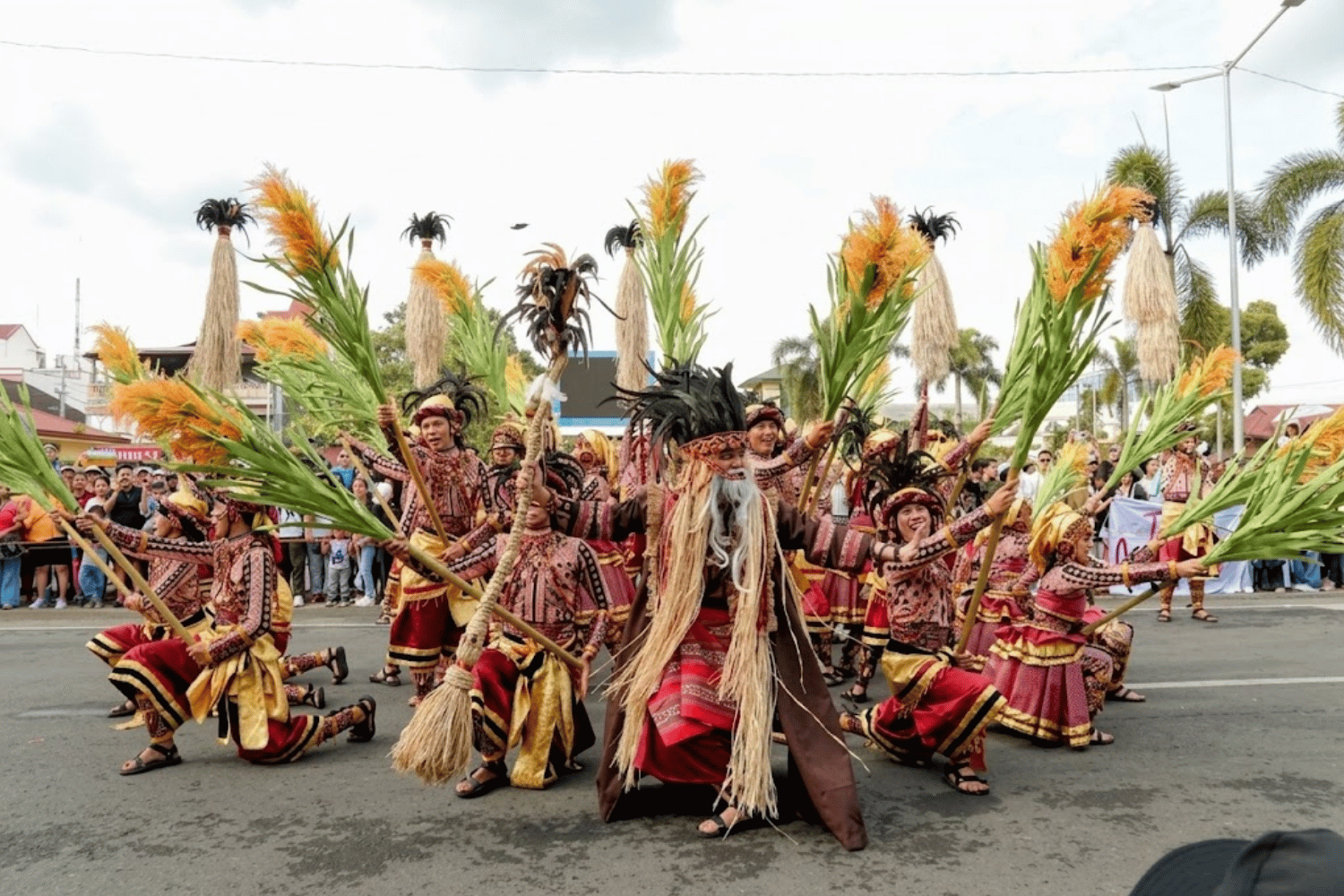
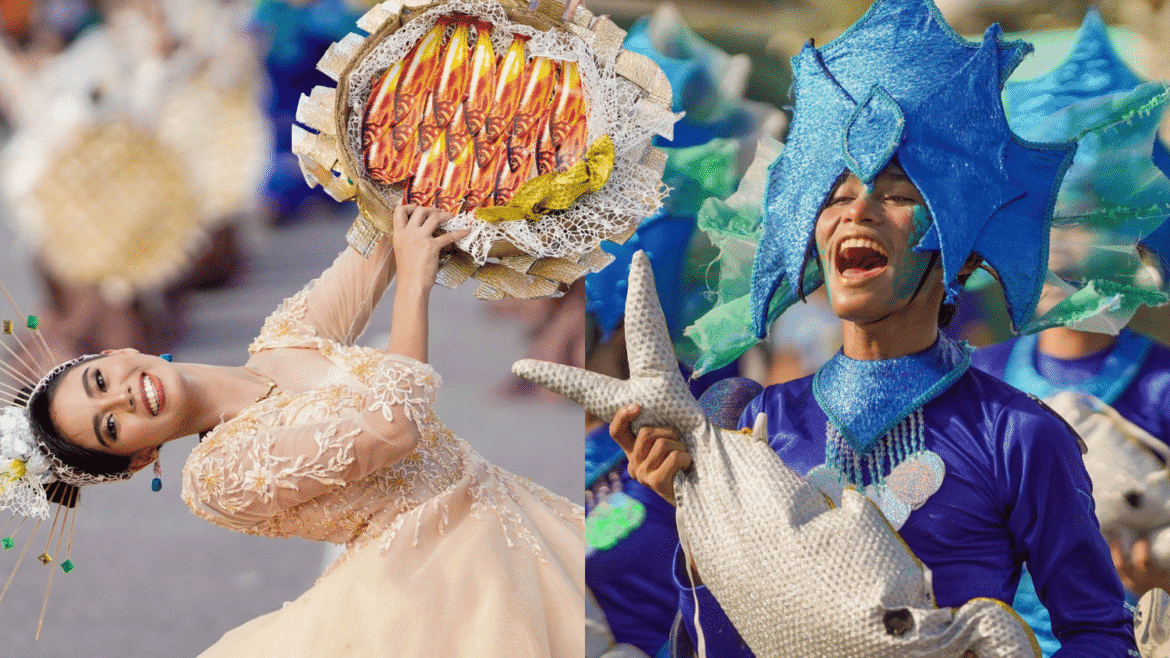
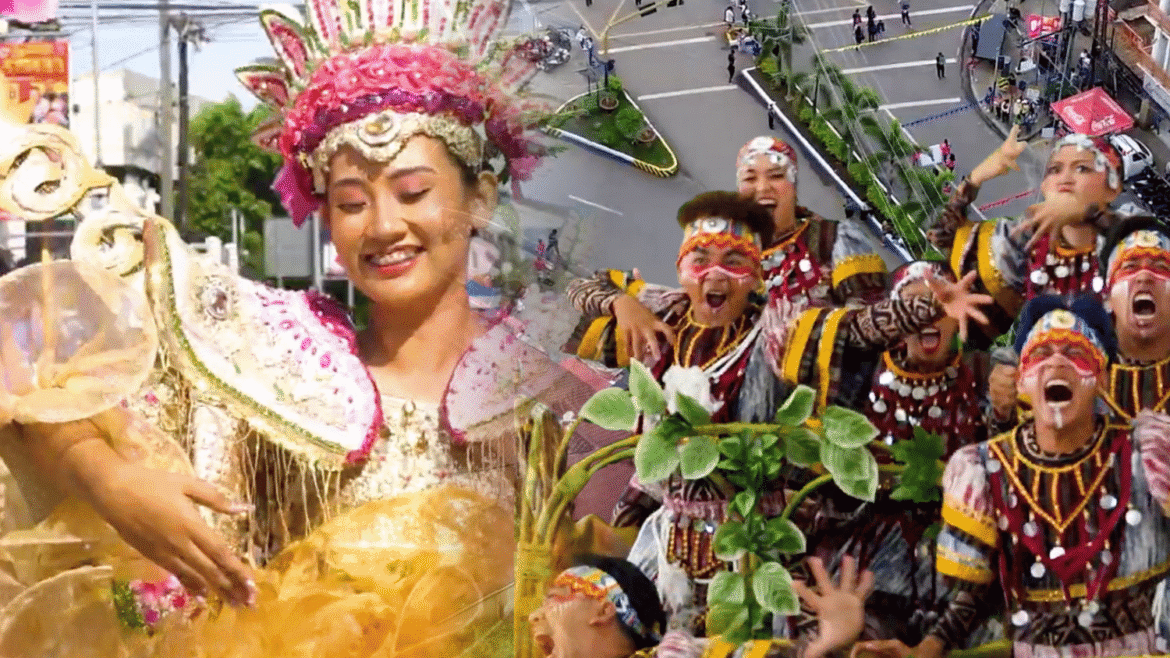
They strut. They flap their arms like wings. They bob their heads, circle one another and burst into sharp, aggressive movements. Some appear to court. Others look ready to fight. Their costumes complete the illusion: feathers, wings, elaborate headdresses and brilliant plumage moving through the streets of Calbayog City.
This is the spectacle of the Sarakiki-Hadang Festival, celebrated every September in Samar—and there may be few Philippine festivals quite like it.
What makes Sarakiki fascinating is that the rooster movements are not merely a quirky gimmick invented for tourists. They draw from traditions that reach into the pre-colonial past of Samar.
“Sarakiki” is a Waray word associated with the characteristic movements of a rooster: strutting and fluttering around a hen during courtship, or posturing aggressively when confronting another rooster.
Those behaviors became a dance language.
Performers imitate the bird through rigid steps, rapid turns, wing-like arm movements and sharp gestures. Taken together, an entire contingent can resemble a colorful flock of roosters engaged in an elaborate ritual of courtship and combat.
But behind the entertaining spectacle is the more solemn idea of Hadang.
According to Calbayog City’s account of the tradition, hadang refers to an old ritual performed as an offering to spirits. Poultry figured prominently in these practices, with rituals associated with healing, protection, thanksgiving and other important moments in community life.
That connection gives the festival its unusual combination of playfulness and spirituality.
The rooster is not simply a costume. Its movements carry echoes of an animal that occupied an important place in ritual, livelihood and everyday Waray culture.
The modern celebration eventually brought Sarakiki and Hadang together, creating a festival identity unmistakably associated with Calbayog.
And while visitors may initially be drawn to what looks like a giant rooster dance, local efforts have increasingly emphasized Hadang to underscore the deeper cultural history behind the spectacle.
That distinction matters.
The Philippines has hundreds of festivals famous for flowers, masks, harvests and religious images. Calbayog has something far harder to mistake for anywhere else: dancers turning the behavior of roosters into choreography.
There is something wonderfully strange about watching human bodies become birds—roosters courting, challenging, strutting and fluttering through the streets.
But beneath all those feathers is an older story.
Sarakiki-Hadang takes something seemingly ordinary—the movements of a rooster—and transforms it into a living piece of Samar’s cultural memory.
READ: