The Philippines has a native tree whose name sounds like it belongs in a naughty conversation rather than a botanical textbook.
It’s called tiganghaba.
And before anyone gets the wrong idea, we’re talking about a real hardwood tree scientifically known as “Tristaniopsis oblongifolia.”
The name alone is enough to make some Filipinos giggle. In everyday Tagalog, “tigang” can refer to someone experiencing a sexual dry spell, while “haba” means long.
Add the fact that the tree produces remarkably hard wood, and the innocent botanical name suddenly sounds like a joke waiting to happen.
But behind the double entendre is a fascinating Philippine tree with a serious conservation story.
Long, hard, and naturally Filipino
Tiganghaba belongs to the Myrtaceae family, which also includes the familiar guava.
It is native to the Philippines and grows in forests with rocky and mineral-rich soils.
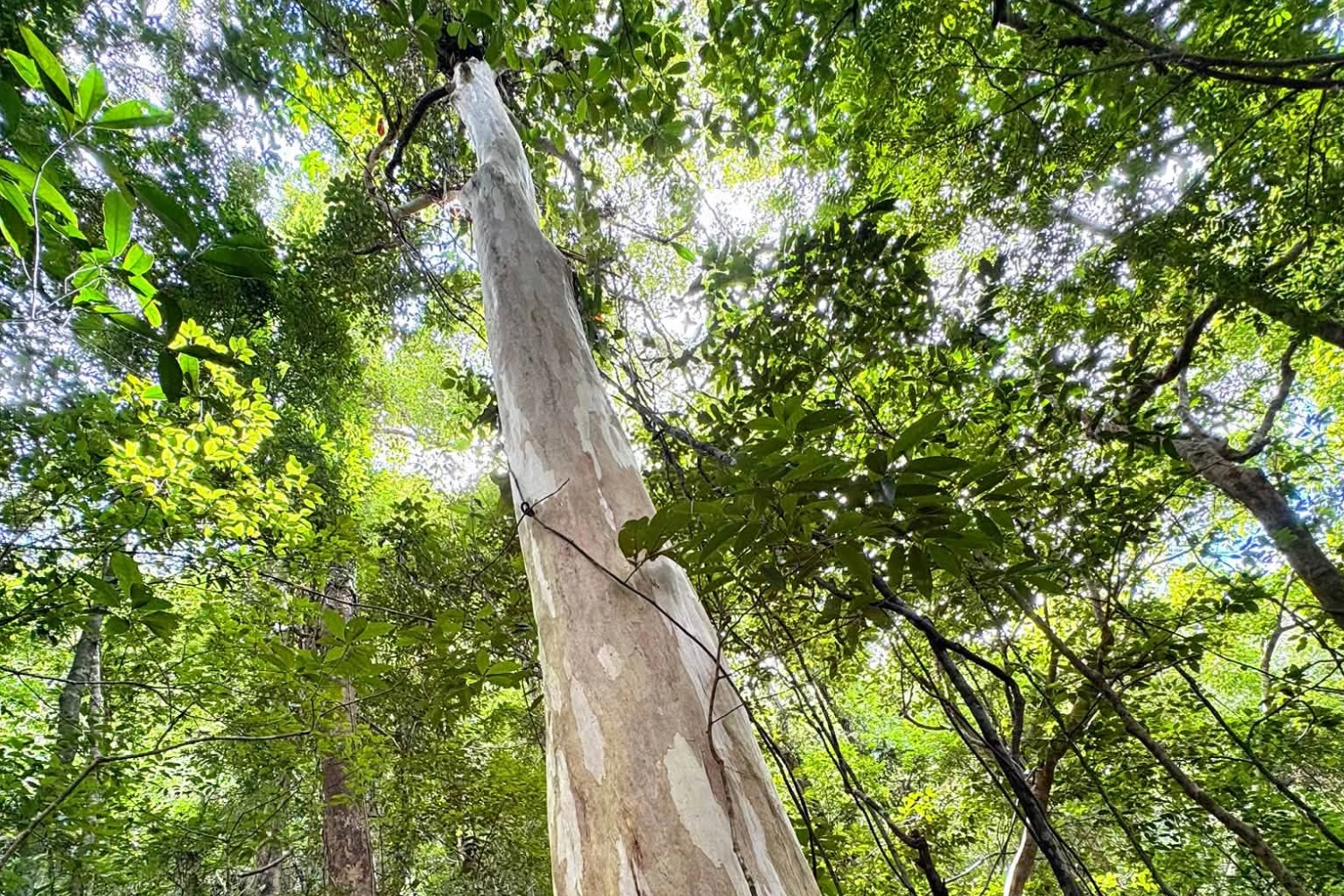
The tree is distinguished by its pale outer bark, elongated leaves, and dense hardwood.
Its scientific name, “Tristaniopsis oblongifolia,” refers to its oblong leaves. It is closely related to malabayabas, another native tree known for its distinctive bark.
A name with an innocent history
Despite how it sounds to modern Filipino ears, tiganghaba is a traditional local tree name, not a sexual reference.
The suggested connection between “haba” and the tree’s elongated leaves is plausible, although the precise linguistic origin of the entire local name is not firmly established.
What makes the name amusing today is how ordinary botanical terminology can acquire an entirely different meaning through contemporary slang.
Documented more than a century ago
American botanist Elmer Drew Merrill first described the species scientifically in 1919 under the name “Tristania oblongifolia.” It was later transferred to the genus Tristaniopsis in 1982.
Botanical records place the species in Quezon, Isabela, and Palawan, particularly in forests growing on ultramafic, mineral-rich soils.
Sadly, this one is endangered
While its name may provoke laughter, the tree’s conservation status is no laughing matter.
The International Union for Conservation of Nature (IUCN) classifies tiganghaba as Endangered. The Philippines’ updated 2026 national list, meanwhile, categorizes it as Vulnerable.
Habitat destruction and forest degradation threaten the survival of many native Philippine hardwood species, making the protection of their remaining habitats essential.
So yes, the Philippines really does have a tree called tiganghaba. It’s long in the leaves, remarkably hard in the wood, and entirely innocent despite its suggestive name.
And perhaps the biggest surprise is that this unusually named tree is one Filipinos should be protecting, not merely laughing about.