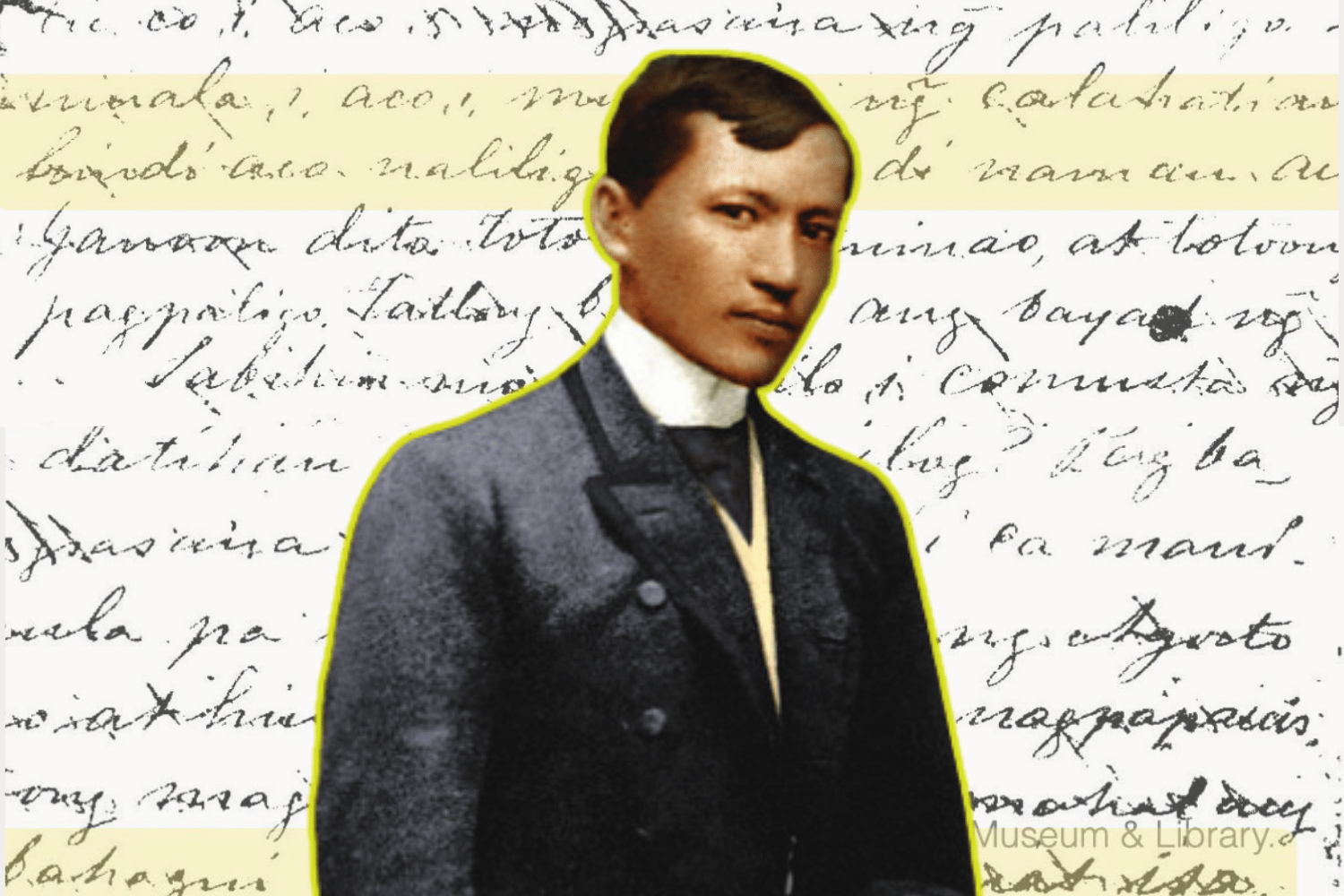
In the letter, the 21-year-old Rizal asked his sister María whether the river in their hometown of Calamba still swelled, adding that when he returned home from his studies in Europe, he would bathe as much as he wanted.
The reason, Rizal admitted, was that he had not taken a bath since the middle of August—roughly four and a half months earlier.
Ocampo explained that the weather was cold in Madrid, he did not sweat much, and taking a bath was not exactly cheap. At the time, one peseta was worth four reales, so a bath costing three-fourths of a coin was equivalent to 75 céntimos.
He added that Rizal’s boarding house may not have had a private bathroom, suggesting that paying to use a communal bath or going elsewhere to bathe was likely an added expense and inconvenience for a student living on a tight budget.
Rizal’s penny pinching habits
The national hero’s revelation in this letter is one of several stories that illustrate his frugal lifestyle as a young Filipino studying abroad.
In his book “Rizal Without the Overcoat,” Ocampo recounted that Rizal once attended a New Year’s potluck gathering where he was assigned to bring champagne. Rather than footing the bill himself, Rizal reportedly passed his hat around afterward, asking everyone to reimburse their share.
Another account revealed that on days when his allowance was delayed, Rizal would leave his apartment during lunch and dinner hours—not to eat out, but to walk around the city and watch people dining in restaurants and bars. After an hour or two, he would return to his apartment, giving his landlord the impression that he had eaten outside, despite only smelling his fill.
Notably, Ocampo shared that Rizal’s January 1884 expense record listed only one bathing expense for the entire month. “He will have to pay for each bath he takes or he pays a monthly fee,” Ocampo wrote. “I do hope he took a daily shower.”
He also noted that in Spain at the time, Filipinos were sometimes scolded for bathing daily, as the practice was considered unhealthy by some.
For Ocampo, these stories show that before Rizal became the country’s national hero, he was a young Filipino trying to make ends meet in a country not his own.
“We often forget Rizal was human. Before we fossilized him into monuments he was like you and me. He reminds us of the Filipino capacity for greatness,” he said.
The original manuscript of Rizal’s letter is preserved in the Lopez Museum and Library in Pasig. It houses the country’s second-largest collection of Rizaliana materials after the National Library of the Philippines.
READ: