The meat remains tender and flavorful for months, perfectly braised in its own rendered lard because of the centuries-old Ivatan preservation method.
Forget what you know about adobo. In Batanes, they’ve been making Lunis—a two-ingredient, salt-cured masterpiece—long before “confit” became a French foodie buzzword. It’s crispy, salty, and stays fresh for months in its own lard.
Lunis was born out of survival. In the days before electricity and refrigeration reached Batanes, the Ivatans needed a way to preserve freshly slaughtered pork through months of isolation and storms.
When a family buys or slaughters a pig, nothing goes to waste. The lean and fatty cuts are transformed into Lunis—a protein “treasure” stored in clay jars or glass containers called tagaw, submerged in its own rendered lard. This method effectively seals out oxygen, allowing the meat to remain edible and delicious for months.
From survival meat to golden pork gold
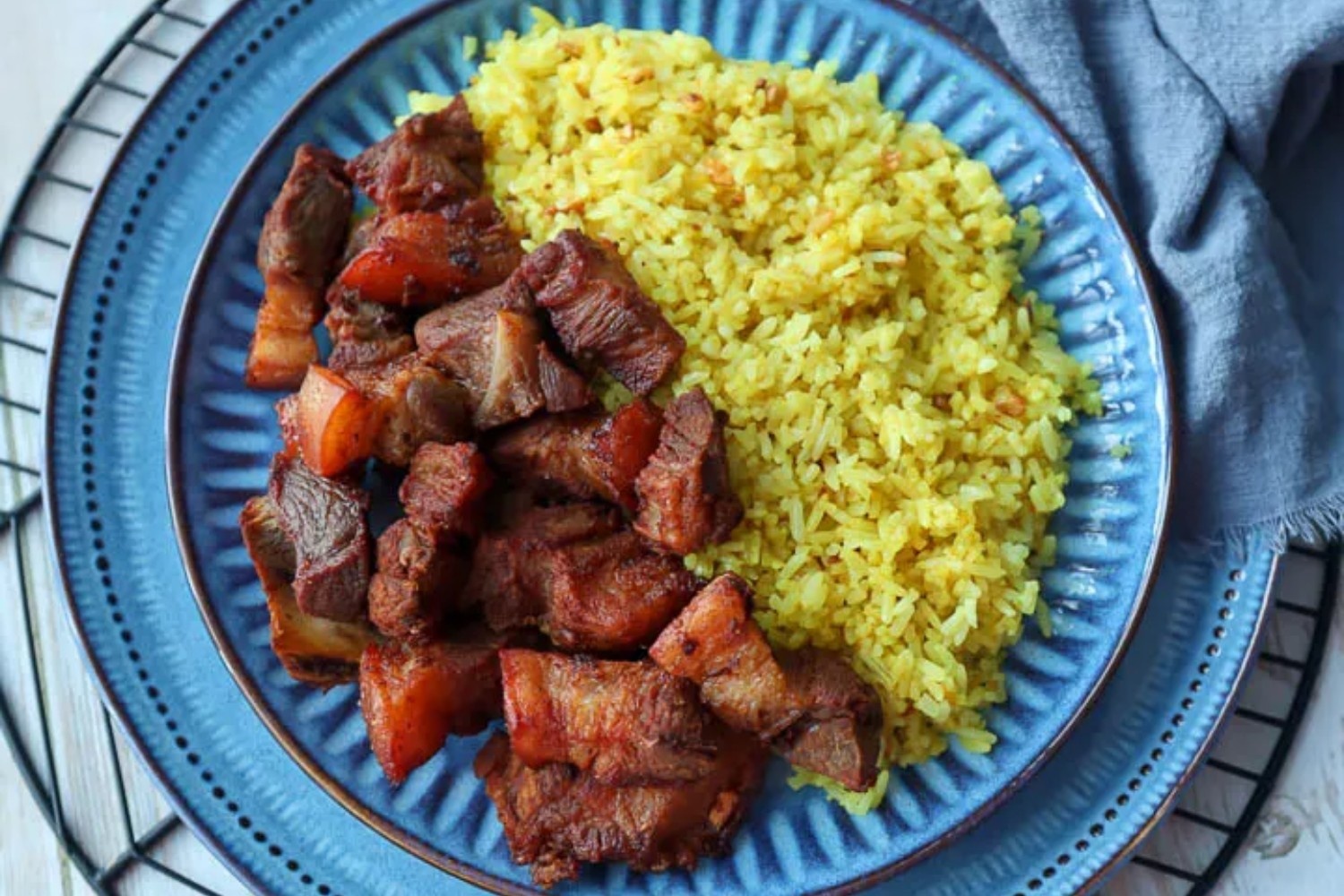
Unlike the “wet” adobo, Lunis traditionally requires only two things—fatty pork belly and rock salt. The pork is cubed and slow-cooked in a pan with a small amount of water. As the water evaporates, the fat renders out, and the pork essentially fries in its own oil until golden brown and crispy.
Lunis is intensely savory and salt-forward, designed to be eaten in small, punchy portions rather than large chunks. It is served wrapped in Kabaya (breadfruit) leaves alongside turmeric rice (Supas) and Uved (banana pith balls).
If you are in Batanes, visit Vunong by Jessica in Basco for this traditional fare. If you want the organic pork version with a cleaner and more premium fat profile, there’s Cafe du Tukon in Fundacion Pacita. If you are into comfort food fusion, go to Lantia Cafe and try their Lunis Pizza.
In Manila, your best bet in finding Lunis is Vunong Dinengdeng at the Salcedo Weekend Market or Legazpi Sunday Market. They are the primary ambassadors of Ivatan cuisine in the metro, often selling jarred Lunis and authentic Supas.