Filipino literature has traveled beyond our planet.
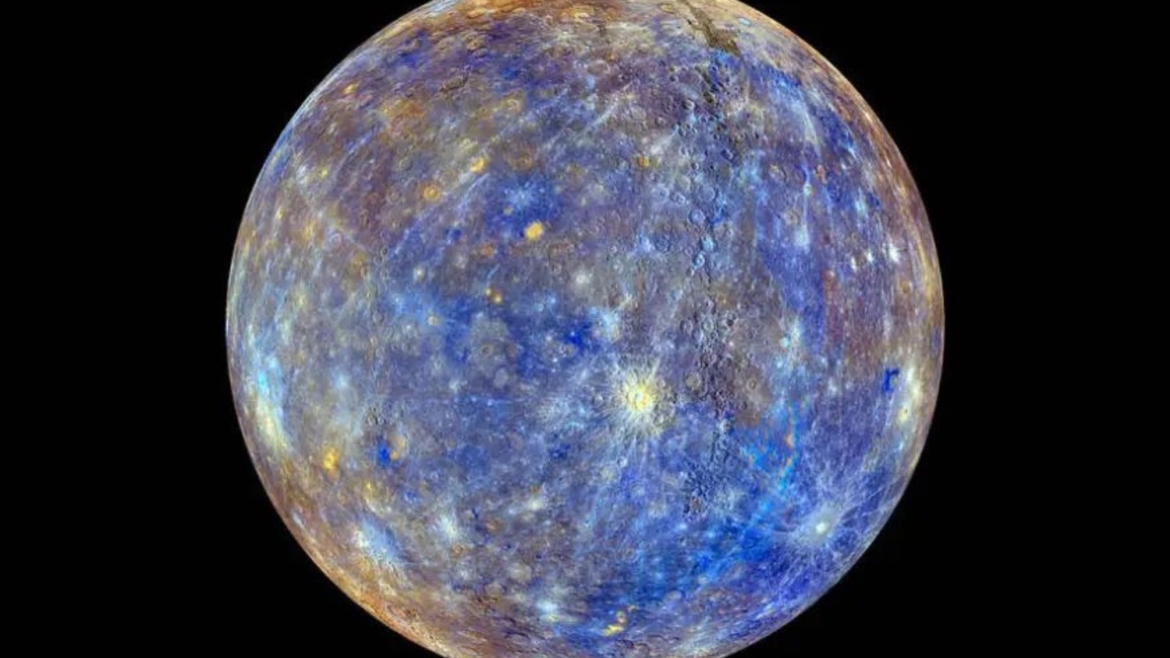
Look up at Mercury and, somewhere across its battered landscape, two Filipino literary giants have left their names.
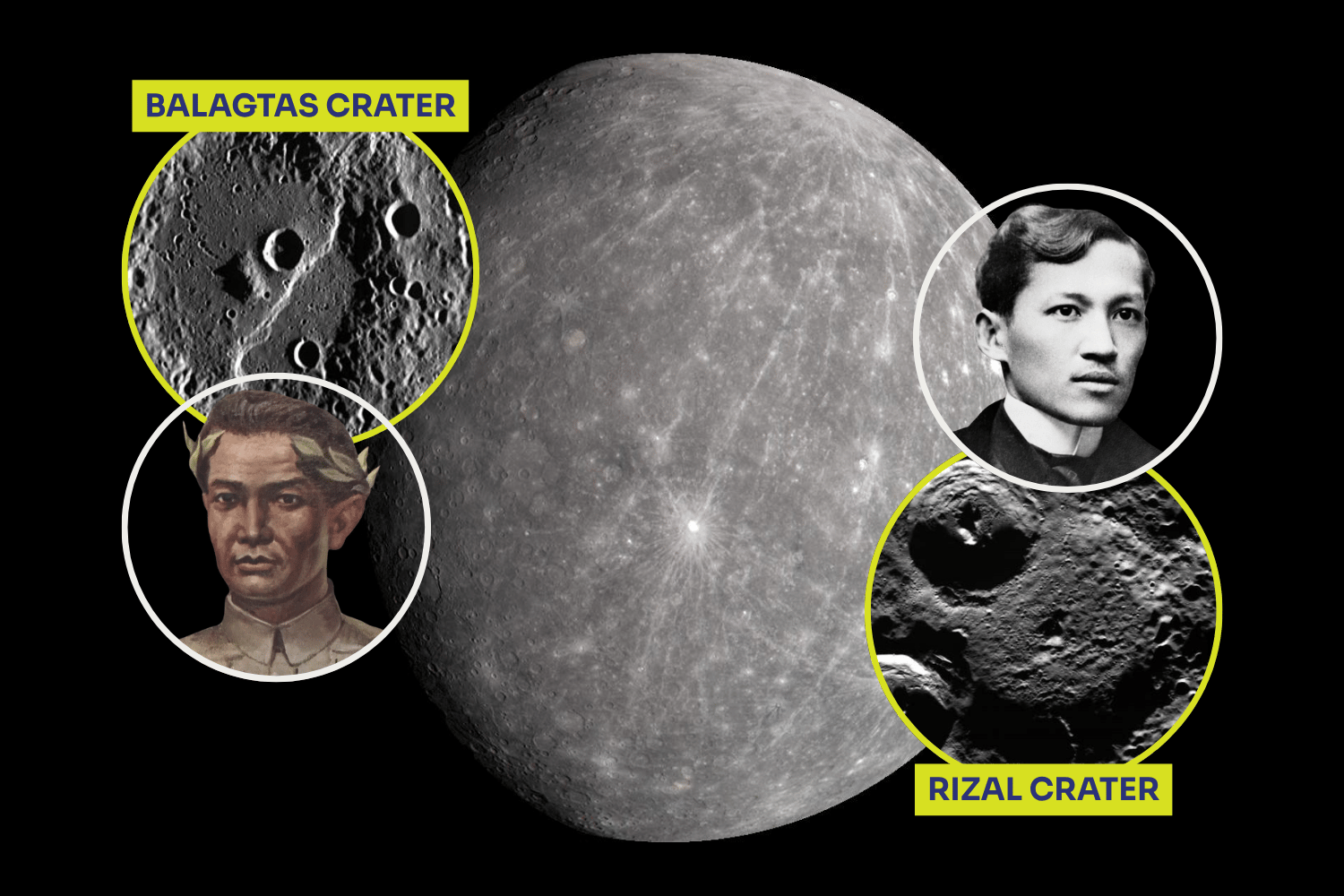
There is a Rizal Crater. And there is a Balagtas Crater.
They are not tiny landmarks, either. Balagtas is a roughly 98-kilometer-wide impact crater in Mercury’s southern hemisphere, while Rizal stretches 64 kilometers near the planet’s north pole, according to the official Gazetteer of Planetary Nomenclature.
It is an extraordinary cosmic footnote: Francisco Balagtas and José Rizal, writers separated by generations but bound by their influence on Philippine literature, are literally written onto another world.
The reason lies in Mercury’s unusual naming convention.
The International Astronomical Union, which oversees official planetary nomenclature, assigns Mercury’s craters the names of deceased artists, musicians, painters and authors who made outstanding contributions to their fields.
That made two Filipinos natural candidates.
Balagtas, born Francisco Baltazar in 1788, became one of the foundational figures of Tagalog literature. His enduring masterpiece, “Florante at Laura,” demonstrated the expressive power of Tagalog poetry and helped inspire the Filipino poetic debate known today as the balagtasan.
His name reached Mercury remarkably early. The IAU approved Balagtas Crater in 1976, making the Filipino writer part of the planet’s official map for half a century. The Gazetteer identifies its namesake simply as a Filipino writer who lived from 1788 to 1862.
Rizal joined him much later.
On September 11, 2019, the IAU officially adopted the name Rizal for a crater centered at about 82.5 degrees north latitude. Its citation honors “José, Filipino writer (1861–1896).”
The designation places Rizal alongside writers and artists from across human civilization. The same batch of Mercury crater names approved during the 2018–2021 period included Maya Angelou, Chuck Berry, Nadine Gordimer and Jack Kirby.
It is fitting that Rizal is remembered there primarily as a writer. Long before monuments, streets and schools carried his name, it was the written word—particularly “Noli Me Tángere” and “El Filibusterismo”—that made his ideas endure.
Balagtas did something similar generations earlier through poetry.
Their craters are scars left by violent impacts billions of years ago. But humans gave those scars meaning.
On a planet tens of millions of kilometers away, two distinctly Filipino names now sit permanently on the map: Balagtas and Rizal.
Our literature, quite literally, has traveled beyond Earth.
READ: