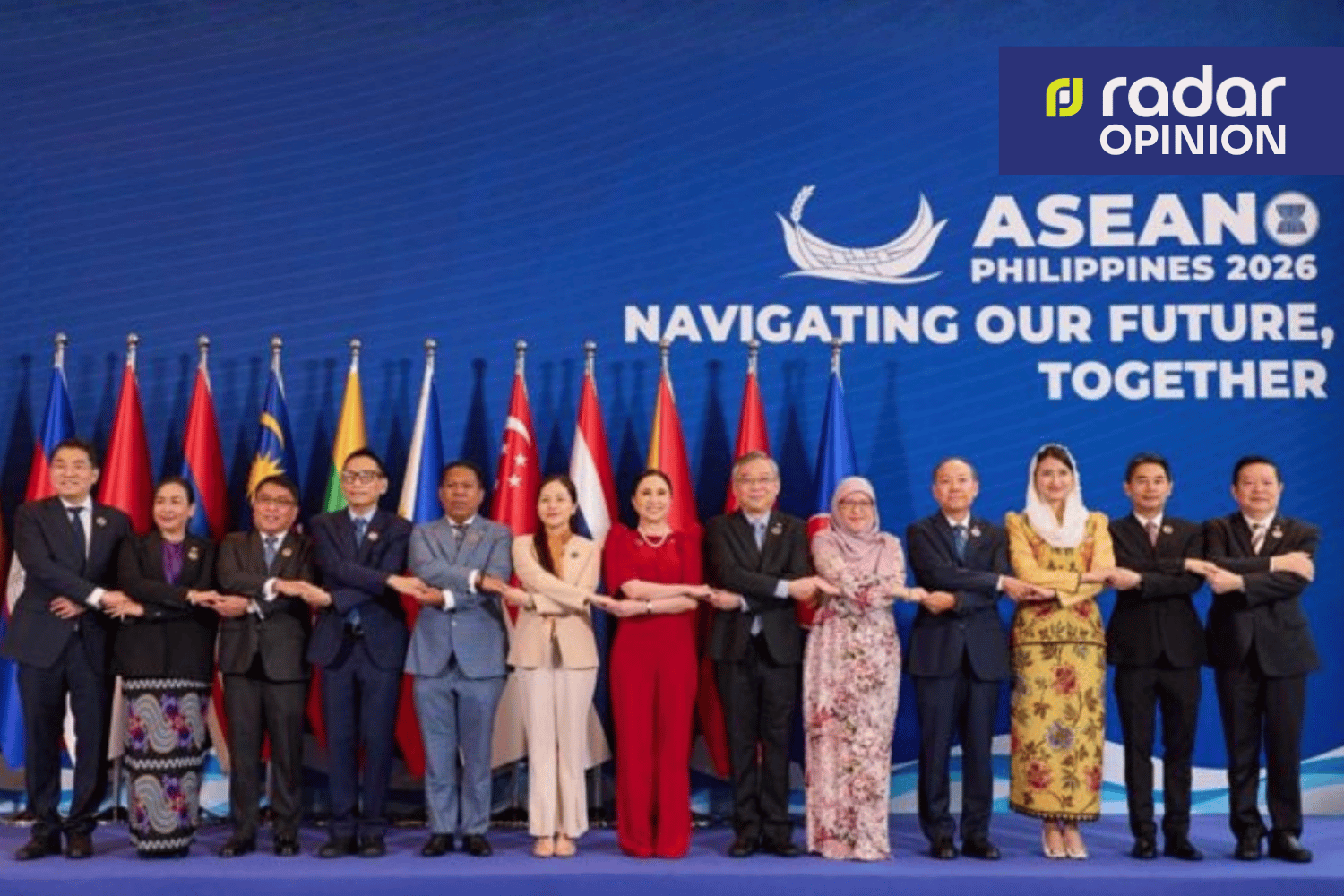

How the current administration is using a ‘barebones’ summit to lead regional coordination.
President Ferdinand Marcos Jr. said the upcoming ASEAN summit and related meetings will be “barebones,” with discussions centered on oil, food, and migrant labor. That framing comes at a time when the region is dealing with a real economic shock.
The ongoing Iran war has disrupted global energy flows, particularly through the Strait of Hormuz, a critical chokepoint for oil bound for Asia. For Southeast Asia, the impact is direct. Economies in the region rely heavily on imported energy, and rising fuel costs are feeding into inflation, supply chain pressure, and broader economic strain.
The Philippines is particularly exposed. It imports most of its energy requirements, and the effects are already visible in domestic prices and cost structures.
Against that backdrop, a narrower ASEAN agenda reflects what needs to be addressed.
From diplomacy to coordination
ASEAN has historically functioned as a diplomatic platform. It convenes leaders, aligns language, and maintains relationships across member states. That model is not designed for moments like this, where multiple economies are facing the same pressure at the same time.
What is emerging now is a shift toward coordination.
Energy costs, food supply disruptions, and inflation are moving across borders. Individual responses have limits. Coordination, even at a basic level, becomes more useful.
The Philippines, as chair, can push for that. This does not require structural changes to ASEAN. It can begin with working-level alignment on fuel cost management, food supply stabilization, and inflation response.
These are incremental steps, but they move ASEAN beyond purely diplomatic outcomes.
Positioning the Philippines
The Philippines is not an abstract participant in this discussion. It is directly affected by the pressures being discussed.
Energy imports feed into domestic prices. Food supply affects inflation. Labor mobility supports income and consumption.
That exposure creates credibility.
By anchoring discussions on these issues and maintaining focus, the Philippines can position itself as shaping regional responses rather than simply participating in them. Leadership in this context is defined less by size and more by consistency.
Linking policy to capital
Coordination affects how the region is viewed.
When governments respond to shared pressures in a more aligned way, uncertainty narrows. That influences how capital is deployed across emerging markets.
The Philippines can reinforce this by linking policy priorities to specific investment areas. Energy infrastructure, power generation, and supporting systems become more relevant when they are clearly tied to policy direction.
The objective is not to present a wide set of opportunities. It is to present a coherent one.

Labor as a structural factor
Migrant labor is part of the core agenda for a reason.
For the Philippines, it underpins domestic consumption and foreign exchange stability. Regional coordination on labor mobility and worker protection improves the reliability of that system.
That has direct economic effects, particularly on domestic demand.
Using the chairmanship
The Philippines does not need to control ASEAN to shape outcomes. As chair, it sets priorities, frames discussions, and determines what gets sustained beyond the meetings themselves.
That is leverage.
It can push for coordination on energy and cost stability, anchor regional discussions on practical economic pressures, and consistently direct attention to sectors where policy and capital can meet. It can use the chairmanship to make ASEAN look more aligned in response to external shocks, even if that alignment is partial.
That positioning carries through beyond the meetings. It affects how the region is understood and where capital chooses to go.
The opportunity is to use the chairmanship not as a hosting role, but as a way to shape direction while attention is already on the region.
Diplomacy is out; coordination is in. With the Iran war disrupting global energy, the Philippines uses its “barebones” ASEAN chairmanship to align the region on fuel, food, and labor.