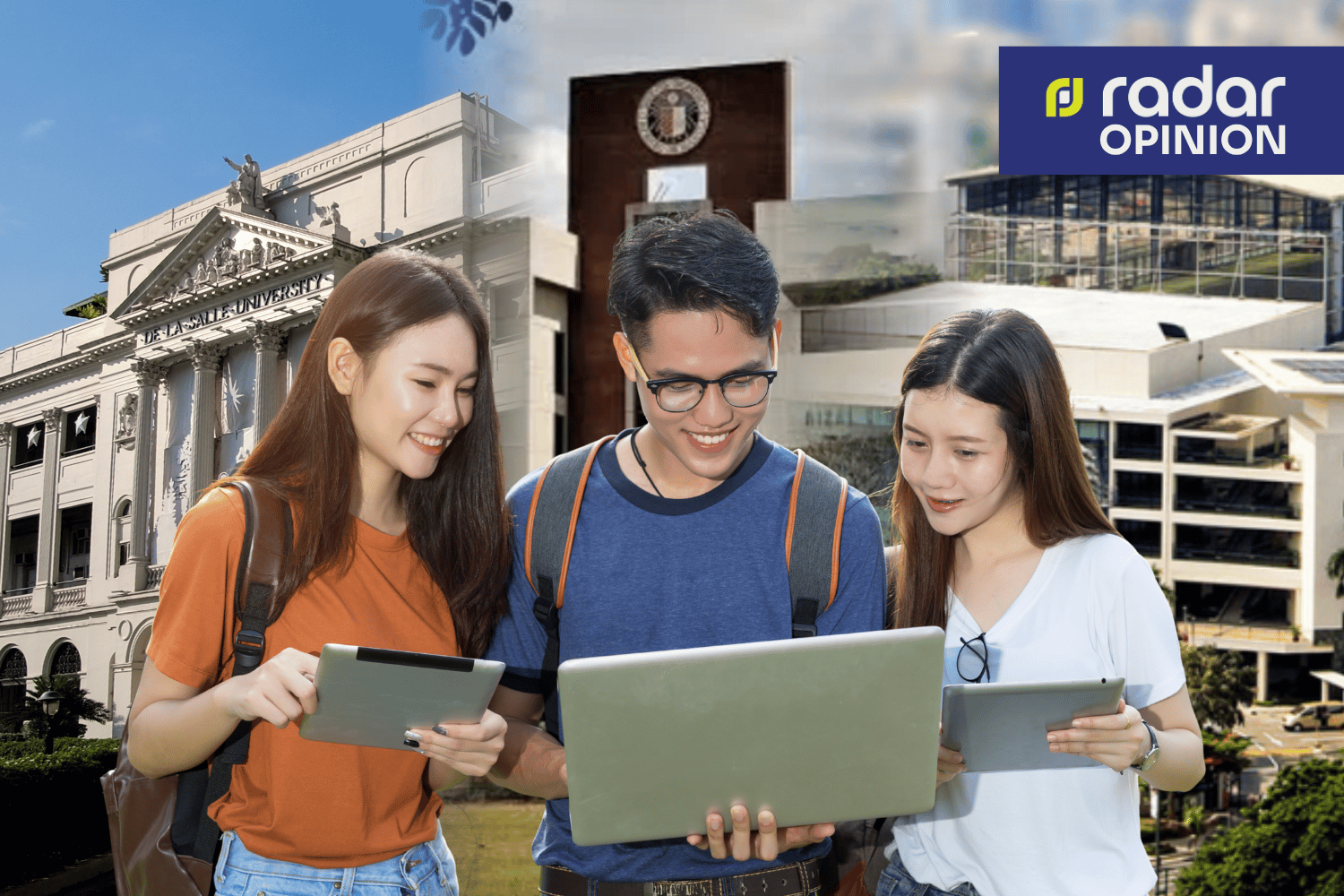
Wealthy families invest in social capital, lifelong networks, and access to powerful relationships that shape their child’s future.
Why would parents spend hundreds of thousands—or even more than a million pesos—a year sending their children to an elite school when excellent education can be found elsewhere for much less?
The answer may not always be academics.
For many affluent and upwardly mobile families, one of the biggest advantages of an elite school is social capital: the relationships, networks, and access their children accumulate simply by being surrounded by the right people.
In simpler terms, you’re not just paying for what your child learns.
You’re paying for who your child meets.
Your seatmate could matter someday
French sociologist Pierre Bourdieu argued that privilege is passed down not only through money but through cultural capital—manners, language, tastes and credentials—and social capital, or valuable relationships and networks.
Elite schools can provide both.
A student learns math, science, literature, and history in class. But outside the classroom, they may also learn how affluent people speak, socialize, negotiate, and move comfortably inside powerful institutions.
More importantly, they build relationships.
That classmate beside your child could eventually become a CEO, lawyer, doctor, entrepreneur, politician, investor, or heir to a family business.
Twenty years later, a childhood friendship might become a job referral, business introduction, investment opportunity, or simply a call to someone who knows someone.
Filipinos already understand this
We actually have everyday words for social capital.
Kakilala. Kaibigan. Kabarkada. Batchmate.
The Philippines is a highly relationship-driven society. Opportunities often travel through networks: “May kilala ako.” “Batchmate ko ’yan.” “I can introduce you.”
That doesn’t automatically mean favoritism. Networks also operate through trust. People naturally recommend those whose abilities and character they already know.
The advantage is that some children begin building powerful networks before they even understand what networking means.
For them, it doesn’t start at a business conference at 30.
It starts during recess at 10.
You’re buying a peer group
This helps explain why wealthy families remain attached to particular schools even when equally strong academic programs exist elsewhere.
They’re buying an ecosystem.
The birthday parties matter. The sports teams matter. The parents meeting other parents matter. The classmates who become lifelong friends matter.
Even learning to feel comfortable around wealth and power can become an advantage. Someone raised inside those environments doesn’t have to figure out how to enter them later.
They already know the language of the room.
Elite doesn’t mean smarter
None of this means students from elite schools are automatically brighter or better educated.
The Philippines produces exceptional graduates from public schools, science high schools, state universities, provincial colleges, and ordinary private schools every year.
Money can buy access to a network.
It cannot buy intelligence, creativity, discipline, empathy, or character.
Perhaps that’s why judging an elite school’s value purely by its curriculum misses the point.
For some families, the most valuable thing their child takes home isn’t written on the diploma.
It’s the phone numbers saved on their phone.
READ:

While schools debate AI use, one college integrates it into the curriculum
radar Lifestyle
July 31, 2026
UST updates handbook after 8 years with generative AI rules
Nikko Miguel Garcia
August 9, 2026

9,000 remote schools to benefit from new Last Mile Schools Act
John Lloyd Aleta
July 26, 2026