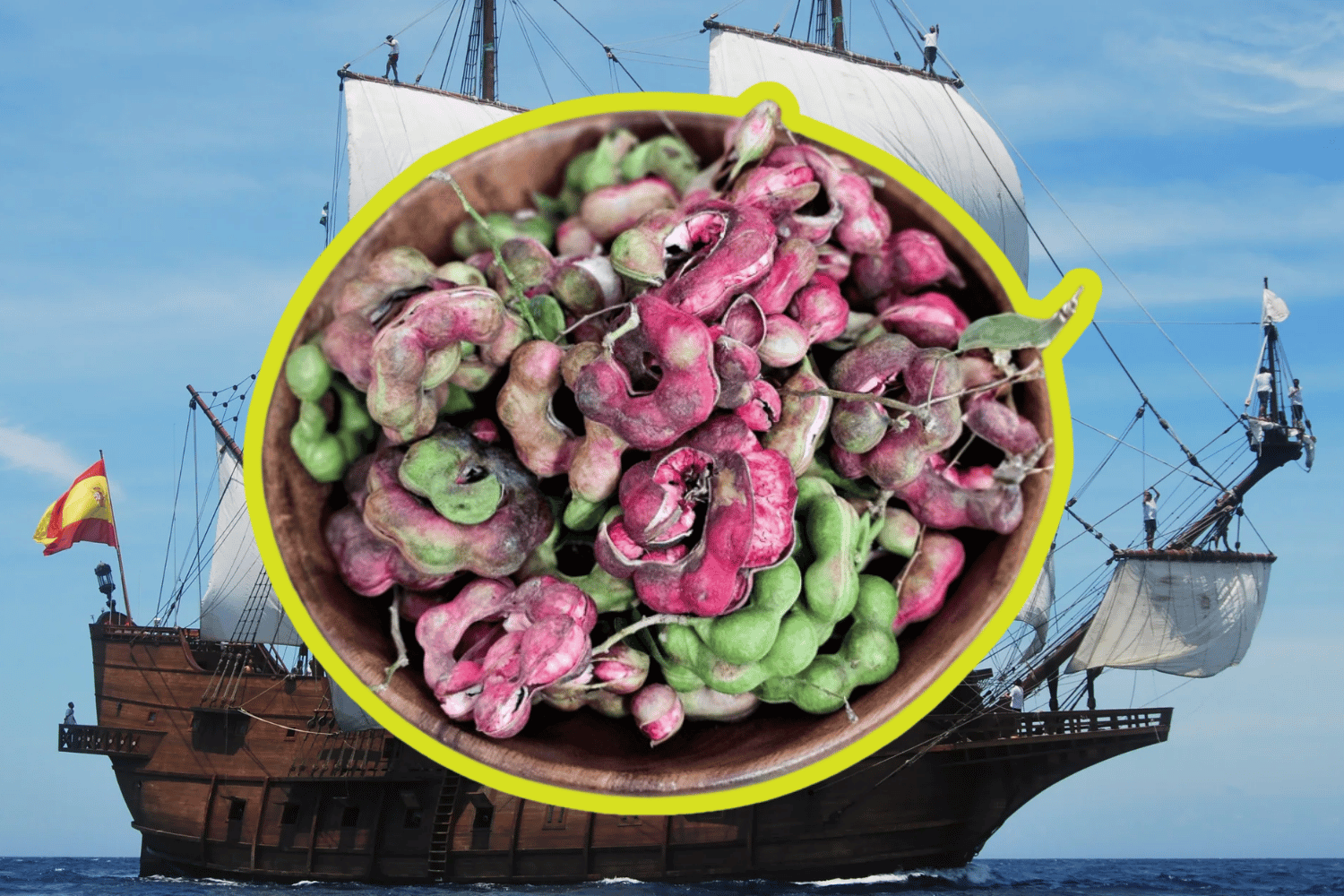
These young pods found their way into local cooking as an alternative souring agent.
You probably remember it.
A barkada standing under a thorny tree after school. Someone throws a slipper or a rock. Another climbs the branches despite the scratches. Minutes later, everyone is passing around curly green-and-pink pods, peeling them open, eating the soft white flesh, and spitting the glossy black seeds onto the ground.
For many Filipinos, camachile wasn’t something bought from a grocery. It was simply there—growing beside schools, on vacant lots, in old plazas, and along dusty provincial roads. It feels so familiar that many assume it has always been part of the Philippine landscape.
It hasn’t.
One of the most nostalgic fruits of Filipino childhood is actually an immigrant from Mexico, carried across the Pacific by Spanish galleons more than 400 years ago.
A souvenir of the Galleon Trade
Camachile (Pithecellobium dulce) is native to Mexico, Central America, and parts of northern South America. It arrived in the Philippines through the Manila-Acapulco Galleon Trade, the 250-year maritime route that connected Asia and the Americas from 1565 to 1815.
The same ships that transported silver from the New World and silk, porcelain, and spices from Asia also carried something far less glamorous but far more enduring—seeds.
Among them were corn, cacao, tomatoes, avocado, papaya, and camachile.
The tree proved perfectly suited to the Philippine climate. It grows quickly, survives long dry seasons, thrives even in poor soil, and spreads with remarkable ease. Before long, it had become so common that generations of Filipinos grew up believing it was native.
The mexican roots are hidden in its name
Even the word “camachile” tells the story of its journey.
In Mexico, the fruit is known as guamúchil or cuamúchil, names derived from the ancient Nahuatl language spoken by the Aztecs.
Over centuries of use in the Philippines, the unfamiliar word gradually changed on local tongues until it became camachile or kamatsili in Tagalog, kamunsil in Hiligaynon, and damortis in Ilocano.
The fruit may have crossed an ocean, but Filipinos eventually made it their own.
Why the world calls it “Manila tamarind”
Ironically, camachile is neither from Manila nor is it a true tamarind.
Its English name, “Manila Tamarind,” came about because Manila served as Spain’s trading hub in Asia. After becoming established in the Philippines, the tree was introduced from Manila to other parts of Asia, including India and Southeast Asia.
European traders associated the unfamiliar curled pods with the tamarind they already knew, giving birth to a name that stuck around the world despite being botanically inaccurate.
More than just a tree
Camachile became more than an imported species.
It became a climbing tree. A roadside snack. A challenge for fearless children willing to dodge sharp thorns for a sweet reward.
In some provinces, its young pods found their way into local cooking as an alternative souring agent, while regional bakers even created camachile-shaped cookies known as quinamunsil, preserving its distinctive twisted silhouette in pastry form.
A living piece of history
The Manila-Acapulco Galleon Trade is often remembered through museums, churches, silver coins, and colonial architecture.
But its legacy also survives in quieter ways.
It lives in the cacao used for tsokolate, the avocado in Filipino desserts, the corn sold by street vendors—and in the camachile trees that once shaded countless childhood afternoons.
The next time you spot one of its twisted pods hanging from a thorny branch, remember that you’re not just looking at a fruit.
You’re looking at one of the oldest living reminders that, centuries before globalization became a buzzword, the Philippines and Mexico were already connected by a voyage across the Pacific—one seed at a time.
READ:
FACT CHECK: Was Taiwan once part of the Philippines?
Top Dagohoy
July 11, 2026
How Filipinos made ensaymada from Spain unmistakably their own
radar Lifestyle
May 20, 2026
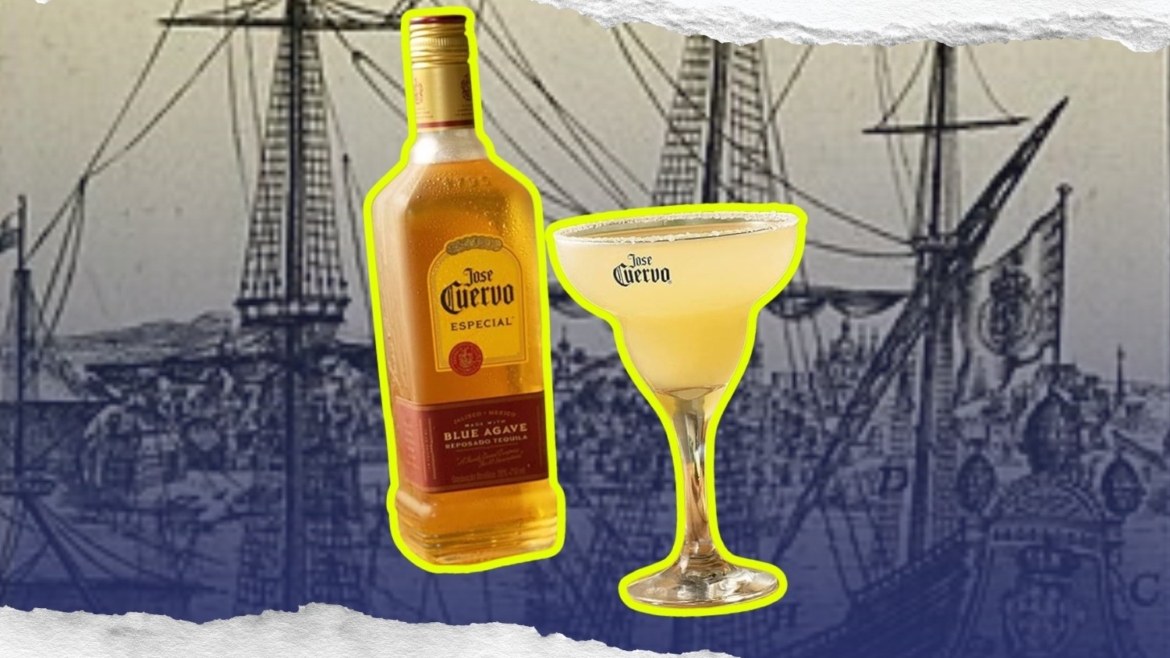
Tequila, the iconic spirit from Mexico, wouldn’t exist without Filipino sailors
Rei Marquez
May 2, 2026